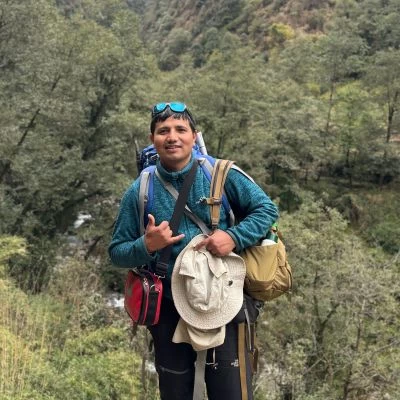
Langtang Valley is not only one of the Nepal’s most beautiful trekking destination but also known as the heavenly piece of myth, devotion and ancient belief. Langtang Valley is also called as the hidden valley of glaciers, and has a fascinating story of its origin, which is deeply linked to a sacred ox, a devoted herder and the spiritual power of the Himalayas. This blog is about the true cultural and spiritual origin of Langtang valley, which has been passed down through generations of Tibetan and Tamang communities.
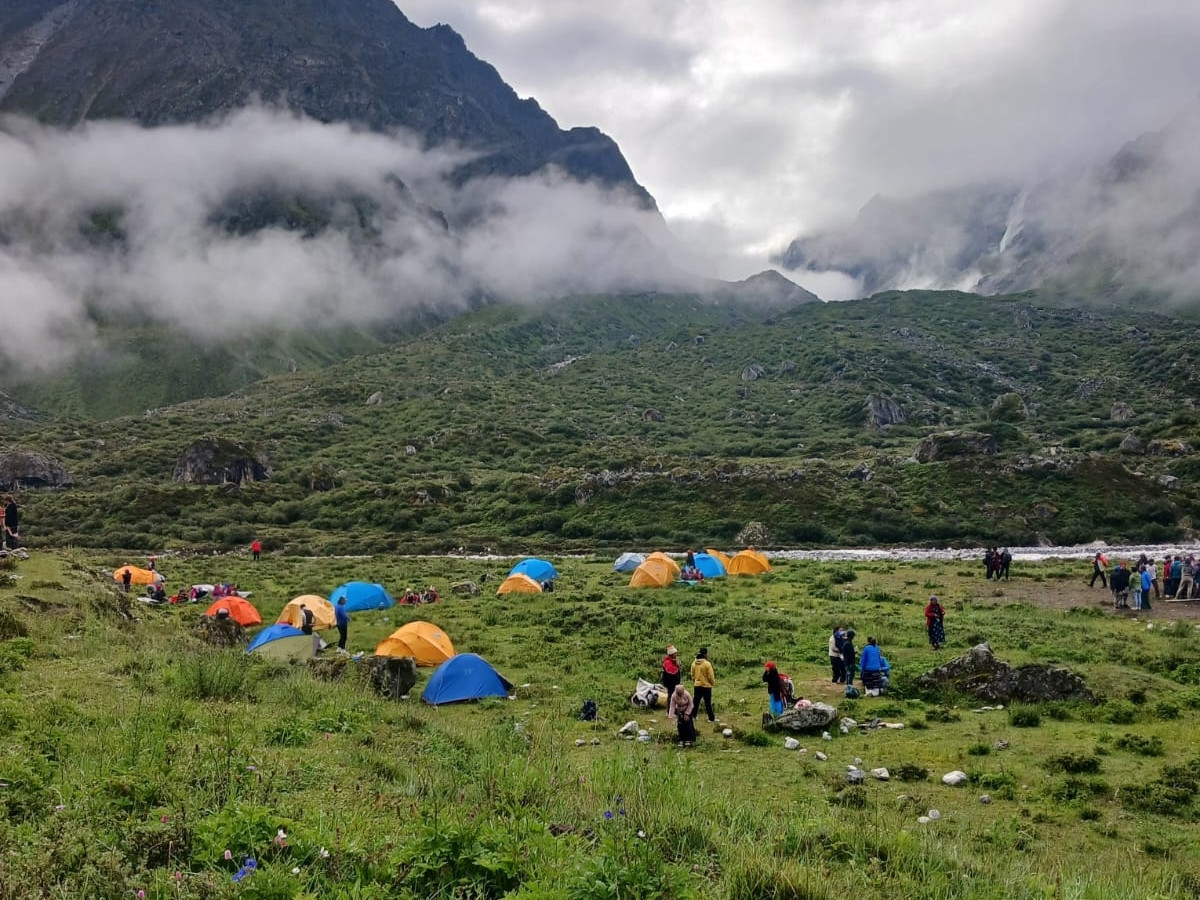
Why Langtang is known as the Hidden Valley of Glaciers or Himalayas ?
Langtang Valley is often called as the hidden valley of Himalayas or glacier because it was not discovered by the conquest or trade, rather revealed through legend, faith, and nature itself. Surrounded by the towering peaks, lush rhododendron and pine forests and massive glaciers inside Langtang National Park, the valley remains naturally protected and spiritually concealed. During theLangtang Valley Trekkingin Nepal, travelers are able to witness how the narrow gorges, dense alpine terrain and high altitude gradually open up to a spiritual valley, which has led to the belief that the valley chooses who may enter it, rather than the other way around.
Unlike other busier trekking routes, the Langtang Region Trekking Route has remained quiet and has helped to sustain the mystery and raw authenticity of the Langtang trek. In addition to that, the valley has spiritual significance since the sacred ox chose it as the final resting place, while giving the valley a divine importance and eternal protection. The spirituality of the valley, combined with the spectacular Langtang Himalayan Views and limited access through the Kathmandu to Syabrubesi trek route, has made the Langtang Valley Trekking Nepal a journey to a place that has remained hidden from the modern world.
Langtang Valley: A sacred Himalayan Homeland
The Langtang Valley is home to Tibetan origin communities from centuries. These early settlers migrated across the Himalayan passes, carrying with them their languages, Buddhist beliefs, and mountain lifestyle. Even today, the local people speak Tibetan and Hyolmi language, while preserving oral stories and legends that revels the discovery of Langtang Valley.
Langtang Valley Panorama Trekking is different from most trekking routes because it is very spiritual in nature. Every village, meadow, and glacier has spiritual meaning. It is said that the Langtang Valley was not discovered by humans, but rather revealed by fate or destiny, as it was chosen by a sacred being. That is why the Langtang Valley is still considered holy and sacred in the Himalayas.
The legend of the sacred Ox, How Langtang Valley was Discovered? History of Langtang Valley
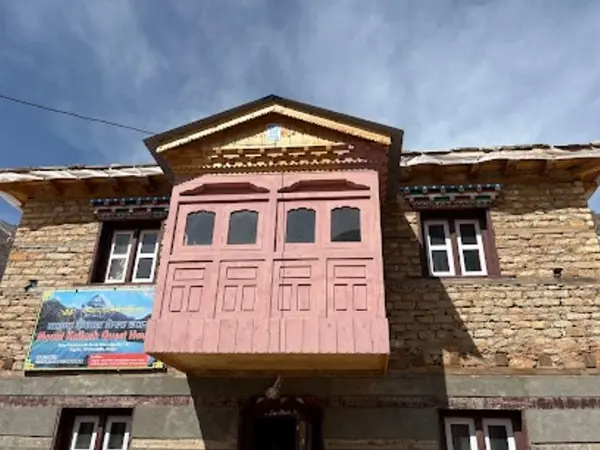
As Owner of Travelers Guest house from Langtang Village , Mr. Nima lama ,'Long ago in Tibet, a king was preparing for the wedding of his son. He was expecting the arrival of many guests and decided to slaughter a yak, a female yak (nak), and an ox for the feast. Upon sensing the danger, these animals escaped during the night. While the nak (female yak) and the ox went south, crossing high mountain ranges to the region now known as modern Nepal, guided by intuition and unseen spiritual forces.
The female yak got lost in the region now called Briddim, where Bri means “Nak” and Ddim means “lost” in the Tibetan language. However, the ox continued the journey, followed by a herder. According to ancient legends or beliefs, the ox was not just any ordinary animal, rather it was a divine creature whose purpose was to reveal a sacred valley hidden deep in the Himalayas.
Journey of the Ox and the Herder Through the Himalayas
As the ox traveled deeper into the Himalayas, Tibetan herder followed it, by forming a lifelong bond. The herder protected the ox as it walked through the rugged terrain until its last breath. The journey took by ox and the herder through areas that today are part of the Langtang Valley Trek, including Lang Tasha, where the herder tied the ox and rested. Even today, people visit this place to seek blessings and perform rituals.
From Lang Tasha, the ox and herder continued to Ghoda Tabela, Langtang Village and higher pastures. These locations are not ordinary, and are believed to be spiritually marked by the ox’s presence. As the herder was by the ox’s side throughout the journey, prayers in Langtang honor both the sacred ox and the loyal guardian.
Meaning of Langtang: The Place of a full Stomach
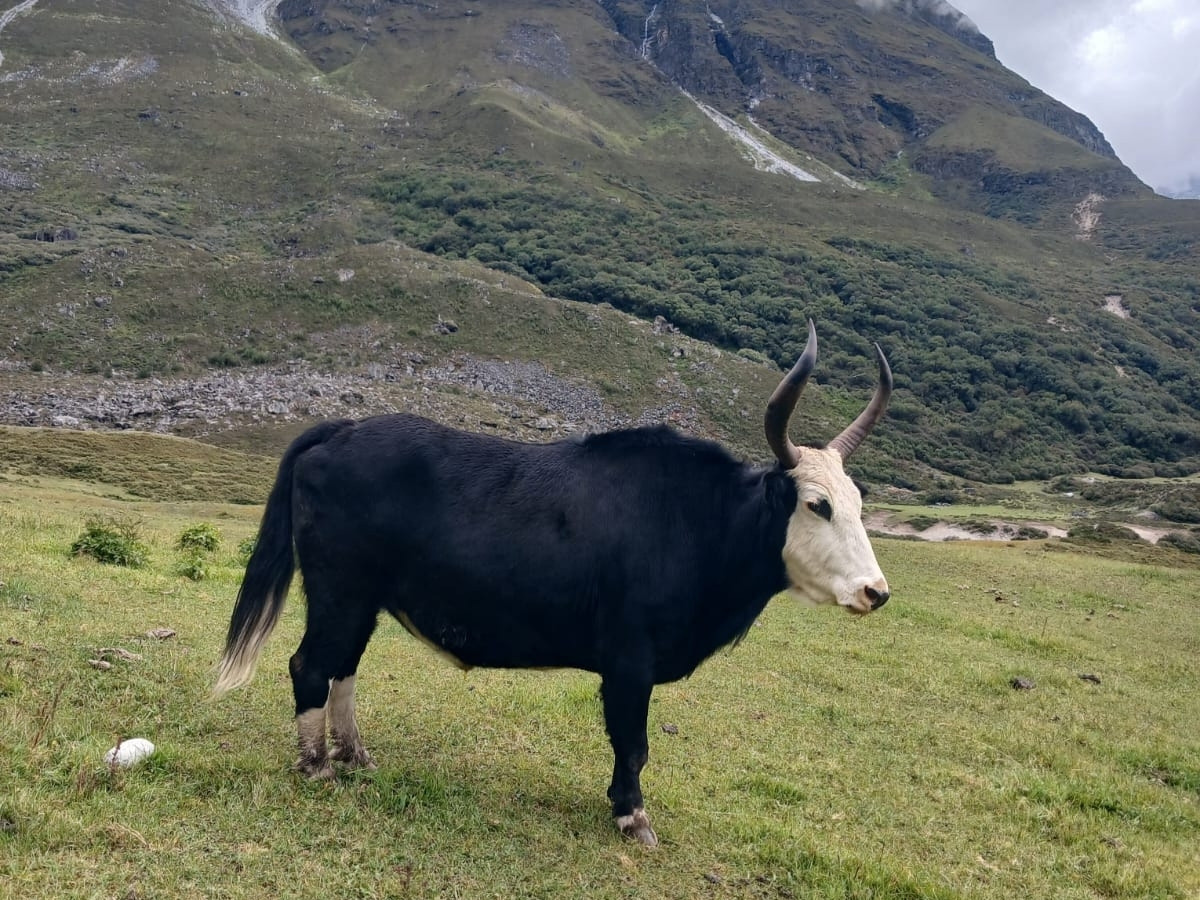
During the journey, the ox stopped in a lush pasture where it ate grass until fully satisfied. According to Tibetan legends, this point of the journey is considered very symbolic. The word "Lang" refers to an ox, while the word "Tang" refers to a full stomach. From this sacred act, the place became known as Langtang, by marking it as a land of abundance and peace.
The locals believed that the ox intentionally chose the valley because it realized the spiritual significance of the place. With this belief, Langtang Valley is widely respected as a blessed land, where nature blessed the land. This is the reason why, Langtang Valley is known as the hidden sanctuary, which gets revealed only when the time was right.
Kyanjin: The Ox Sacred Place of Rest and Relaxation
From Langtang, the ox continued onward to a place where it finally rested completely, by relaxing its body legs and soul. This place became known as Kyanjin, which means deep relaxation. The energy of peace which is felt here is believed to come from the ox’s spiritual presence, which still blesses the Langtang Valley Land today.
For travelers who are completing the Kyanjin Gompa Trek, this sense of calm feels unreal. Kyanjin Gompa is surrounded by towering peaks and glaciers, and it feels totally protected and sacred. Kyanjin Gompa later became the spiritual center of the valley, where rituals, meditation and festivals continue to connect people with the divine history of Langtang.
Lang Shisha: The Place Where Sacred Ox Decided to Took its Final Breath
final destination of the ox was Lang Shisha, where the Lang means ox and Shisha means died. According to the ancient belief, the ox sensed its time had come to the end and chose this highland as its final resting place. Locals here describe the sacred ox as the God Duth, a divine reincarnation sent to guide and protect the people.
Because of this event, Lang Shisha has become one of the most sacred places in the valley. The remaining mark of the ox and herder are still visible today on stones. This sacred ending is the why Langtang is honored as a hidden valley chosen by divine will. Over time, Lang Shisha has become a revered and sacred site, which symbolizes the deep spiritual connection between nature, faith and humanity.
How Kyanjin Gompa was Built? Foundation of Kyanjin Monastery by Mingyur Dorje ?
According to Kyanjin Gompa legends, around 600 years ago, a Tibetan lama named Mingyur Dorje arrived in Kyanjin seeking for peace and calmness. By recognizing the area’s spiritual significance, Mingyur Dorje established Kyanjin Monastery (Gompa) at the base of the Majestic Langtang Lirung Mountain. Inside of Kyanjin Gompa (Monastery), it includes sacred deities such as Guru Rinpoche (Padmasambhava), who is the founder of Tibetan Buddhism, and Green Tara, the goddess of compassion and the protection.
After the Kyanjin Monastery’s establishment, permanent settlements gradually started to form around it, as people were drawn to its spiritual influence. Over time, Kyanjin Gompa has become the religious and cultural center of the Langtang region, which serves as the spiritual heart of the Langtang Valley Trek Nepal and a place of pilgrimage, meditation and community gathering during festivals.
Dhukpa Chheju Festival on Kyanjin Gompa: Honoring Yak
One of the most important cultural events in Langtang is the Dhukpa Chheju Festival, which is celebrated annually in Kyanjin. During this week-long festival, yak is honored as sacred animal connected to the Langtang Valley origin and spiritual history. Each community here presents a specially chosen yak which is believed to carry divine energy, ancestral blessings and protection for the land and its people throughout the year.
The yak is decorated beautifully with clothes and offered butter, ghee and salt while monks perform prayers and sacred rituals. These rituals mainly include masked dances, traditional singing and offering prayers. Traditional games such as archery are also played, as this kind of activities strengthen the community unity while helping to preserve the rich spiritual and cultural traditions of the Langtang Region Trek.
Lang Shisha Mela: Festival to honor the Sacred Ox
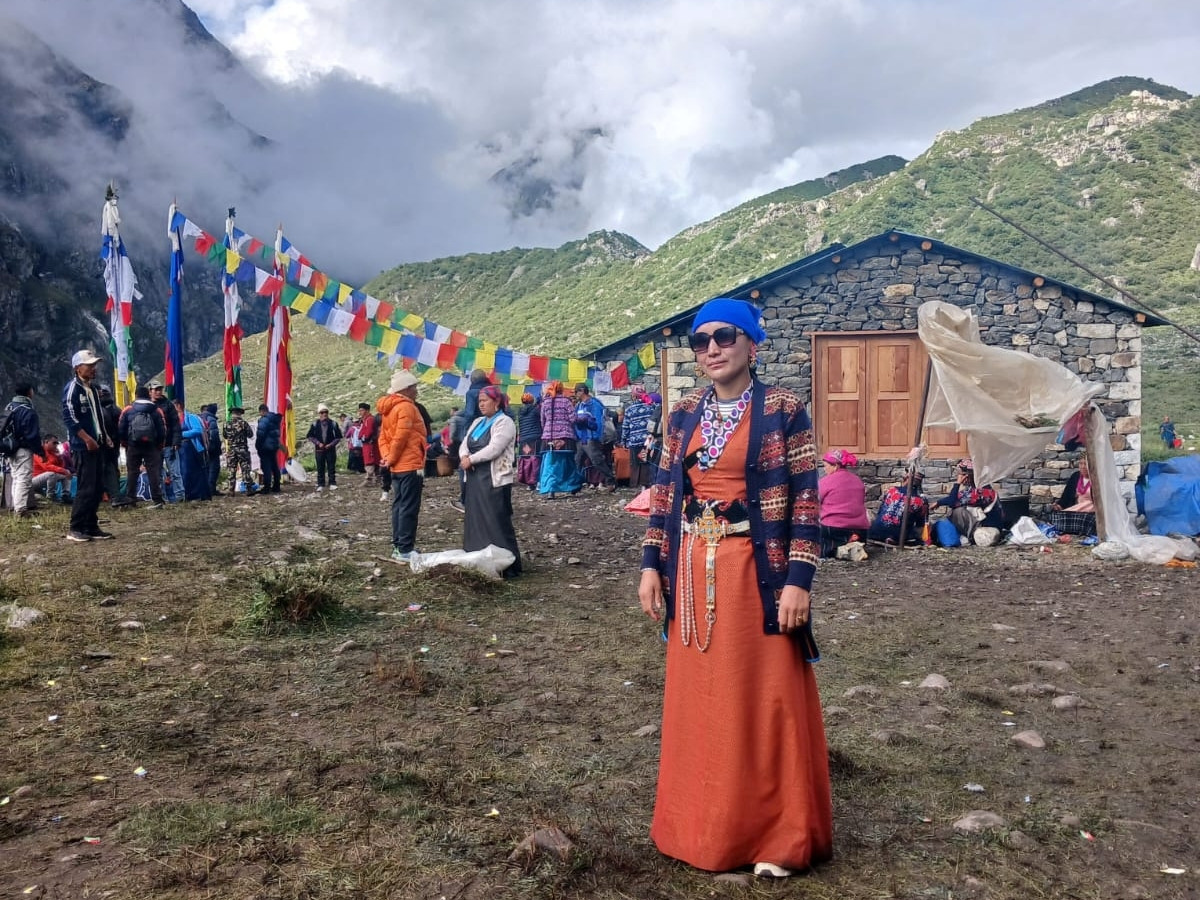
The Lang Shisha Mela, which is also known as the Lang Shisha Jatra is celebrated every year during the full moon of monsoon (Bhadra Purnima) and holds a deep spiritual importance in the Langtang region. Thousands of pilgrims from across the Langtang valley and neighboring areas gather here together to honor the sacred ox which was believed to reveal the Langtang Valley. Through devotional chants, ritual offerings, prayers and communal ceremonies, people express gratitude, faith and the reverence for divine presence which shaped the Langtang Valley Region Land.
The Lang Shisha Mela is done at different sacred locations each year. One year, the celebration takes place at Lang Shisha Kharka, which is the legendary site connected with the sacred ox. And the following year, it is held at the Meditation Cave of Padmasambhava (Guru Rinpoche), which is located near the lake visible from Kyanjin Ri. Lang Shisha Mela reinforces the belief that Langtang Valley Trekking Nepal is more than just a physical journey. Langtang Trek is a spiritual Himalayan pilgrimage that goes through a sacred landscape which has been shaped by sacrifice, devotion, and the divine guidance, making the Langtang region trek deeply meaningful for those travelers who walk in its paths.
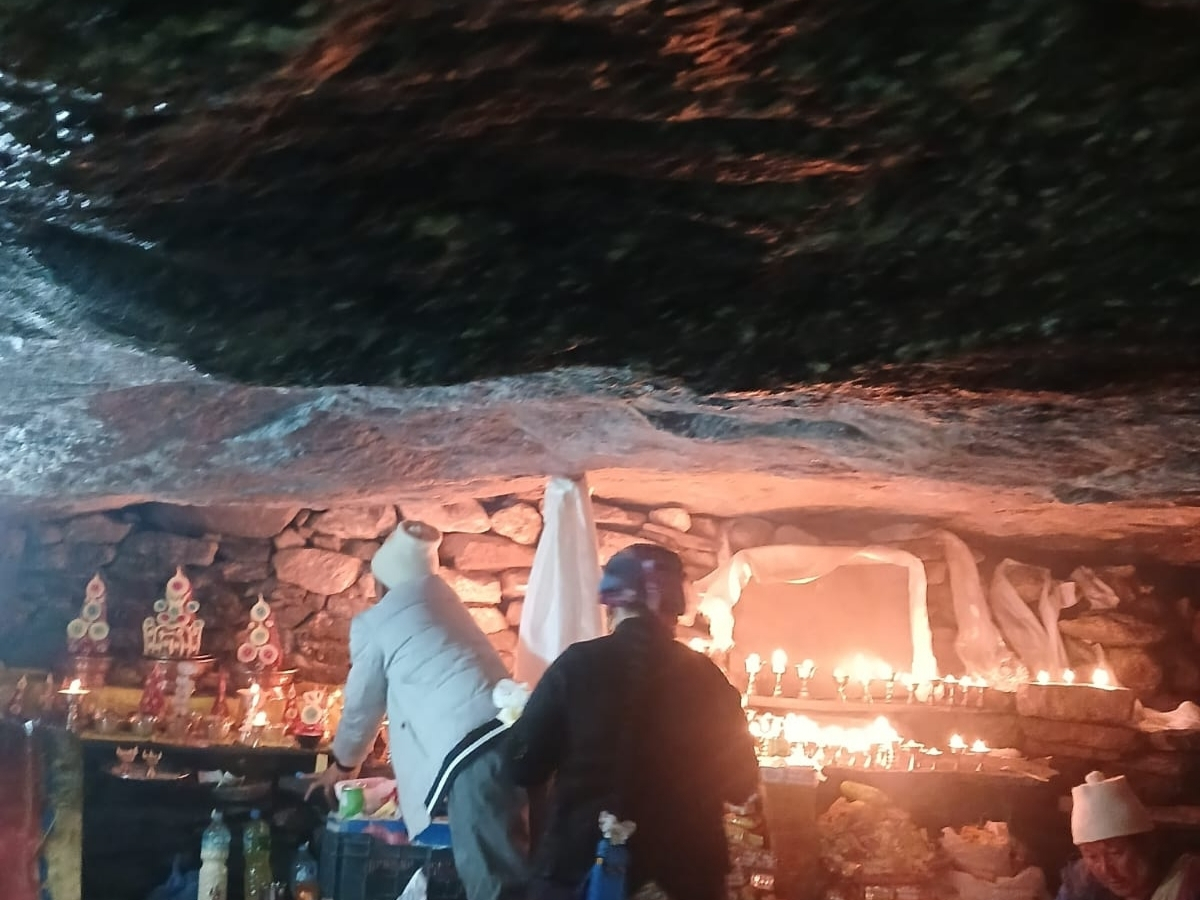
Meditation Caves of Guru Rinpoche Near Langtang Glacier
Beyond Kyanjin, near the Langtang Lirung Glacier, lies the sacred meditation cave of Guru Padmasambhava at a place known as Parna. One year, the Lang Shisha Mela is celebrated here, while in other years, it takes place at Lang Shisha Kharka. According to the ancient belief, Guru Rinpoche meditated in this cave, drawing spiritual power into the mountains, valleys and glaciers.
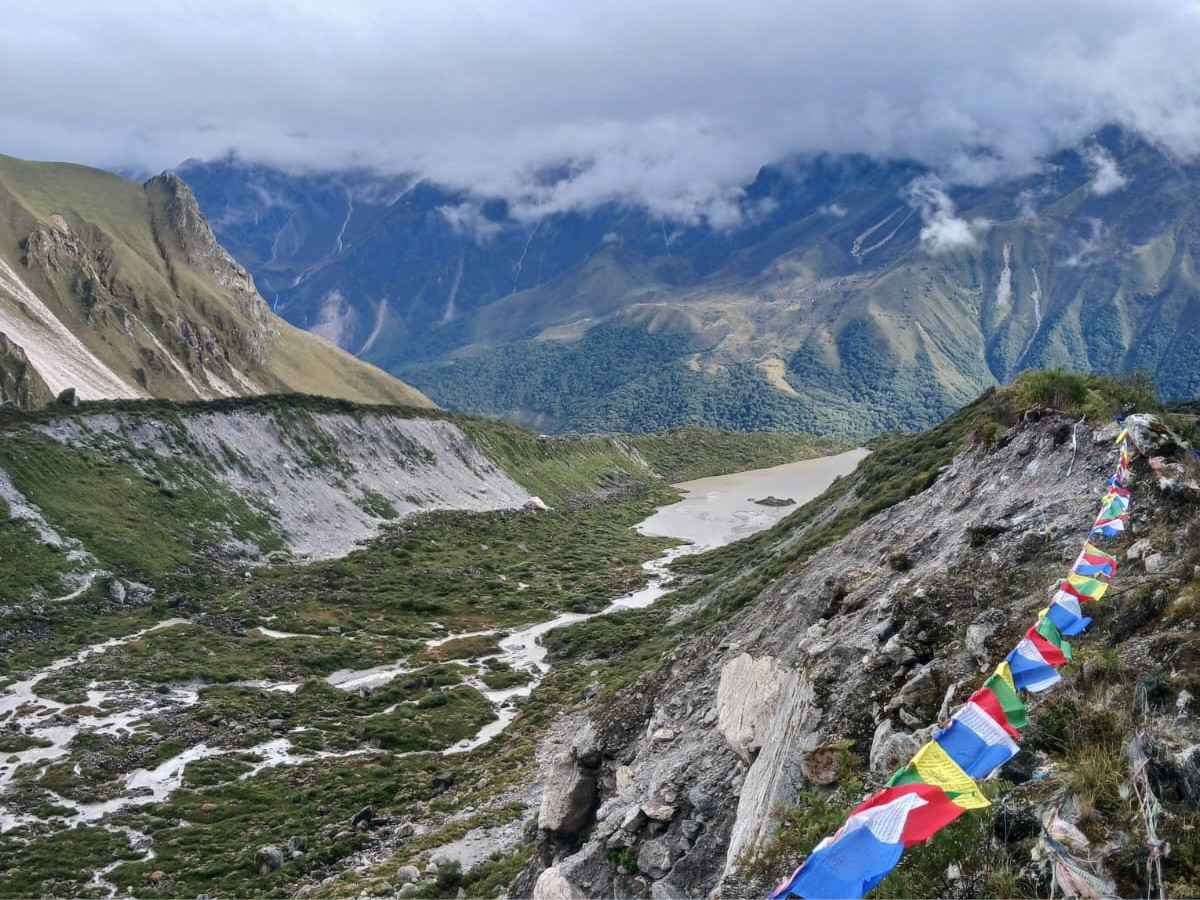
This cave can be reached in about 45 minutes from the glacial lake which is visible from the Kyanjin Village. People from across the district visit Parna for prayer and different rituals especially during festival times. People say that this meditation cave is one of the most spiritually important and powerful spots along the Langtang Valley Trekking route and gives trekkers a strong sense of peace, devotion and connection to the sacred landscape.
Langtang Valley Today: A living Story of Faith and Nature
Today walking through the Langtang Valley feels like moving through the living legend. The Tibetan legends of the sacred ox, the devoted herder and the Kyanjin Monastery founded by revered lama Mingyur Dorje remain alive in festivals, prayers, and daily life. Pilgrims and villagers still continue to honor these traditions through numerous rituals through offerings and the seasonal celebrations like Lhosar, Dhukpa Chheju Festival, Buddha Jayanti and Lang Shisha Mela. Each step throughout the Langtang Valley Panorama Trekking carries historical and spiritual value for trekkers, from the sacred sites of Kyanjin Gompa and Lang Shisha Kharka to the ancient meditation cave of Guru Padmasambhava at Parna. The scenery itself with glacial lakes, high pastures and towering peaks feels both sacred and holy with centuries old of devotion and divine presence.
For travelers, who are joining on Langtang Valley Trek Nepal Package offers more than spectacular mountain views. It also provides a chance to connect deeply and directly with local culture, while reflecting on ancient belief and experiencing how faith and nature coexist in harmony. Those travelers who finish the Langtang Valley Trekking journey, they return not only with the memories of breathtaking scenery but also with a greater understanding of why Langtang is a sacred, a place where history, spirituality and the natural world meet together in silent majesty.
Sacred Trails and Symbolic places along the Langtang Trek Route
Every step during the Langtang Valley Trek Itinerary includes a trail that has been shaped by ancient legends, memory and belief. Brithim, Lang Tasha, Ghoda Tabela, Langtang Village, Kyanjin, Lang Shisha, and many more are not any random places you travel, instead these are the sacred pauses along the journey of the ox and the herder. While Hiking in the Himalayas, trekkers unknowingly walk the same symbolic path, where prayers, blessings, and rituals have been offered for centuries.
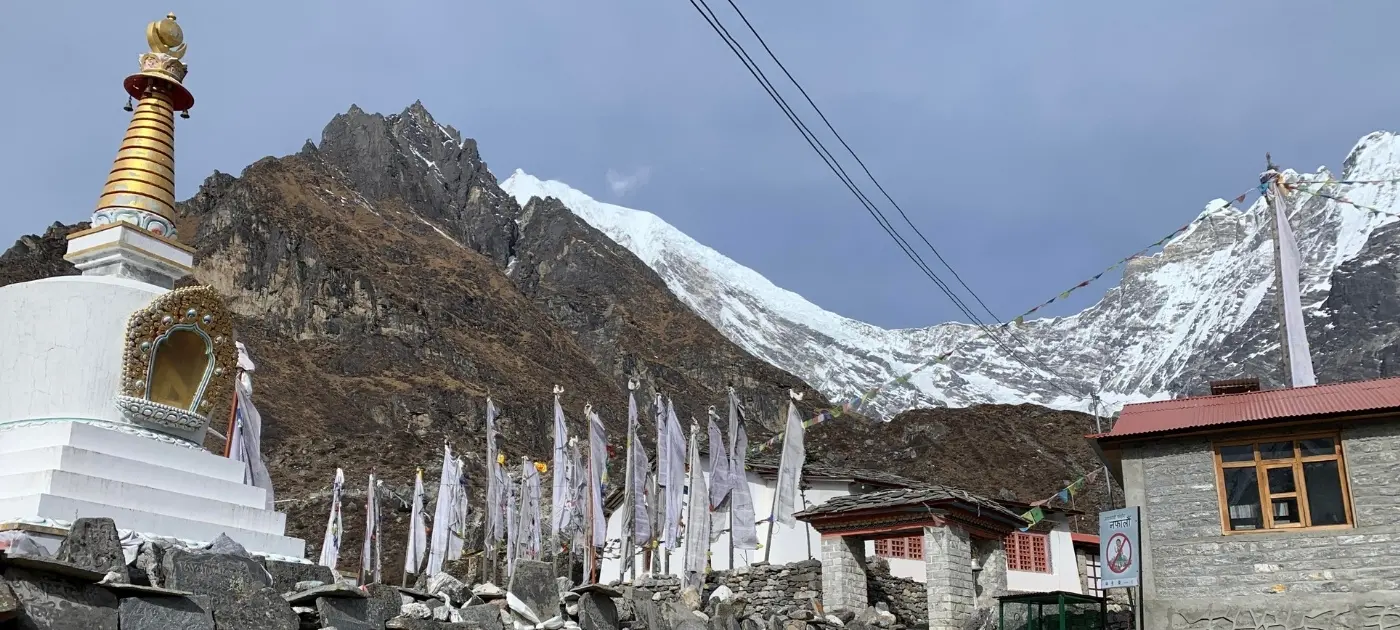
The trail to Kyanjin Gompa Trek and beyond contains many mani walls, fluttering prayer flags, and chortens, which marks the spiritual transitions more than distance. Each and every place on this Langtang Trek has deep roots in Tamang Heritage and Culture. Each location carries significant meaning which is tied with survival, rest, gratitude and farewell, deeply rooted in Tamang and Buddhist Heritage and Culture. This is what makes the Langtang trek more than a physical journey. Langtang Valley Trek is a pilgrimage through legend stories, ancient beliefs and the sacred geography that has been shaped by generations.
How legends Shape Modern Langtang Valley Panorama Trekking Experience
Legends still remain alive in the daily rhythm of the Langtang Valley Trekking experience. The guides narrate stories about the sacred ox, Mingyur Dorje, and Guru Rinpoche as trekkers rest at tea houses or pass through ancient landmarks. These stories influence how trekkers perceive altitude, weather and fatigue during Langtang Valley Trek, while turning physical effort into a meaningful spiritual journey.
For many, the stories and legends contribute to the emotional value of trekking through the Langtang Valley Panorama Trekking route. Knowing the stories about the history of the Langtang Valley contribute to the understanding and respect for monasteries, wildlife, and culture, especially around Kyanjin Monastery and Tserko Ri Viewpoint. As a result, the Langtang Valley Trekking Package becomes a once in a life time journey or an experience that has been shaped equally by legend and landscape, which leaves trekkers with cultural understanding alongside unforgettable mountain memories.
Final Words
At last, Langtang Valley is not just a trekking route, rather it is a legendary trail that has been filled with ancient myths and jaw dropping Himalayan landscapes. From legend stories of the sacred ox that revealed this hidden valley to the spiritually enriching 600-year-old Kyanjin Gompa monastery (Kyanjin Gompa) and the peaceful settlements throughout the trail, the Langtang Valley Panorama Trek blends myth, Tamang culture and heritage, and awe-inspiring mountain scenery in a single meaningful journey.
At Mount Face Nepal, we turn this legendary trail into a carefully planned and crafted once in a lifetime experience. With experienced local guides, comfortable Langtang Valley Trek accommodation, personalized trekking packages, and budget friendly options, we Mount Face Nepal ensures your Langtang Panorama Trekking journey remains smooth, safe and deeply rewarding from beginning of the journey. From planning to journey’s completion, we help you in every step on the sacred paths of the Langtang Region Trek, carrying home beautiful memories, clarity and stories that will stay with you forever.