Everest Base Camp Trek 2026/2027 | 14 Days Itinerary, Cost, Map & Package – Mount Face Nepal

tripadvisor141 reviews
google20 reviews
Everest Base Camp Trek
EBC-Trek-Mount-Face-Nepal
Everest Base Camp Trek

Either you are hiking without guide, joining the group or buying an all-inclusive Everest Base camp trek package, the Everest trail offers stunning views, fairy-tale terrain, and a typical tase of high mountain life. 

  • Duration 14 Days
  • Trip Grade Strenuous

    The strenuous grade is both moderate and difficult. Even in this grade, treks reach around 5000-5500 meters. You walk generally 6-7 hours every day. Strenuous treks require good physical condition and acclimatization. if some problems appear, you have to walk down and take some hot drinks or soup. You may get affected fast if you have high blood pressure, asthma, heart disease or complicated medical conditions.

  • Country Nepal
  • Maximum Altitude 5545m
  • Group Size 2+
  • Starts Kathmandu
  • Ends Kathmandu
  • Activities Trekking
  • Best Time Autumn & Spring

Overview - Everest Base Camp Trek: Nepal's Most Iconic Himalayan Journey

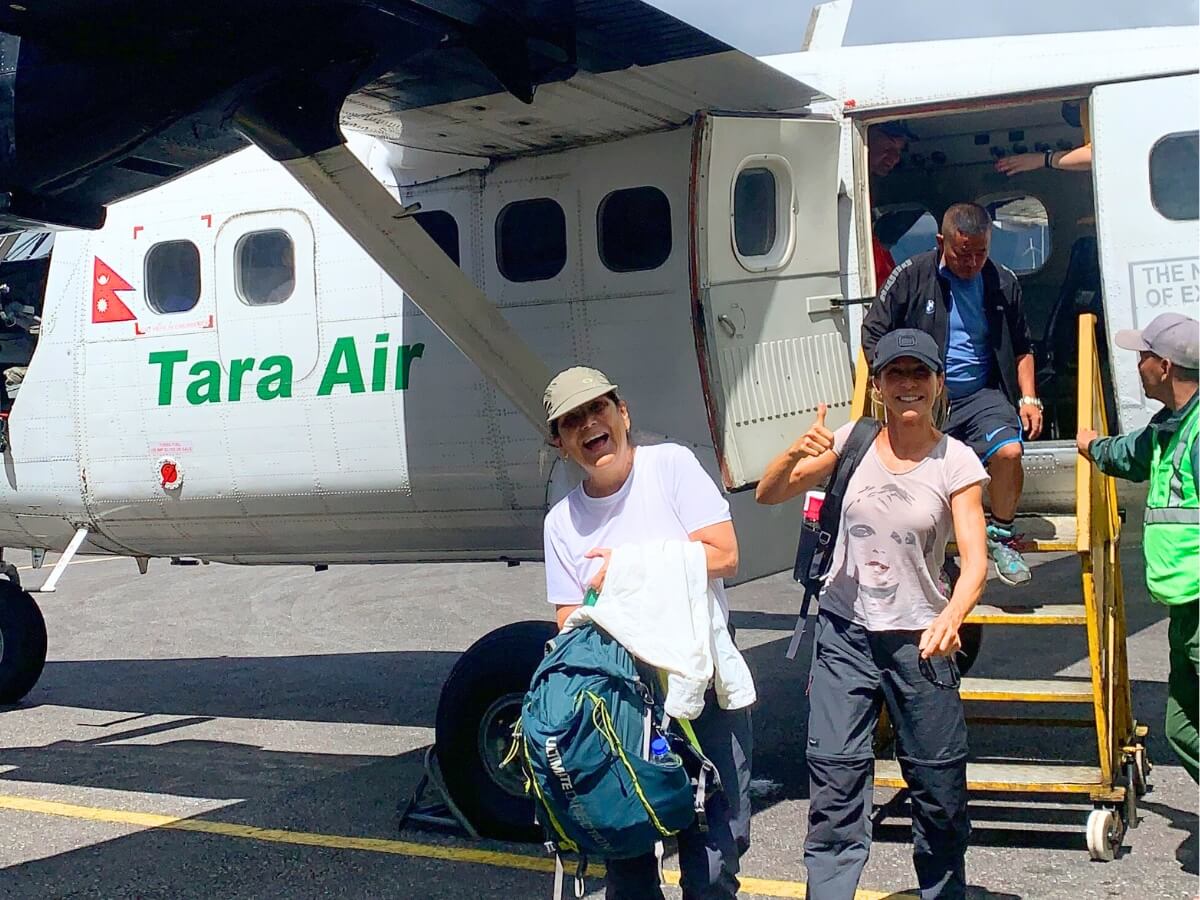
Whether you are joining a guided group or booking all-inclusive packages of Everest Base Camp Trek package, the classic EBC offers you breathtaking and panoramic mountain views while taking you through fairy-tale terrain and providing an authentic glimpse into the high-altitude Sherpa life. The journey begins in Kathmandu with a scenic 30-minute flight to Tenzing-Hillary Airport in Lukla, passing over lush green valleys and dramatic ridgelines before the trail opens into the legendary Khumbu Valley. Trekkers pass through famous landmarks such as Namche Bazar, Tengboche, and Gorakshep, navigating high altitude trails, rocky terrain and glacial landscapes.

The Everest Base Camp Trek is not technically difficult; however,the high-altitude environment makes proper acclimatization and physical preparation very important. Two acclimatization days, one at Namche Bazaar and another at Dingboche, help the body gradually adjust to higher elevations before reaching Everest Base Camp. The optional hike to Kala Patthar at 5,545 meters provides one of the most spectacular and photographed views of Mount Everest, attracting thousands of trekkers every year. Following the “trek high and sleep low” approach can supports proper acclimatization and help to reduce the risk of altitude sickness during Everest Base Camp Trek.  

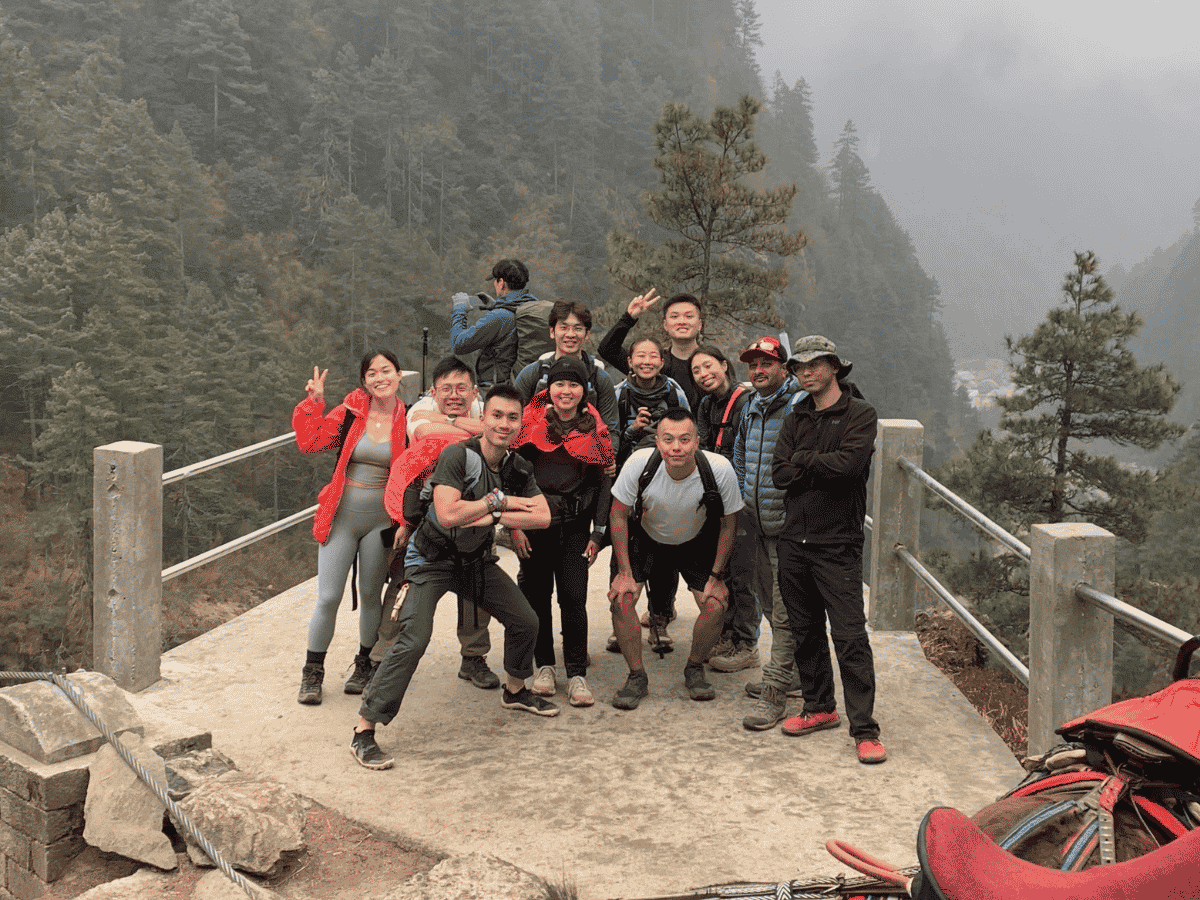
Mount Face Nepal has been guiding trekkers on Everest Base Camp Trek since 2010, with experienced,licensed guides and small group departures. Our Everest Base Camp Trek package includes permits, airport transfers, teahouse accommodation, meals during the trek, and a farewell dinner in Kathmandu, making the journey comfortable and well organized.

If you are seeking for a safe and memorable Everest trekking experience, our Everest Base Camp Trek package provides an excellent opportunity to explore the Khumbu region with proper planning, experienced guides and personalized services. Join us for your Everest Trek 2026 or 207 and experience one of the world's most iconic himalayan adventures.

Highlight of Everest Base Camp Trek

  • Scenic flight to Tenzing-Hillary Airport (Lukla) located at an altitude of 2846m. 
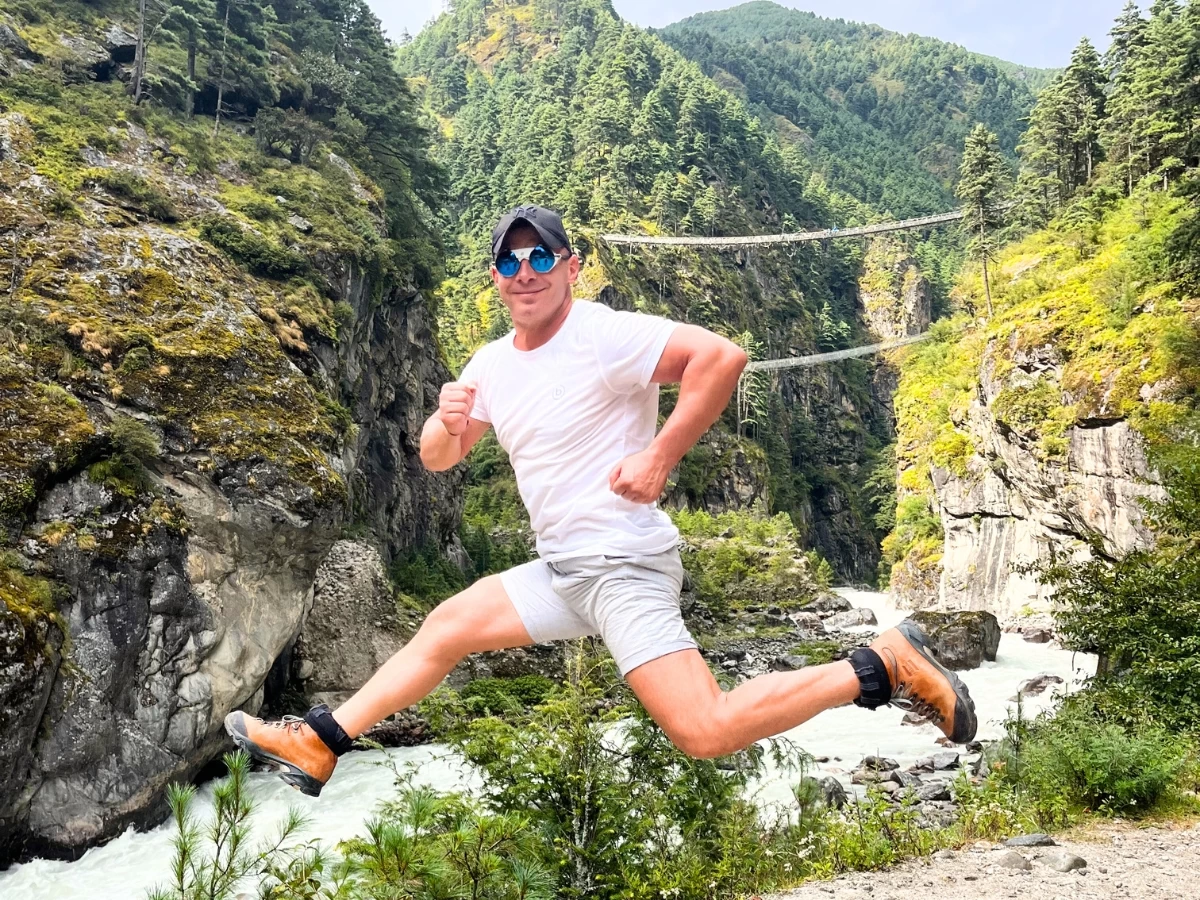
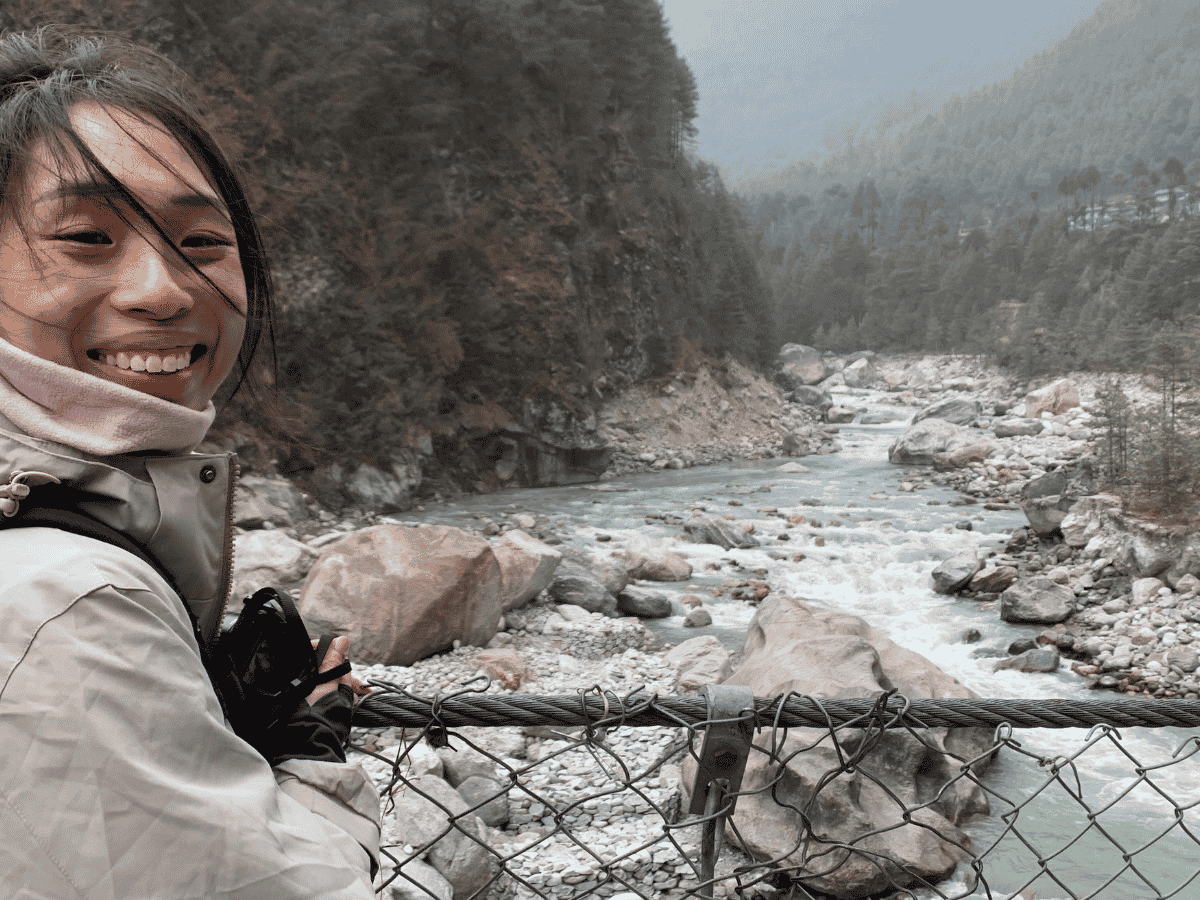
  • Thrilling crossing of Hillary Bridge overlooking the beautiful Dudhkoshi River Valley
  • Namchebazar: The vibrant gateway to the Khumbu Valley
  • Syangboche Airport located at an altitude 3780m
  • Hotel Everest view: Highest hotel in the world, 3880m
  • Get chance to experience authentic Sherpa villages, warm locals, and their rich mountain culture
  • Sagarmatha Next Project: Support for project, working to keep Everest clean and sustainable
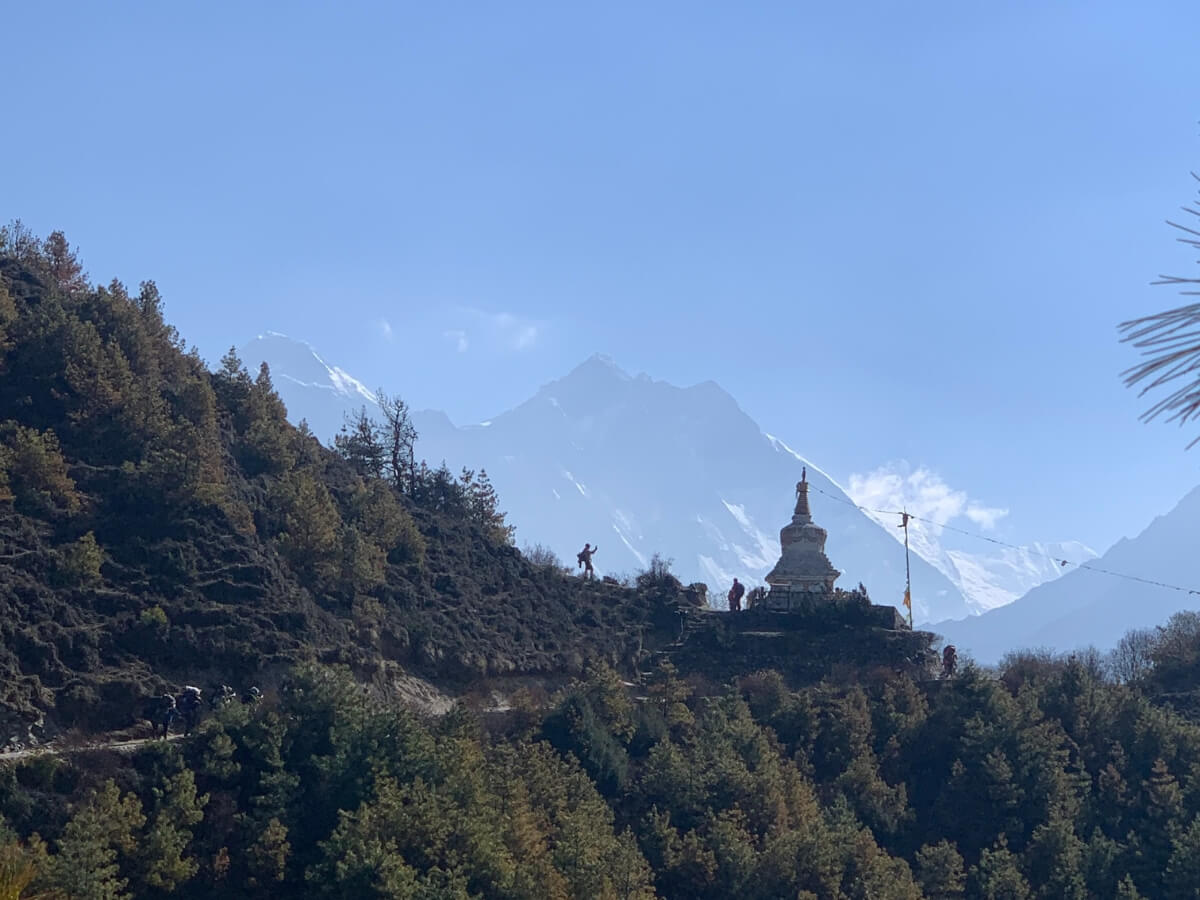
  • Tengboche Monastery: The largest, ancient and most sacred monastery in Khumbu Valley, spiritually connected to Rongbuk Monastery in Tibet. 
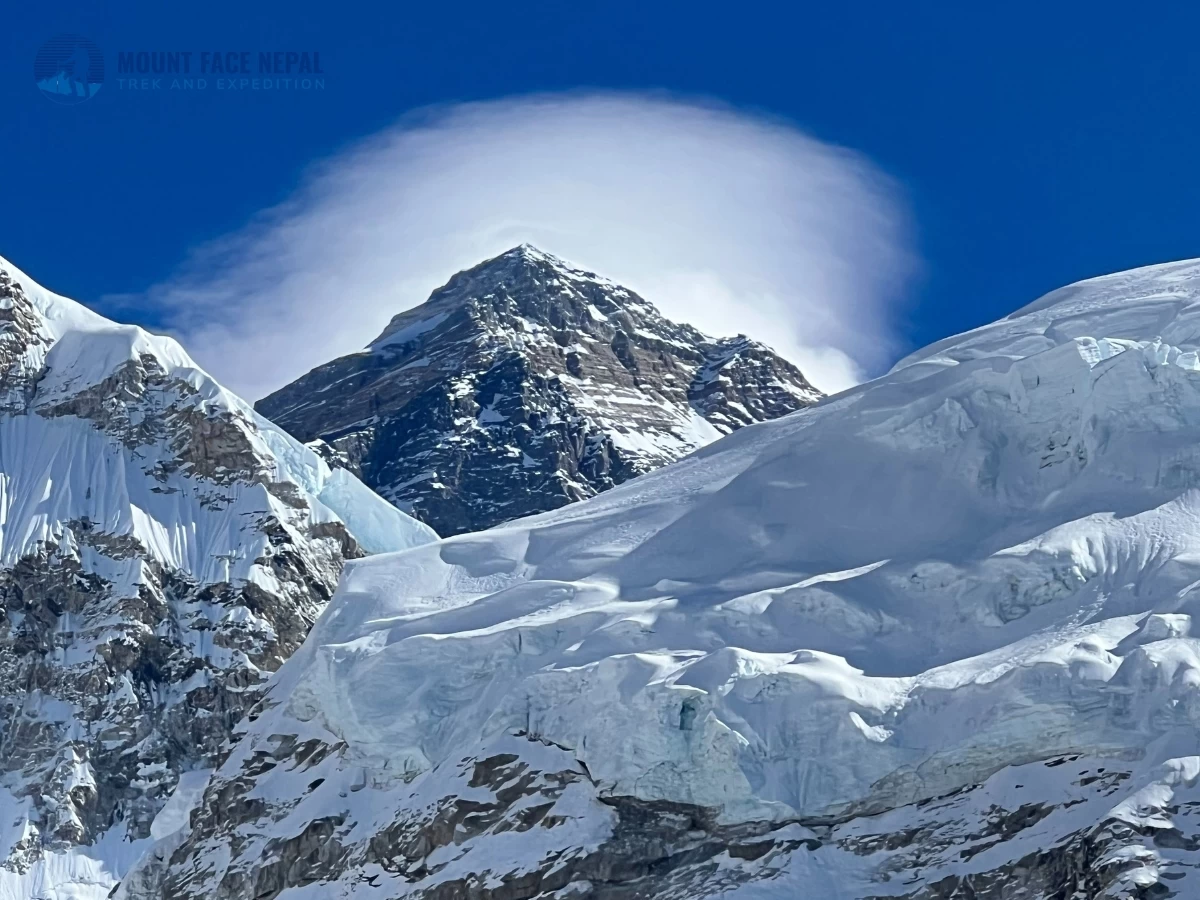
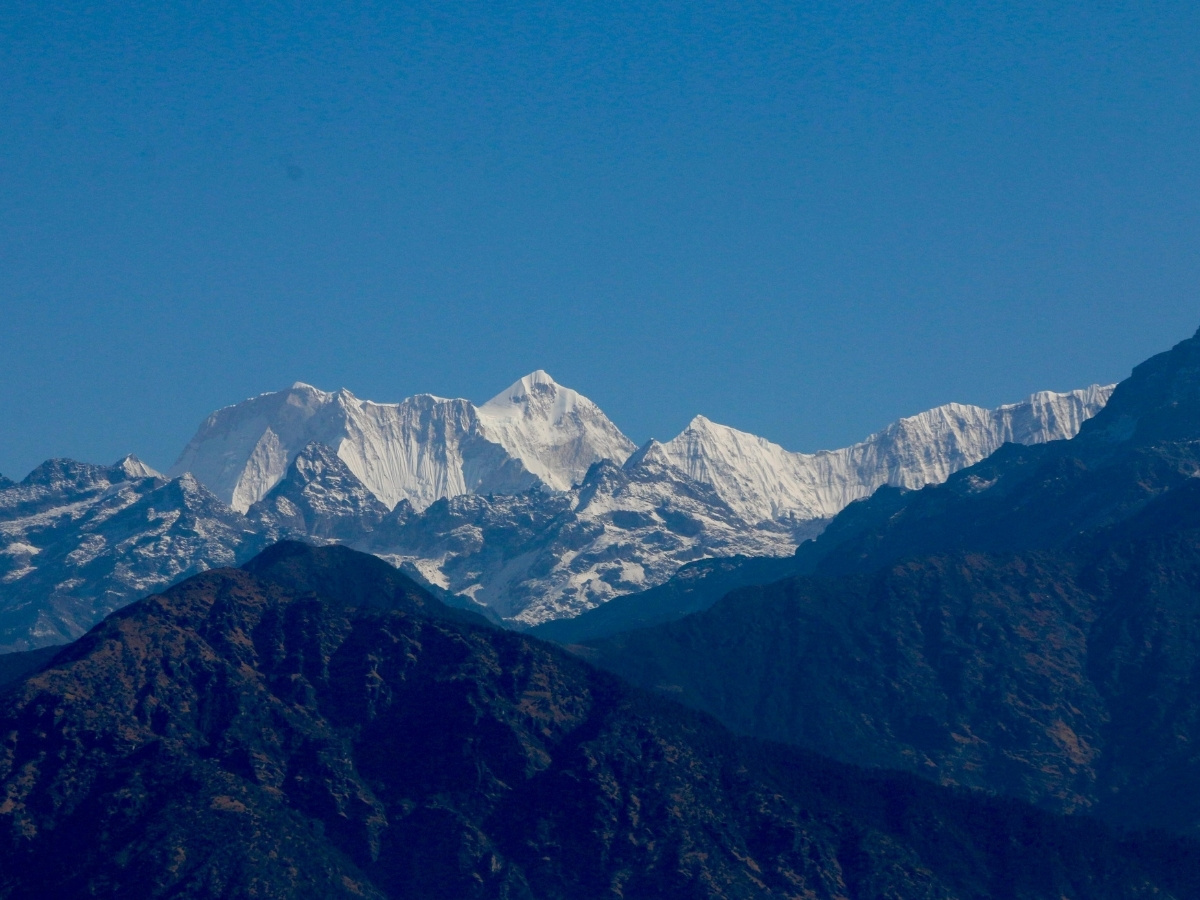
  • Magical and close-up views of the magnificent and world's highest mountain, Mount Everest (8,848.86 m). 
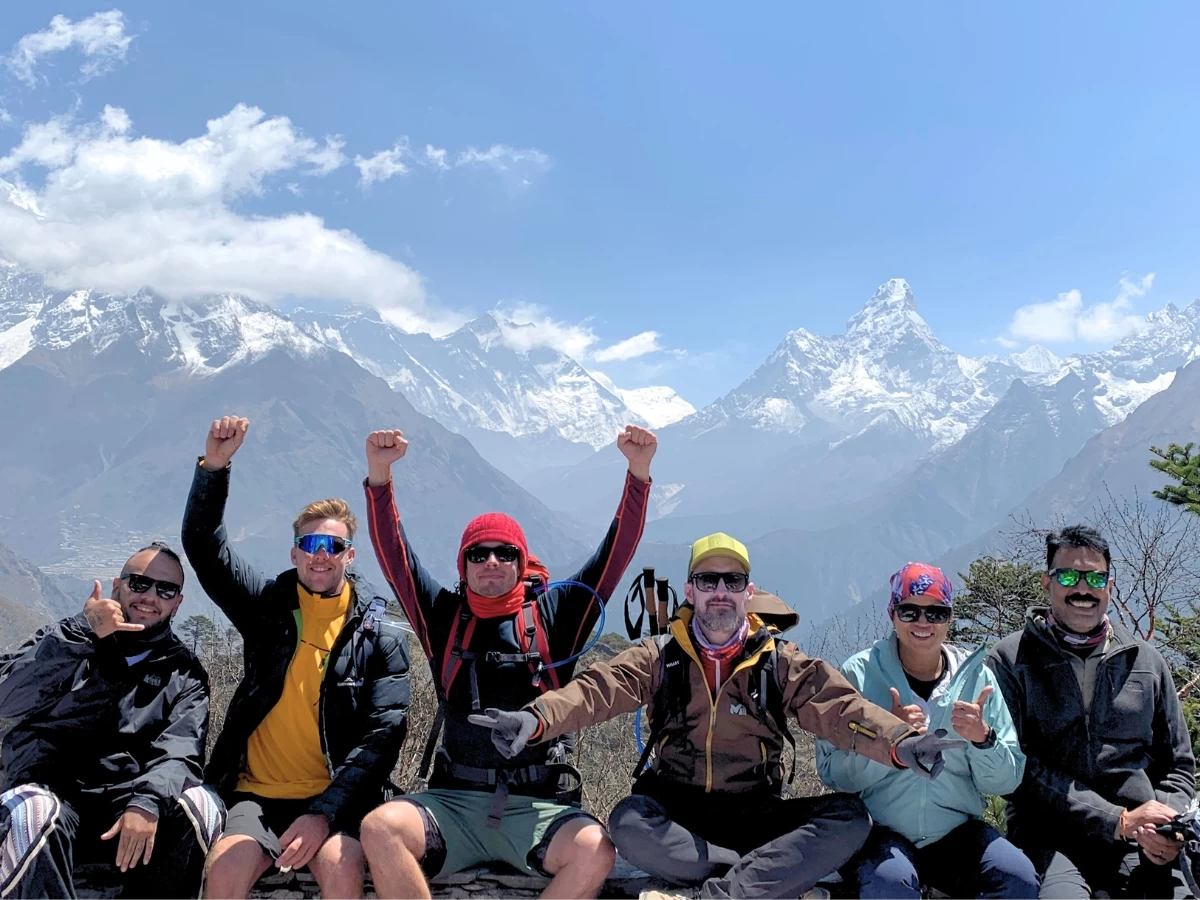
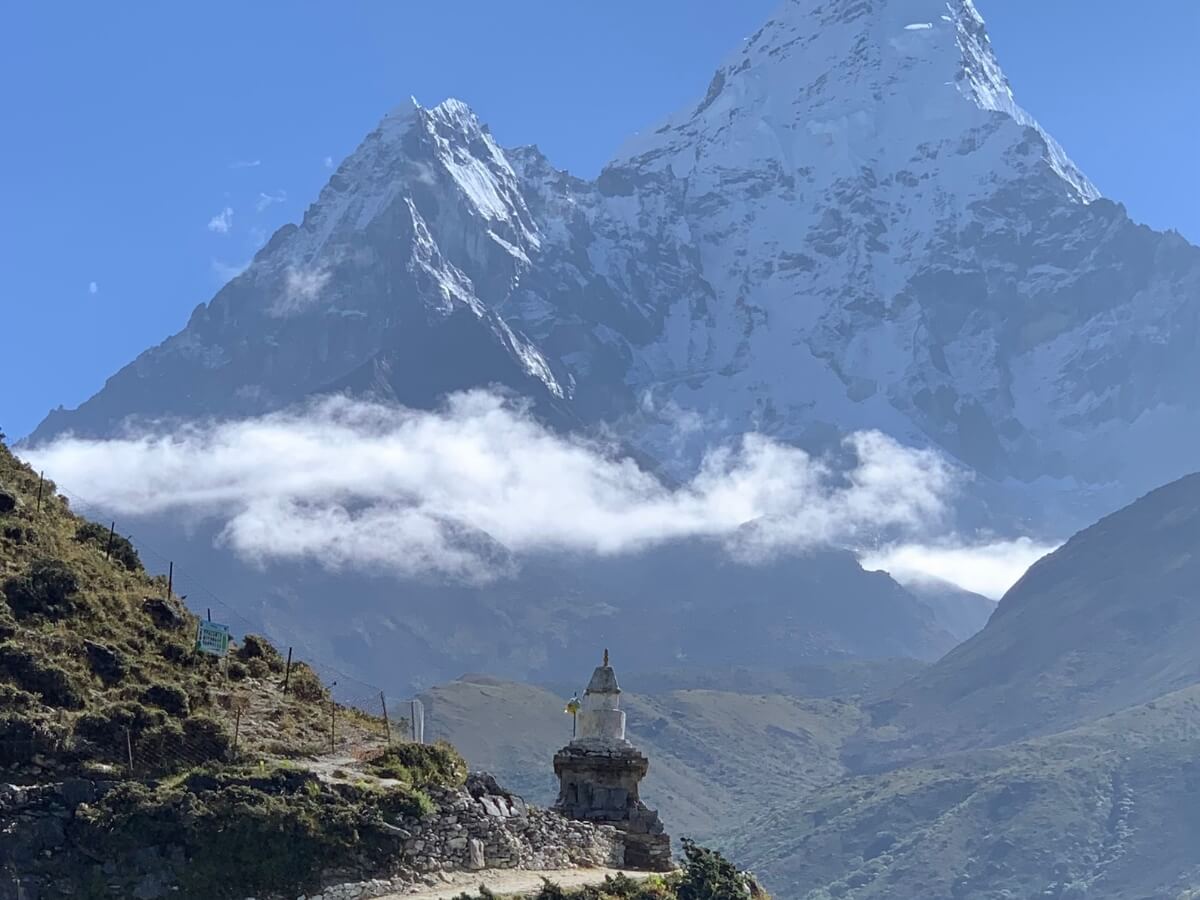
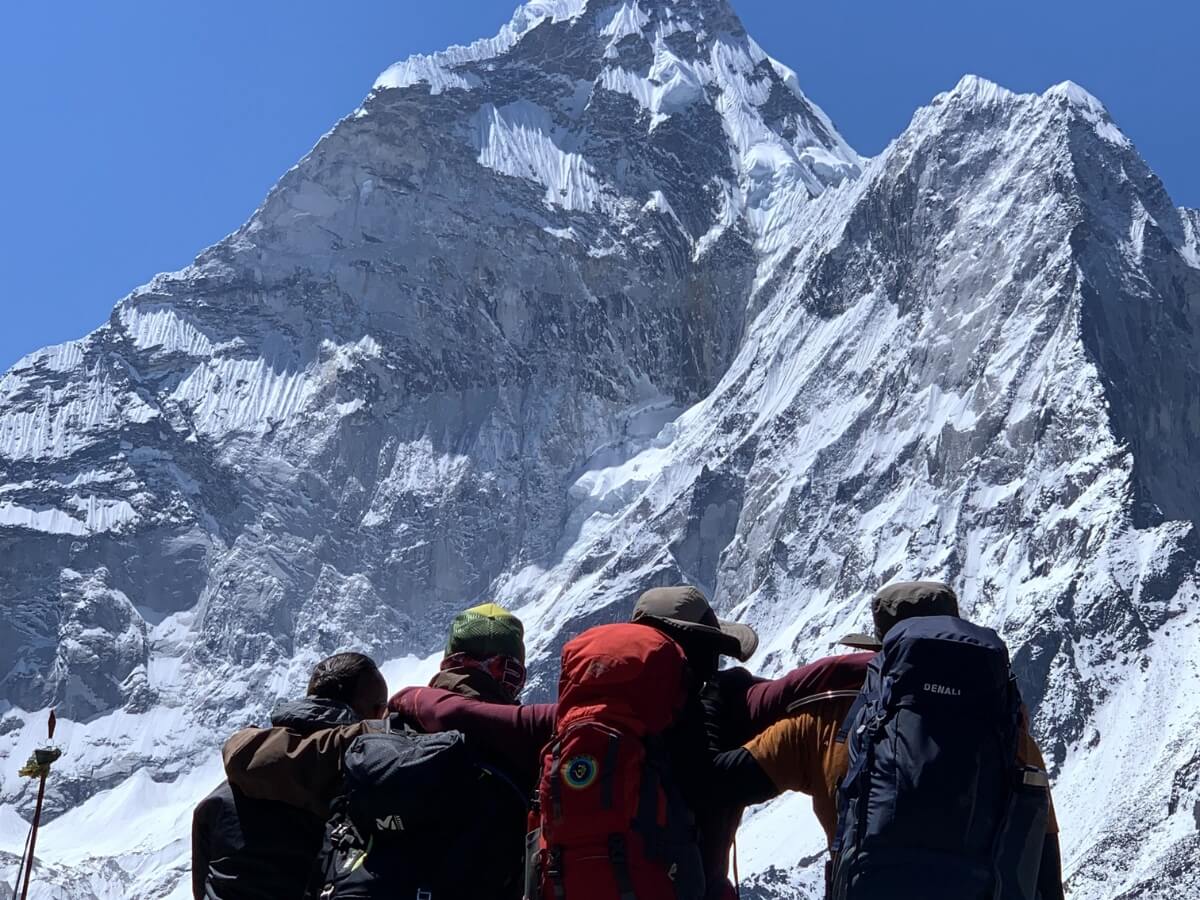
  • Outstanding and Panoramic views of Mt.Makalu, Lhotse ,Mt.Everest, Mt.Choyo, Mt.Amadablam and more. 
  • Khumbu Glacier, one of the highest glaciers in the world spanning around 17 KM. 
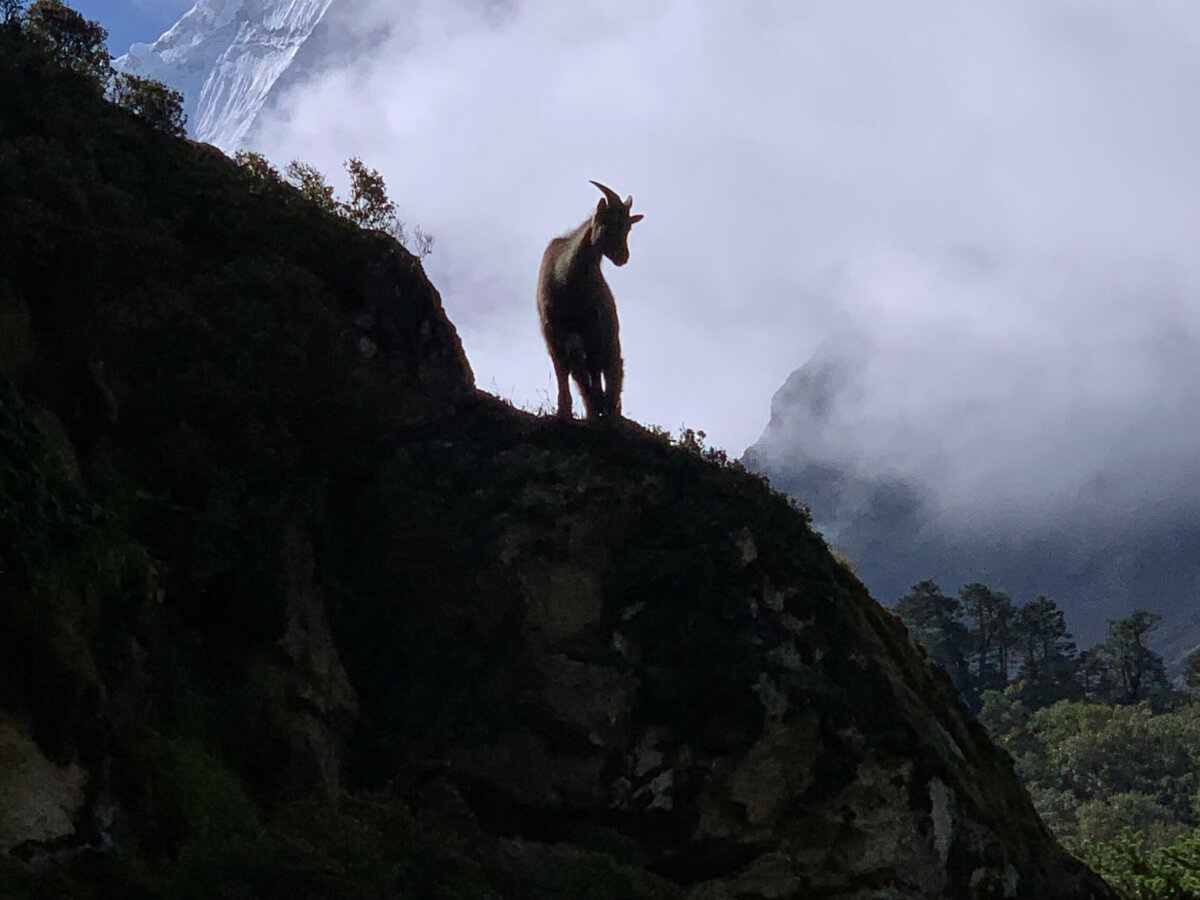
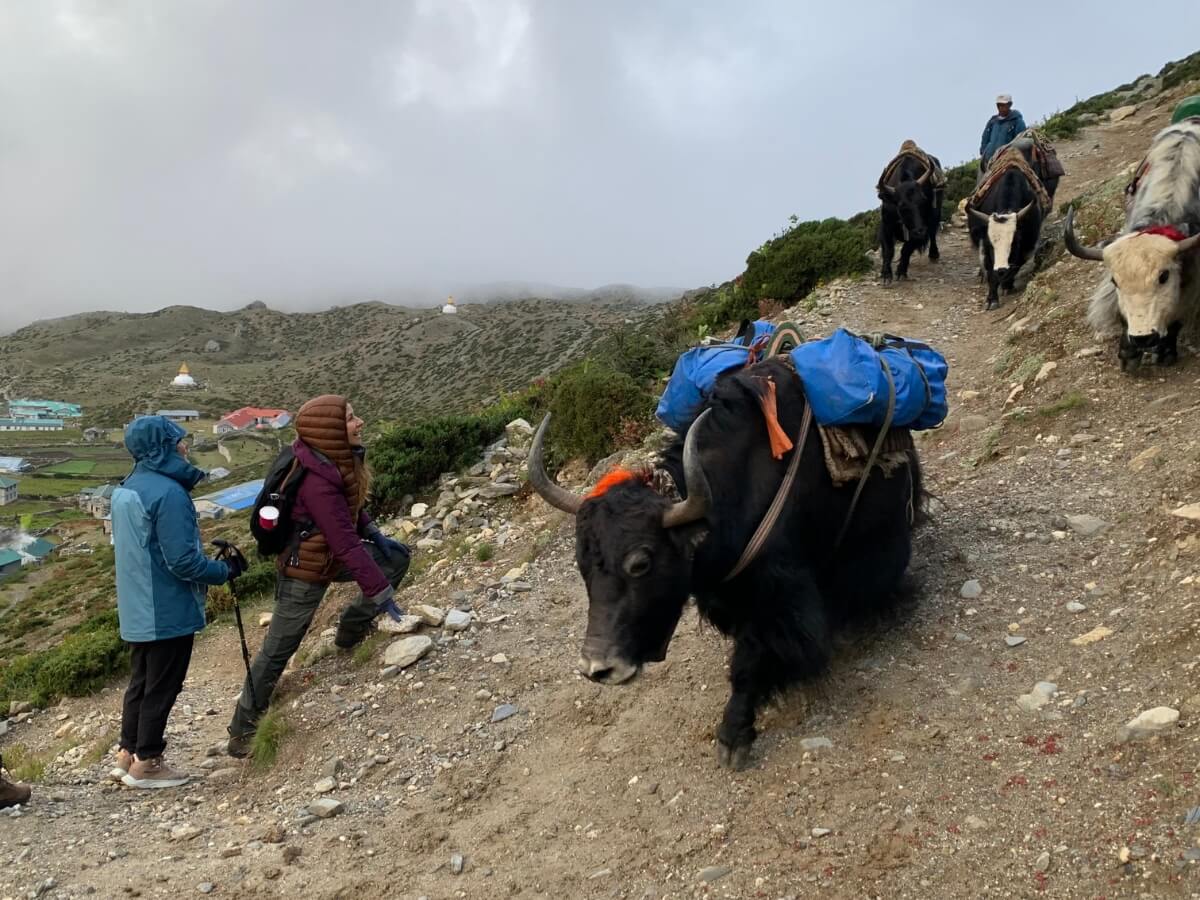
  • Chances to spot Himalayan wildlife including musk deer, Himalayan tahr, yaks, snow leopards, and colorful pheasants
  • Beautiful forests of rhododendron, hemlock, juniper, Himalayan birch, and many colorful alpine flowers
  • Sherpa Cultural Museum in Namche Bazaar
  • Panoramic mountain views from Kala Patthar at 5,545m
  • Picturesque village of Pheriche en route to Everest Base Camp

Why Choose Mount Face Nepal for Everest Base Camp Trek?

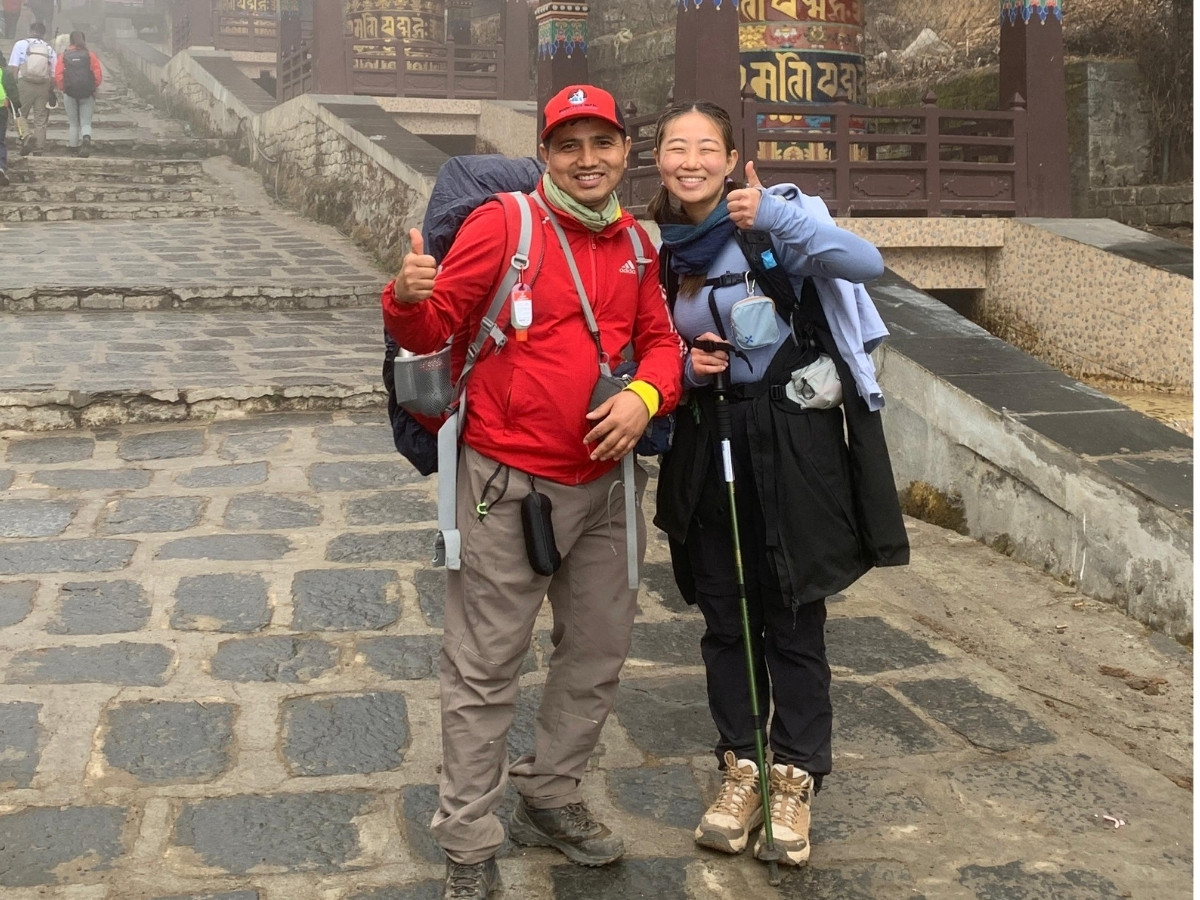
Choosing the right company is one of the most important decisive parts for a successful Everest Base Camp Trek journey. And, we Mount Face Nepal really focuses on providing safety, reliability and a truly memorable experience for trekkers from beginning to end. Our Everest region Trek guides are government licensed, experienced and highly knowledgeable professionals who have spent many years as leading trekkers through the different regions of Himalayan trekking Nepal. They not only guide you safely along the trail but also shares local culture, traditions and valuable mountain knowledge throughout the journey.

During the Everest Base Camp Trek Nepal, our guides carefully monitor your health, advises on proper food, hydration and trekking pace, while also helping you choose the right gear for higher elevations. From the moment you book your Everest Base Camp Trek Package, our Mount Face Nepal team handles every tiny detail including permits, domestic flights, accommodations, transportation, meals and all other trekking logistics, allowing you to fully enjoy your Trek to Everest Base Camp without unnecessary stress. With our excellent value for money package, countless satisfied trekkers and a genuine commitment to client satisfaction, we Mount Face Nepal has become a trusted and highly recommended partner in Nepal for anyone who are planning this unforgettable and once in a lifetime Everest Base Camp Trek.

How Difficult Is the Everest Base Camp Trek?

The Everest Base Camp Trek difficulty is considered as moderate to challenging which rates around 7 out of 10 due to its high altitude environment and long hour trekking days. This Everest Base Camp Trek route covers around 130 kilometers round trip where trekkers walk for about 5to 7hours daily across the steep trails, rocky sections and an uneven terrain. Reaching Everest Base Camp at 5,364 meters and Kala Patthar at 5,545 meters makes the high altitude trekking Nepal experience physically demanding, although no technical climbing skills, ropes or mountaineering equipment are required.

Altitude sickness risk is one of the major concerns during Everest trekking difficulty as thin air, cold temperatures and strong winds becomes more noticeable above Dingboche and Gorak Shep. Proper acclimatization days at Namche Bazaar and Dingboche helps the body to adjust before continuing towards higher elevations. The steep climb to Kala Patthar and the rocky trail between Gorak Shep and base camp are one of the most difficult sections where trekkers need to be very careful. However, even first time trekkers with good fitness level who can walk six hours daily on hilly terrain and help from an experienced guide can successfully complete this rewarding journey.

Altitude Sickness during the Everest Base Camp Trek?

Altitude sickness is one of the key challenges encountered by trekkers during the Everest Base Camp Trek. Since the journey reaches up to 5,545m meters above sea level, some trekkers may experience normal symptoms to Acute Mountain Sickness. In many cases, symptoms such as headache, nausea, dizziness, and fatigue can occur from altitude of around 3000m. Therefore, proper acclimatization and careful monitoring from your guide becomes very important. 

To reduce such risks of AMS and other altitude related problems on your Everest Base Camp Trek journey, we Mount Face Nepal carefully follows a designated Everest Base Camp Itinerary with proper and extra acclimatization days at Namche Bazaar and Dingboche. Along with these acclimatization stops, we also recommend some important measures which are listed below to prevent altitude sickness during Everest Base Camp 2026/2027. 

  • Stay hydrated throughout the trek. 
  • Avoid alchol and smoking as it can increase the risk of altitude sickness. 
  • Slower is winner in the mountain – gradual pace really gives your body enough time to adjust with the thin air.
  • Better to limit coffee consumption as it may affect your sleeping pattern at higher elevations. 
  • Additionally, consult with your doctor regarding your altitude medication before the trek. 

Our licensed and well experienced mountain guides will carefully monitor your daily health condition and observe any changes caused by increasing altitude. They will provide necessary advice and support in case of any altitude related issues during the trek. Health and safety are always important than reaching the desitantion. Choosing the right trekking company like us with experienced guides and porter altitude management plan really can make your Everest Base Camp Trek a safe, successful and memorable lifetime adventure. For Comprehensive guide for altitude sickness , please visit our Blog Comprehensive Guide to Altitude Sickness.

Everest Base Camp Trek Permits: Types, Cost & How to Get Them

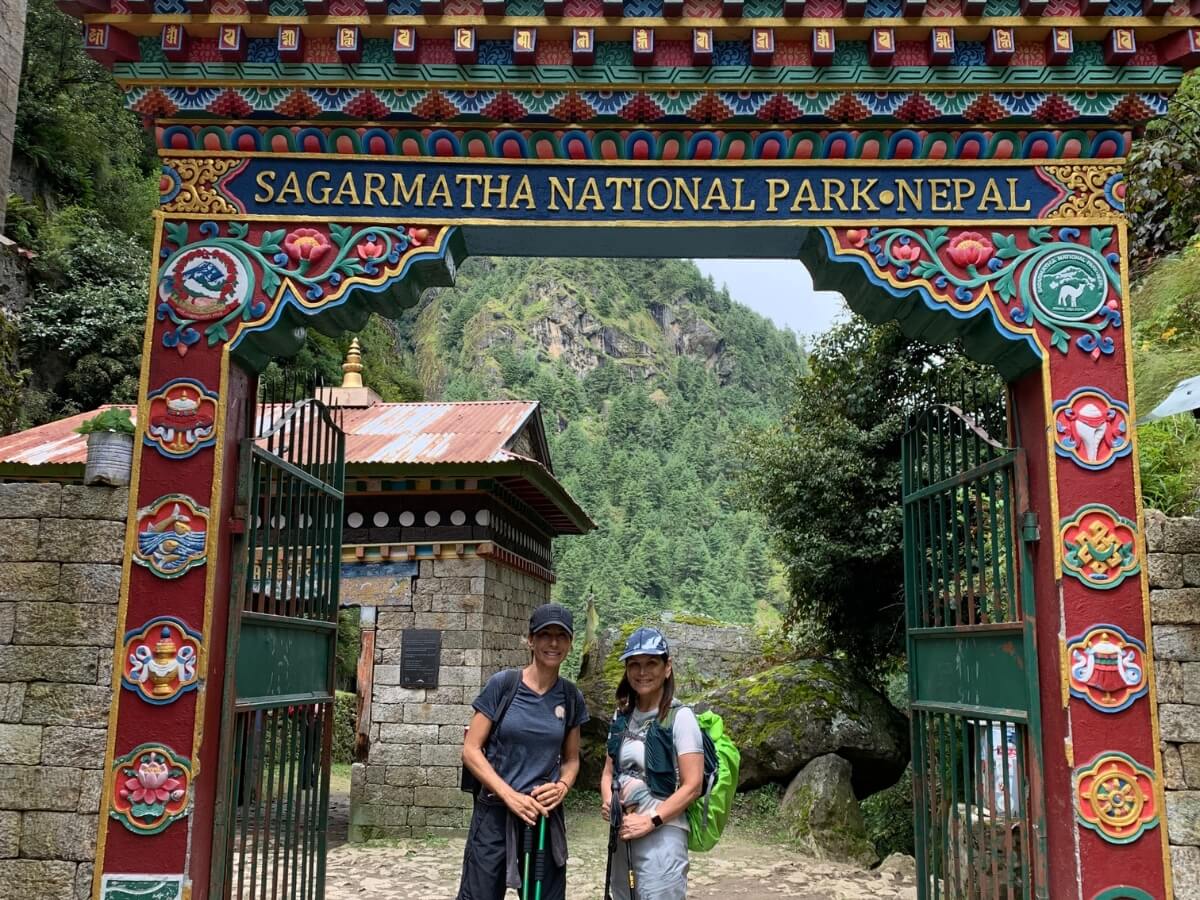
Obtaining the trekking permits for the Everest Base Camp Trek is mandatory. Trekkers must obtain two major permits which includes the Khumbu Pasang Lhamu Rural Municipality Permit and the Sagarmatha National Park Entry Permit for trekking in the Everest region. These permits are required for all trekkers entering the Khumbu region. These permit cost helps to support local communities, conservation efforts and trekking management. 

Both the municipality permit and national park permit can be obtained at Lukla or Monjo. A valid passport is required while issuing these permits. At present, the Khumbu Pasang Lhamu Rural Municipality also issues a Trek Card with a QR code and digital chip which helps authorities to monitor trekkers and improve safety during the Everest Base Camp Trek. The permit cost for Sagarmatha National Park Entry Permit is NPR 3,000 for foriegners and NPR 1,500 for SAARC nationals per person. And, cost for Khumbu Pasang Lhamu Rural Municipality Entry Permit is NPR, 2000 per person. 

TIMS card is currently not mendatory for the Everest Base Camp Trek according to the latest regulations.

Note: If you are trekking Everest trekking via long route through Jiri, an additional Gaurishankar Conservation Area Permit is also required.

Everest Base Camp Trek Cost 2026 — Complete Price Breakdown

The Everest Base Camp Trek Cost 2026 starts from USD 1,150 per person for a standard package, while a luxury Everest Base Camp Trek Package can cost up to USD 1,700 per person depending upon accommodation, group size and additional services. The package cost generally includes Kathmandu–Lukla round trip flights, Sagarmatha National Park Permit, Khumbu Rural Municipality Permit, certified English speaking guide and porter services during the Everest Base Camp Trek.

Most of the Everest Base Camp Trek Package 2026 includes teahouse accommodation for 12 to 14 nights, three meals daily, duffle bag, all government taxes and required trekking arrangements. Luxury packages may also include upgraded lodges and additional comfort services during Everest Trek Nepal. With all of the required logistics, permits, flights, logistics and experienced staffs included, Our Mount Face Nepal Everest Base Camp Trek Package Cost provides excellent value for trekkers with a safe and memorable Himalayan adventure.

Cost of Everest Base Camp Trek for Indians in INR

The cost of Everest Base Camp for indians in 2026 and 2027 depends upon the type of package and types of services chosen by trekkers. The cost for guided Everest Base Camp Trek Package for indian nationals is generally lower when compared to other foreign nationals because of discounted flight fares and permit fees available for indian citizens. 

The domestic flight and permit for Sagarmatha National Park entry fee are the key factors for lowering the cost of Everest Base Camp Trek Cost for Indians. the difference in airfare and permit fee significantly reduces the overall Everest Base Camp Trek Cost in INR for indian travelers, making the trek more affordable and budget friendly. 

Everest Base Camp Trek 2026/2027 | 14 Days Itinerary, Cost, Map & Package – Mount Face Nepal Itinerary

Expand allCollapse all
Starts from:KathmanduEnds at:Kathmandu

Activities: This is your first day in Kathmandu. After you arrive at the Tribhuvan International Airport, our representative will receive you and transfer you to your hotel in Thamel. There you will be briefly explained about the trekking that will start from tomorrow. Explore the city for the rest of the day and prepare for your trek.

  • Max Altitude:1400m
  • Accommodation:3 Star Catagory
  • Duration:30min
  • Distance:7 Km from Airport
  • Mode of Transportation:Private Car or Jeep
  • Altitude Gain:1400m
  • Road Condition:May encounter traffic in Office Hour
  • Highlight of the Day:Thamel Bazaar, restaurants, and bar

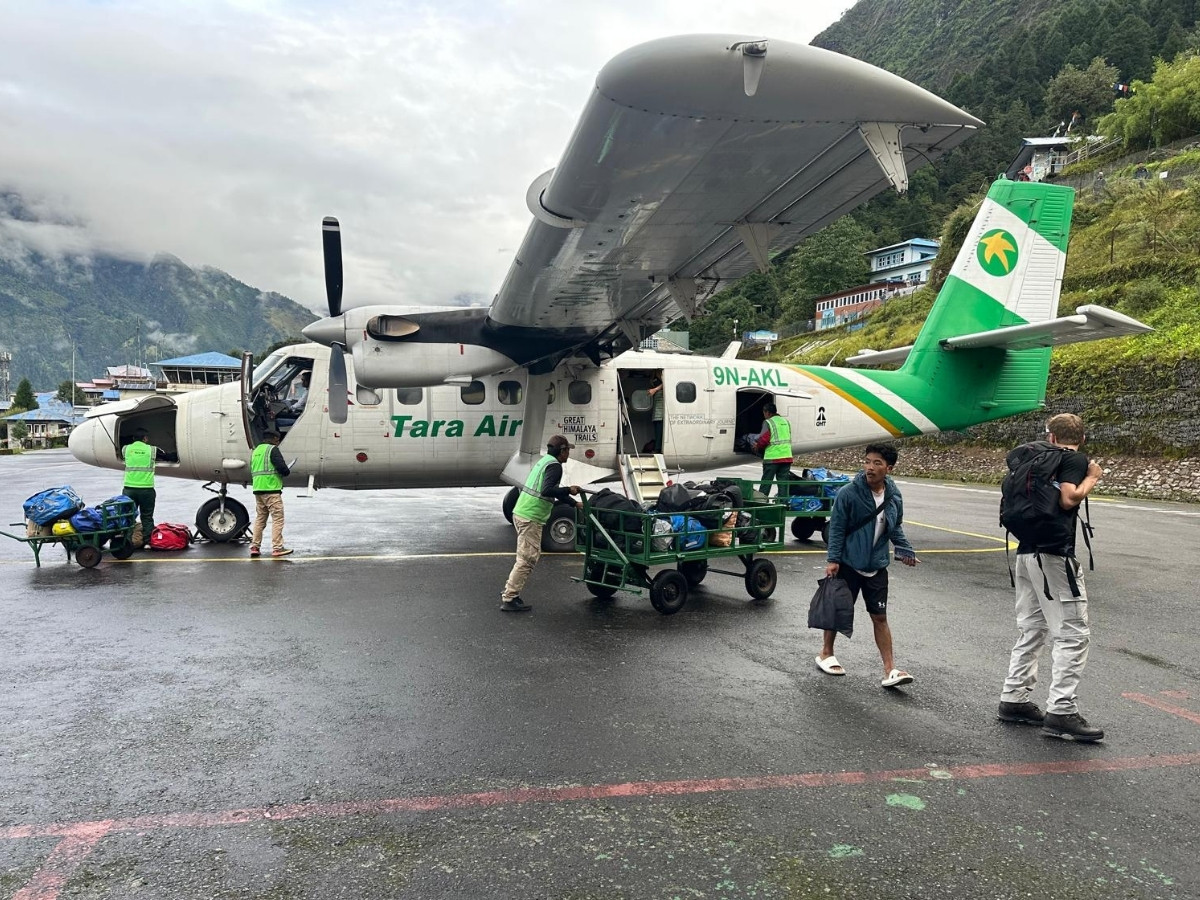
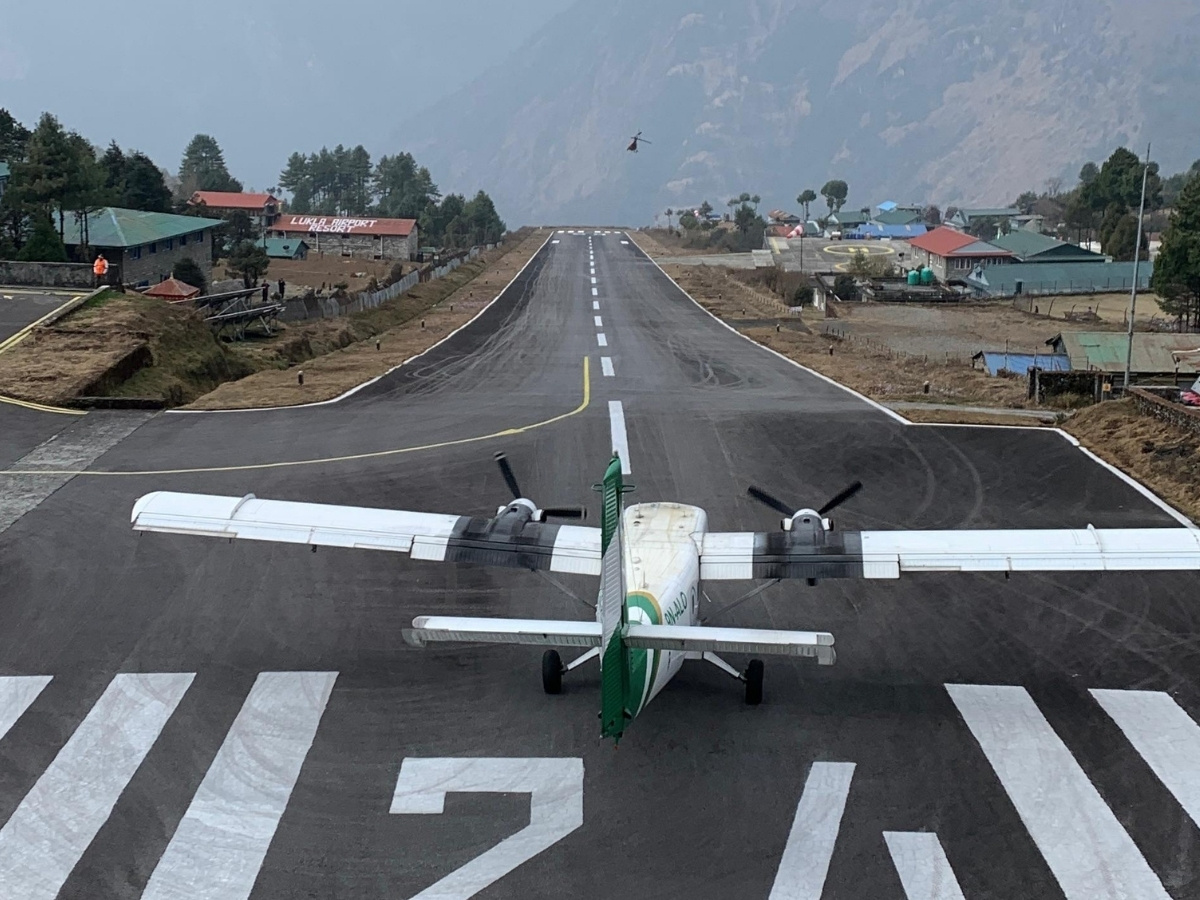
The adventure starts with a thrilling 30–35-minute flight from Kathmandu to Lukla, flying above green valleys and snow-topped mountains. Once you landed at one of the dangerous airports in the world, you will meet porter and begin the Everest view trek.

Today, we will stay at Phakding. The first day of Everest view trekking trail is comparatively easier than the coming days trail. It is just 8 Km and may take 4 to 5 hours, depend on how you walk and enjoy with the nature.

The trail leads gradually downhill with well-paved stone stair passing through pine and rhododendron forest. The Sherpa settlement, Mani Wall, Dudhkoshi River, Suspension bridge and chortens add the beauty of the trail.

Note: At the end of Lukla Village, you need to stop to register your entry.

  • Max Altitude:2610m
  • Meals:AP
  • Accommodation:Mountain Lodge
  • Duration:4 Hour Walk
  • Distance:8 KM walking
  • Mode of Transportation:Private
  • Altitude Gain:1210m
  • Flight Duration:30min
  • Trail Condition:Gradual Downhill and Natural Trail
  • Highlight of the Day:Landing at most dangerous airport.

Day 3 of the Everest Base Camp trek is one of the most picturesque and physically demanding sections of the entire route, climbing from Phakding (2,610m) to Namche Bazaar (3,440m) — an 830m elevation gain over 11km. The hiking path follows the Dudh Koshi river, passing through longest suspension bridges in Khumbu region including iconic Hilary bridge and sherpa cultural villages.

The routes to Namchebazar from Phakding is a perfect blend of gradual uphill, acute uphill, downhill and flat. After few hours walk you will enter National Park at Manjo where we stop to register our entry for the second time of the trek. The climb near Hilary bridge to top danda will taste your mentality and physical fitness. On the clear day; today, you will get a first glimpse of giant Mt.Everest just after Hilary bridge.

Once you got some rest at Top Danda, we start to Walk through thick pine forest with natural gentle uphill trail that takes you at Namche bazar. Namche bazar is the gateway of all adventure in Khumbu Valley.

  • Max Altitude:3440m
  • Meals:AP
  • Accommodation:Mountain Guest House
  • Duration:7-8 Hour
  • Distance:11 Km
  • Altitude Gain:830m
  • Trail Condition:Forest trails, multiple suspension bridges, final steep ascent to Namche
  • Highlight of the Day:First Glimpse of Mt. Everest

The third day of Everest View Trek is an acclimatization and exploration day that includes hiking to hotel Everest view with Sherpa museum. It is very important to stay away from altitude sickness during the trip.

The hike toward the luxury high altitude hotel offers a dramatic view of Everest, Lhotse, Ama Dablam, Thamserku and many more other neighboring peaks. Once you have breakfast, our representative takes you towards hotel Everest view. The first part of the walk, up to the syangboche airport is steps and rocky passes through juniper bushes, offering a beautiful view of entire Namchebazar.

Reaching at Hotel Everest view hotel itself is a magical achievement for Everest view Trekking plan. Having a cup of coffee on the terrace of hotel with stunning panorama of high mountain including Mount Everest is truly a heavenly experience. The breath of mountain air and scent of juniper generate a deep sense of joy and touchy with nature

Get Back with unforgettable momentum, and explore Everest next and Sherpa Museum located below the Everest View Hotel. You can also participate a documentary show of Everest Climbing history and enjoy the VR footage of Everest Expedition.

Free time after lunch.

  • Max Altitude:3440m
  • Meals:AP
  • Accommodation:Mountain Guest House
  • Duration:4-5 Hours
  • Distance:6 Km
  • Trail Condition:Steep stone-paved paths with panoramic views
  • Highlight of the Day:Hotel Everest View 3880 m and magical 360 degree from there.

Moving on from breakfast, we walk above Namche Bazaar, going through Kyangjuma village with breathtaking views of Everest, Ama Dablam, and Thamserku. The trek moves past many Himalayan plants and animals and provides views of both wildlife and the lush greenery of the hills.

Kyangjuma, is great place to take a short break and have joyful moment before descending to Phunki Thenga. Phunki thanga, located near Dudhkoshi River is a famous lunch break for trekkers. Right after a we cross suspension bridge over Dudhkoshi river, we start to climb all the way to Tengboche monastery. You may feel harder for this section of the trail but the view from top will heal all your pain.it is another demanding day but also rewarding too.

Explore and meet with a monk at Tengboche monastery. It is a legendary and the biggest of Khumbhu Valley that contains foot footprint of Guru Ringboche. If sky remains blue till sunset time, you will experience a golden mountain with a view of Mount Everest.

  • Max Altitude:3880m
  • Meals:AP
  • Accommodation:Mountain Guest House
  • Duration:7-8 Hours
  • Distance:9.5km
  • Altitude Gain:440m
  • Trail Condition:Gentle trail, descent to river (Phunki Tenga), then steep uphill to Tengboche Altitude:3880m
  • Highlight of the Day:Visit the majestic Tengboche Monastery – the spiritual heart of the Khumbu

Activities: Breakfast at lodge and morning preparation for today’s trek. The trail follows stone steps and riverbanks as the previous day. On your way, you will get to see the lifestyle of the local people in a small village. Trekking is a bit difficult compared to the previous day but the breathtaking views of the mountains will keep you motivated to move further. After reaching Dingboche, you will notice changes in the landscapes. Dingboche is the only place in a region where barley is grown.

  • Max Altitude:4400m
  • Meals:AP
  • Accommodation:Mountain Guest House
  • Duration:6-7 Hours
  • Distance:11km
  • Altitude Gain:520m
  • Trail Condition:Natural Trails, cross tree line, wide valley.
  • Highlight of the Day:Reaching Dingboche

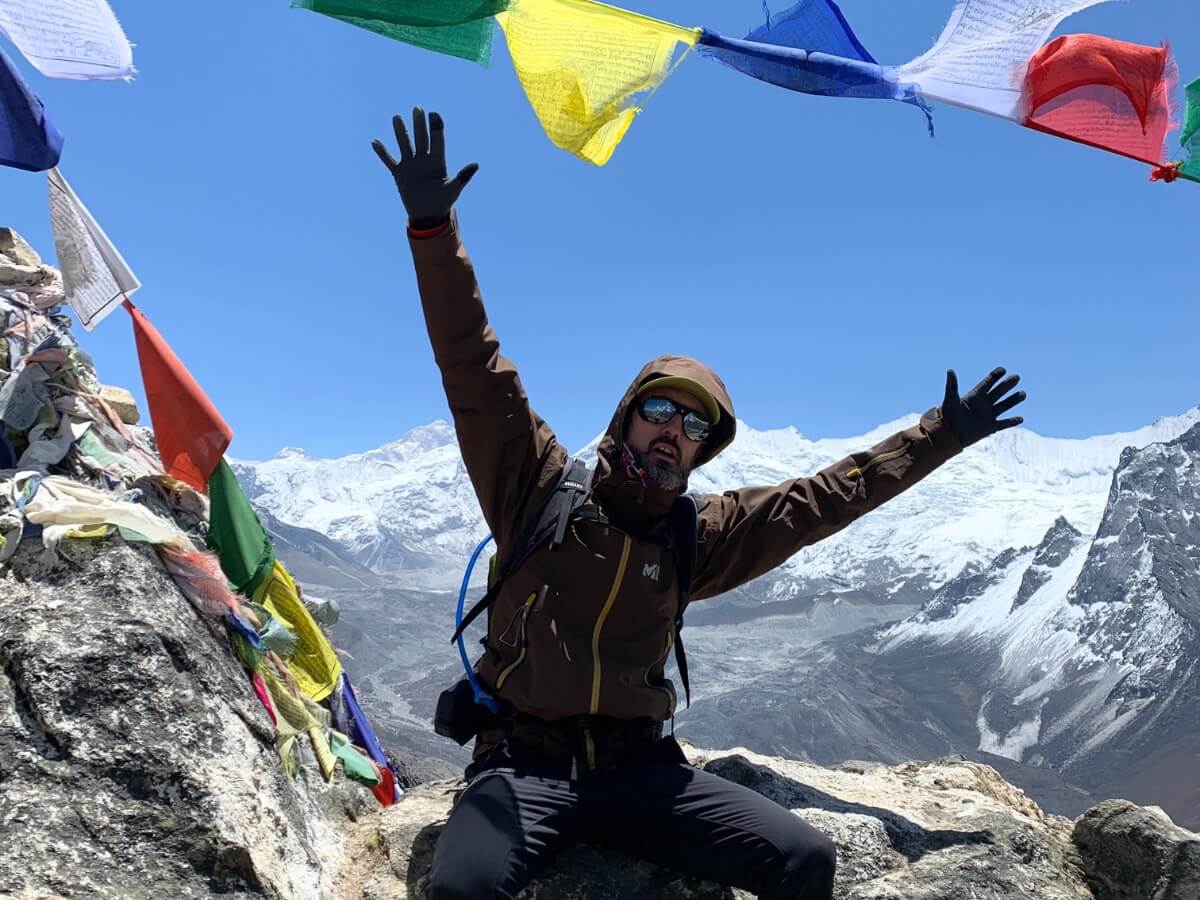
Activities: This is our second day of acclimatization. You will trek through steep and rocky trails to allow yourself to acclimatize. Enjoy the spectacular views of the Himalayas at every turn with colorful prayer Flags at the viewpoint and take pictures. Then we will return back to Dingboche and have our dinner at the lodge where we’ll be spending the night.


  • Max Altitude:5083m
  • Meals:AP
  • Accommodation:Mountain Lodge
  • Duration:4 Hours
  • Distance:4 km
  • Altitude Gain:683m
  • Trail Condition:Natural Trails and ascending with some rocky part.
  • Highlight of the Day:Breathtaking mountain view

Activities: We will continue our trek after having breakfast at the lodge. The trials are comparatively harder than the previous days. We will move uphill following Khumbu Glacier, Pumori, and the surrounding mountains. Trekking starts getting difficult, but the startling views of the mountains will motivate you to continue trekking and move further. Take a rest after reaching Lobuche. Dinner and overnight at the Lodge.

  • Max Altitude:4900m
  • Meals:AP
  • Accommodation:Mountain Lodge
  • Duration:6-7 Hours
  • Distance:8 km
  • Altitude Gain:500m
  • Trail Condition:Natural Trails, wide valley , Gradual Up with some acute climb
  • Highlight of the Day:Alpinist Memorial Park at Thukla Pass

Activities: The most awaited day of the whole journey is here. Today we will trek to Everest Base Camp. Breakfast at the lodge as usual and we’ll set off. The trial to Gorakshep is rocky uphill with a jaw-dropping surrounding view of Khumbu icefall, magnificent view of Pumori and beautiful mountains. From Gorak Shep, the trail becomes rough as you’ll pass through large rock, up and down. A few hours hike and Congratulations! You have made it to the base of Mt. Everest at the height of 5364m. Celebrate your achievement and take a lot of pictures of the panoramic view of the Mount massif and of yourself as well. Then we will return back to Gorakshep and spend the night there.

  • Max Altitude:5364m
  • Meals:AP
  • Accommodation:Mountain Tea House
  • Duration:8-9 Hours
  • Distance:12km
  • Altitude Gain:600m
  • Trail Condition:High altitude trail, Flat, Acute Climb, crossing the glacier and rocky.
  • Highlight of the Day:walking over glacier and raching Everest Base Camp

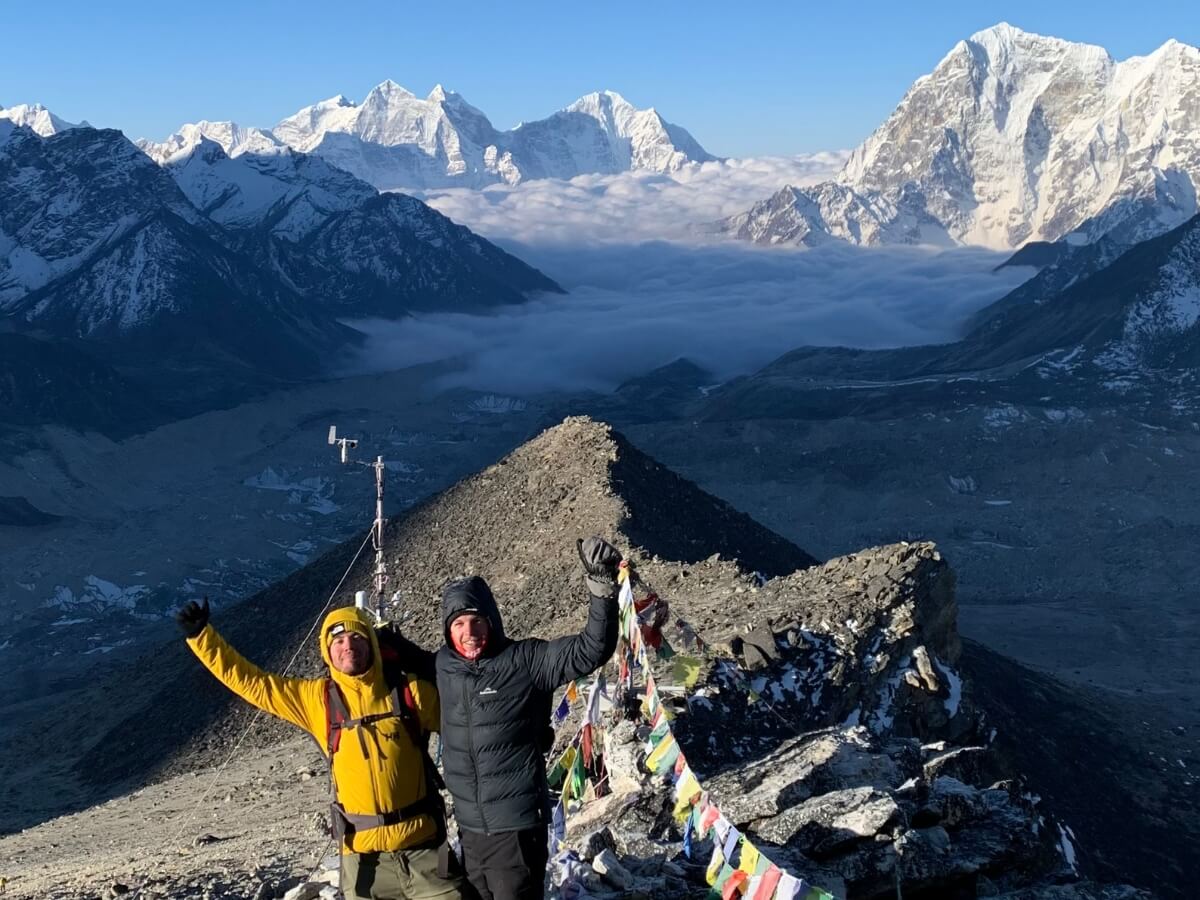
Activities: Today we will wake up early in the morning at about 4:00 am and leave for Kalapatthar, a viewpoint of sunrise. The sunrise from between the Mount massif looks amazingly spectacular. Make sure you take a lot of pictures and time-lapse videos of the sunrise. You will also see breathtaking views of Mt. Everest, Lhotse, Nuptse, Thamserku, Cho-yu, Ama Dablam, Pumori etc from Kalapatthar. Afterward, we will return to our lodge to have our breakfast and descend to Pheriche for today’s destination.

  • Max Altitude:4320m
  • Meals:AP
  • Accommodation:Mountain Tea House
  • Duration:8-9 Hours
  • Distance:16km
  • Altitude Loss:860m
  • Trail Condition:Acute Climb, then mostly downhill and flat
  • Highlight of the Day:Reaching at Kalapathar 5545m and enjoy the view

Activities: Breakfast at the lodge as the usual and downward journey to Namche, a beautiful Colorful Sherpa village in the Everest region. Passing through the suspension bridges and small villages and hiking with gentle up and down hills, we will reach Namche Bazaar. You will see trekkers moving in the opposite direction and mountains you had seen on your ways to EBC like Ama Dablam, Thamserku, and Lhotse, etc. Celebrate your victory after reaching Namche Bazaar. Dinner and overnight at Namche.

  • Max Altitude:3440m
  • Meals:AP
  • Accommodation:Mountain Guest House
  • Duration:8-9 Hours
  • Distance:19km
  • Altitude Loss:885m
  • Trail Condition:Gradual Down-up-down-up-gentle walk
  • Highlight of the Day:Walking at peacefull trail with great view of mt.Amadablam

Activities: Breakfast at the lodge and we will hike downwards to Phakding/Lukla. This is the last day of your trek and last night you’ll be spending on this Himalayan region.  You’ll cross several suspension bridges and pass through the bank of Dudh Koshi river till you arrive Phakding. From Phakding, ascend to Lukla after taking some rest. Get freshen up at your lodge and explore Lukla village.

  • Max Altitude:2835
  • Meals:AP
  • Accommodation:Mountain Guest House
  • Duration:8-9 Hours
  • Distance:19km
  • Altitude Loss:600m
  • Trail Condition:ecent-Gentle Walk and slightly climb before Lukla
  • Highlight of the Day:Reaching at Lukla a


Activities: On our thirteenth day, we will have our breakfast at the lodge and take a 45 min flight to Kathmandu. You can enjoy the same Himalaya views and scenery from above. Take some rest after reaching your hotel in Kathmandu and in the evening, we will serve you a traditional Nepali dinner as a farewell. The dinner will be followed by a cultural dance.

  • Max Altitude:1400m
  • Meals:BB
  • Accommodation:3 Star Catagory Hotel
  • Distance:140km areal
  • Mode of Transportation:Flight
  • Altitude Loss:1435m
  • Flight Duration:30 minutes
  • Highlight of the Day:Flying with stunning view of moutain and hilly region of Nepal

Have your breakfast at the hotel and our private vehicle will drop you off at the airport to catch your flight. Make sure you have not left anything. Our tour operator will bid you goodbye in a traditional way.

  • Duration:30 min
  • Distance:7 km
  • Mode of Transportation:Private Car or Jeep
  • Road Condition:May encountered traffic during Office time
Customize Your Perfect Trip

Mount Face Nepal Experts offers personalized trekking and tours in the Himalayas. Experience unique, safe, and expertly planned adventures tailored perfectly to your style and preferences.

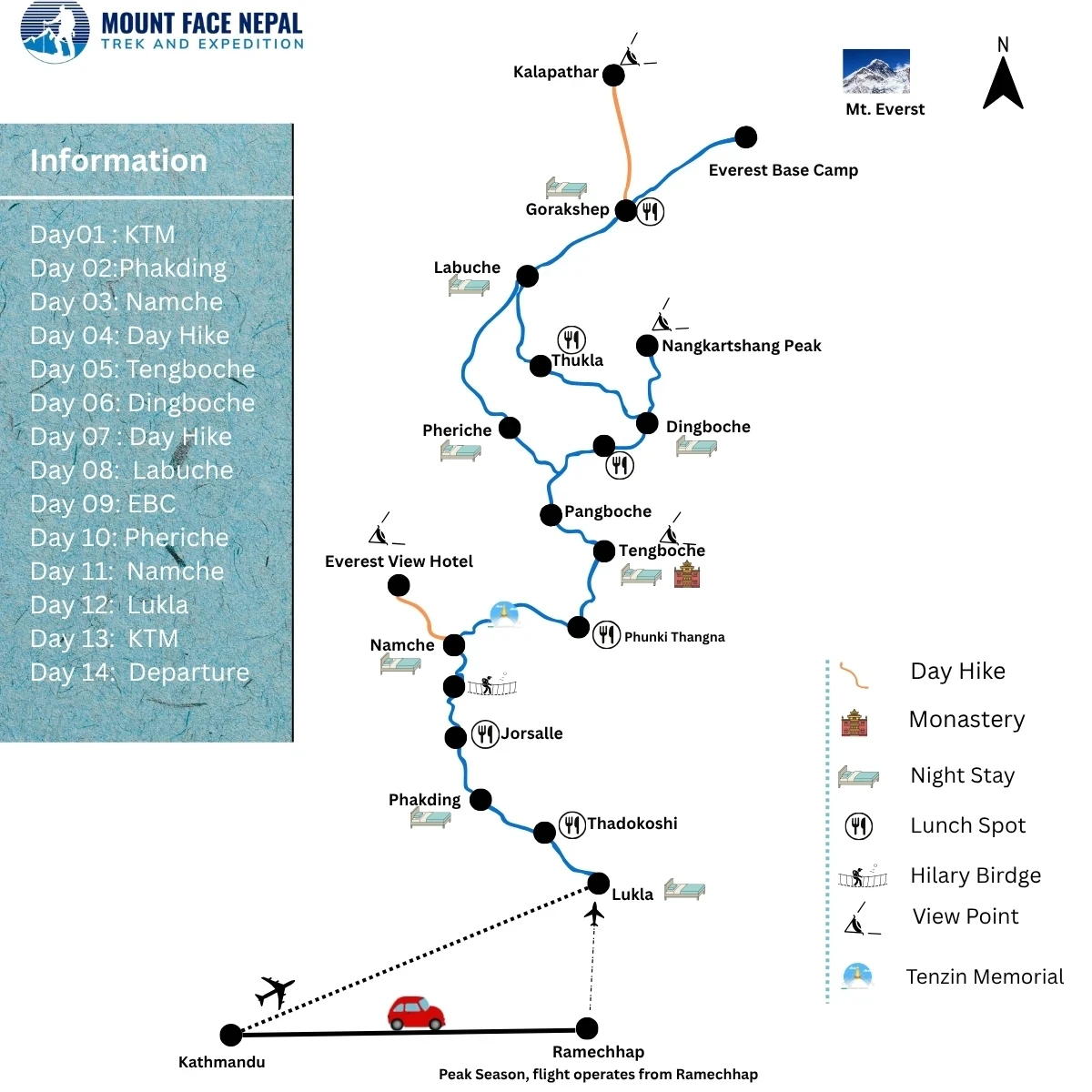
Route Map

Trip Map Everest Base Camp Trek

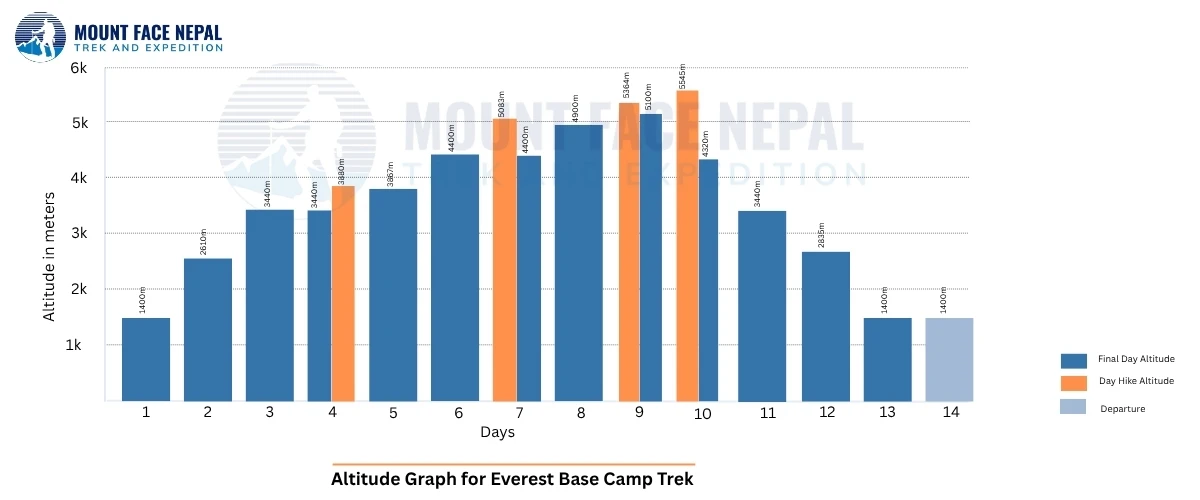
Altitude Chart

Altitude Graph for Everest Base Camp Trekking

Everest Base Camp Trek 2026/2027 | 14 Days Itinerary, Cost, Map & Package – Mount Face Nepal Cost Details

Includes

  • Pickup and drop off at the Airport
  • Accomodation In Kathmandu - Hotel Holy Himalaya or same catagory 
  • Full Board Meals (Breakfast, Lunch, and Dinner) during the trekking period
  • Air fare for Kathmandu-Lukla-Kathmandu (not for Guide)
  • Accommodations during the trek
  • A government-licensed mountain guide.
  • Porter to carry your baggage
  • Food, drinks, accommodation, insurance, salary, equipment, transportation, and local tax for guides and porters
  • Ground Transportation Charge as per the itinerary
  • TIMS card (Trekker’s Information Management System)
  • First Aid Kit
  • Entry Fees, wherever required
  • Trekking maps
  • Trekking Permits needed for Restricted Area Trekking
  • All government taxes and service charges
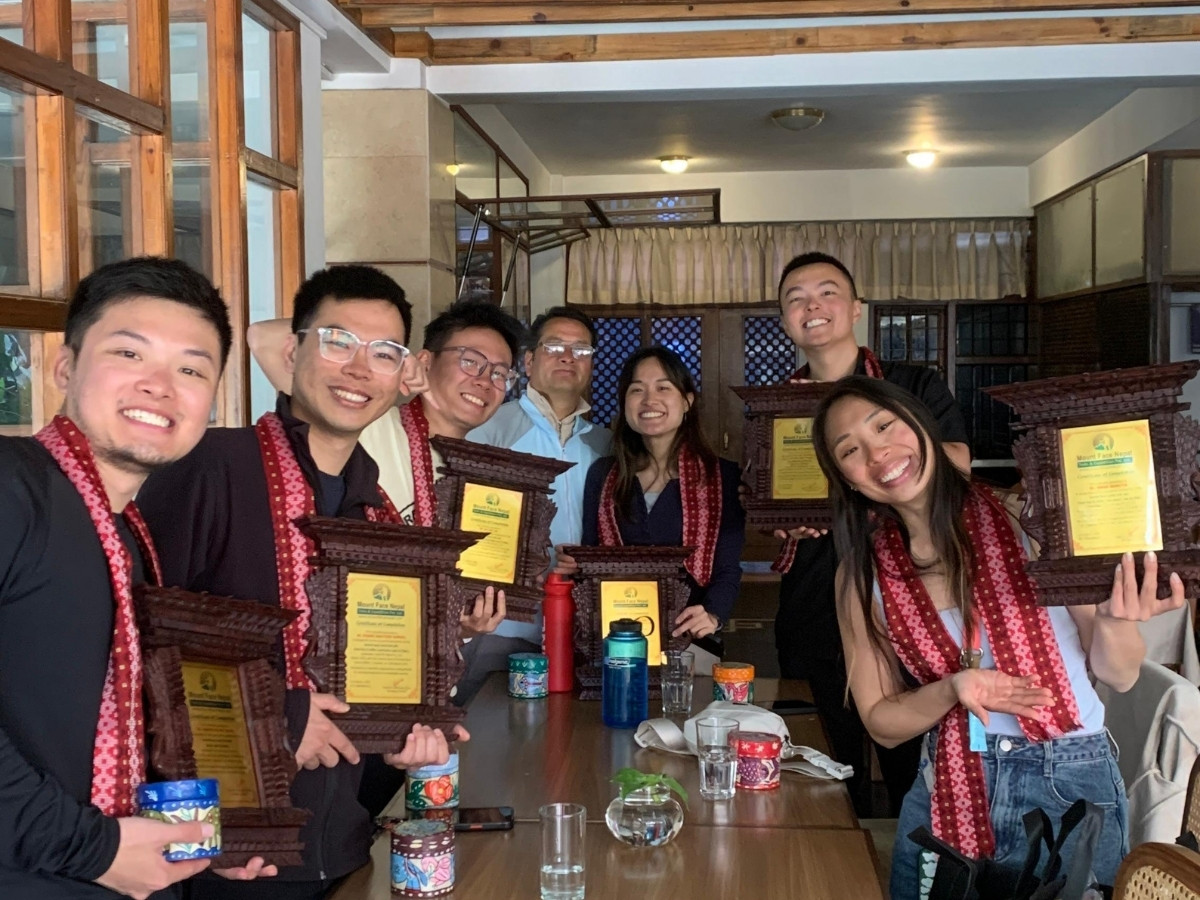
  • Certificate of Appreciation
  • Farewell dinner before departure

Excludes

  • Lunch and dinner in Kathmandu
  • Travel insurance
  • Nepal Entry Visa Fee
  • International Airfare and Airport Departure Tax
  • Tips for trekking staffs
  • Drinks (hot/soft/cold) and liquors
  • Personal shopping and laundry, Personal trekking equipment, Gifts, and souvenirs
  • All items not listed in Cost included the section
  • Notes: Costs are prone to change in itinerary. So costs will be recalculated if the trekking days get modified.

Dates and Availability

Select Departure Date
Displaying October Departure Dates
Start - End Date
Oct 02 - Oct 15, 2026
Status
Guaranteed
Price
US$1450
Start - End Date
Oct 10 - Oct 23, 2026
Status
Closed
Price
US$1450
Start - End Date
Oct 16 - Oct 29, 2026
Status
Closed
Price
US$1450
Start - End Date
Oct 22 - Nov 04, 2026
Status
Guaranteed
Price
US$1450

The itinerary for the EverestBase CampTrek is planned, but weather, changes on the trail, or unexpected events could cause changes. Adjustments will be made by our guide throughout the experience to protect you and give you the best time. Besides, you can change the itinerary to meet your needs and schedule. We encourage you to speak to us before your trek to plan a journey that fits what you hope for.

Add-Ons & Options

  • Booking a single room: If you like to have your own space and comfort, ask about booking a single room for your whole trip when trekking. It fits solo travelers or those who’d rather have private rooms in the teahouses.
  • Including a guided city tour in Kathmandu: Explore UNESCO World Heritage Sites such as Swayambhunath, Boudhanath, Pashupatinath, and Kathmandu Durbar Square. Let a local expert describe Nepal’s history and culture during your tour.
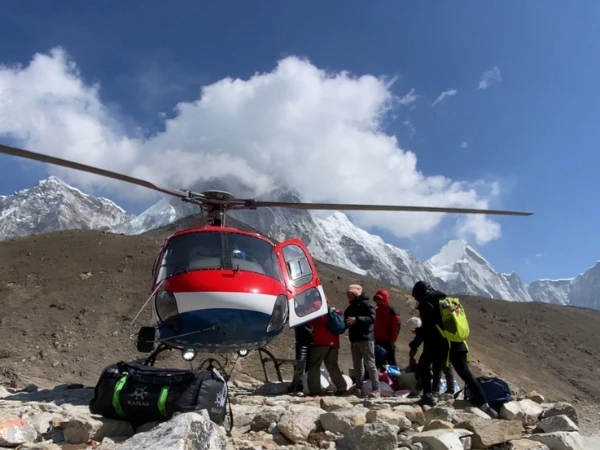
  • Helicopter ride Back to Lukla or Kathmandu from Gorakhshep: if you want to avoid same trail walking back to the lukla or if you have less time, we have option to come down lukla with Helicopter. For arrangement and cost of helicopter ride back. Contact or call to our expert.
  • Accommodation: During this Everest View Trekking, luxury hotels are available. Since we are staying in normal guest house, if you want to upgrade your accommodation in high mountain. Please let our expert to know.

Packing List for Everest Base Camp Trek 2026/2027 | 14 Days Itinerary, Cost, Map & Package – Mount Face Nepal

Packing List for Everest Base Camp Trek in Nepal

Packing list for Mount Everest Base Camp Trek is depend on which season you are going on it. You need more warm gears, if you are doing in winter compare to spring season. Here is some list of gears that is not for left behind. For comprehensive list, please kindly check out the complete packing list guide for Everest Base Camp trek.

Expand AllCollapse All
Clothing Essentials

Base Layers

  • Moisture-wicking thermal tops (2–3)
  • Thermal bottoms (2)
  • Quick-dry trekking T-shirts (3–4)
  • Trekking pants (2)
  • Lightweight shorts (optional)

Insulation Layers

  • Fleece jacket (1)
  • Down jacket (-15°C or lower) (1)
  • Outer Layers
  • Waterproof & windproof shell jacket (1)
  • Waterproof trekking pants (1)

Innerwear

  • Trekking underwear (4–5 pairs)
  • Trekking socks (3–4 pairs)
  • Warm wool socks (2 pairs)
  • Thermal sleepwear (1 set)
Footwear & Accessories

Footwear

  • Waterproof trekking boots (well broken-in)
  • Lightweight camp shoes or sandals
  • Gaiters (winter/monsoon)

Accessories

  • Warm beanie
  • Sun hat or cap
  • Neck gaiter/Buff
  • Balaclava (winter)
  • Lightweight gloves
  • Insulated waterproof gloves
  • UV400 sunglasses (Category 3 or 4)
  • Trekking poles
  • Rain cover for backpack
  • Dry bags or waterproof stuff sacks
Camping & Sleeping Equipment
  • Microspikes (winter or icy conditions)
  • Trekking crampons (if required by trail conditions)
  • 4-season sleeping bag (-15°C to -20°C)
  • Sleeping bag liner 
  • Ear plugs
Personal Items & Toiletries
  • Toothbrush & toothpaste
  • Biodegradable soap
  • Shampoo (travel size)
  • Quick-dry towel
  • Wet wipes
  • Hand sanitizer
  • Toilet paper
  • Sunscreen (SPF 50+)
  • Lip balm (SPF)
  • Moisturizer
  • Nail clipper
  • Razor (optional)
  • Hairbrush/comb
  • Feminine hygiene products (if required)
Health & First Aid Kit
  • Personal prescription medication
  • Diamox (consult your doctor)
  • Paracetamol or Ibuprofen
  • Anti-diarrheal medicine
  • Oral Rehydration Salts (ORS)
  • Cold & cough medicine
  • Antihistamines
  • Motion sickness tablets
  • Blister treatment (Compeed/Moleskin)
  • Band-aids
  • Sterile gauze
  • Medical tape
  • Antiseptic cream
  • Elastic bandage
  • Digital thermometer- Our Team will carry it.
  • Pulse oximeter (optional)- Our Team will carry it.
Food & Hydration
  • Snacks
  • Energy bars
  • Protein bars
  • Mixed nuts
  • Chocolate
  • Dried fruits
  • Hydration
  • Two reusable water bottles (1L each)
  • Insulated bottle cover
  • Hydration bladder (optional)
  • Electrolyte tablets or powder
  • Water purification tablets
  • Water filter bottle (optional)
Documents & Permits
  • Passport (minimum 6 months validity)
  • Passport-size photos (2–4 copies)
  • Travel insurance (covering trekking up to 6,000m and helicopter evacuation)
  • Emergency contact list
  • Cash in Nepalese Rupees
  • Required Trekking Permits(Guide will handle )
  • Khumbu Pasang Lhamu Rural Municipality Permit(Guide will handle )
  • Sagarmatha National Park Entry Permit(Guide will handle )
Electronics & Navigation
  • Electronics
  • Mobile phone
  • Power bank (20,000–30,000 mAh)
  • Charging cables
  • Universal travel adapter
  • Camera (optional)
  • Spare camera batteries
  • Memory cards
  • Headlamp with spare batteries
  • Smartwatch or fitness tracker (optional)
  • Navigation Tools
  • Offline maps (Maps.me or Organic Maps)
  • Trekking route map
  • GPS device or GPS app (optional)
  • Emergency whistle
  • Satellite communicator (Garmin inReach or similar – optional for independent trekkers)
Emergency & Safety Gear
  • Personal first aid kit
  • Whistle
  • Multi-tool or small pocket knife
  • Waterproof matches or lighter (optional)
  • Water purification tablets or filter
  • Trekking poles
  • Emergency contact information
Download Equipment Lists

Essential Information

Best Time to Do the Everest Base Camp Trek — Month-by-Month Season Guide

The Best Everest Base Camp Trek weather is considered during spring and autumn, However winter also has been trending for past few years. Each season has it's own beauty and taste of the trail. Spring (March to May) offers comfortable weather conditions, blue skies and stunning Himalayan views and the Everest trekking path beautify with multicolored rhododendron forests, blossomed wild flowers and pleasant daytime temperatures.

The unobstructed views of Mount Everest, Lhotse, Ama Dablam and other Himalayan peaks create a truly unforgettable experience. Another important attraction of trekking during spring is the opportunity to witness the Everest expedition teams preparing for their summit attempts at Everest Base Camp, which really adds another excitement to the Everest Trek Nepal experience.

Like spring, autumn (September to November) season is also regarded as an excellent season for Everest Base Camp Trek. Early September may occasionally affect Lukla flights due to the ending monsoon, but the landscapes remain really green and temperatures are very comfortable for walking at higher elevations. After the monsoon season, the skies become exceptionally clear and mountain visibility reaches its best condition of the year during this time.

Besides favorable weather and mountain views, autumn also coincides with the major festivals of Nepal such as Dashain and Tihar. These festivals and celebrations adds cultural experiences to our journey while making autumn one of the most rewarding times for Everest Base Camp Trekking in Nepal.

If you want to know more about regarding the best time for Everest Base Camp Trek, please feel free to contact us on our website, email or whastapps for seasonal recommendations and personalized trekking advice. 

Best Alternatives to the Everest Base Camp Trek Package

The classic Everest Base Camp Trek is an unforgettable Himalayan adventure in Khumbu region, but there are even more other adventure yet to discover beyond the traditional route. Get chance to explore our alternative Everest trekking packages for extraordinary journeys that combines breathtaking landscapes, fewer crowds, unique trails, and unforgettable experiences in the Khumbu region.
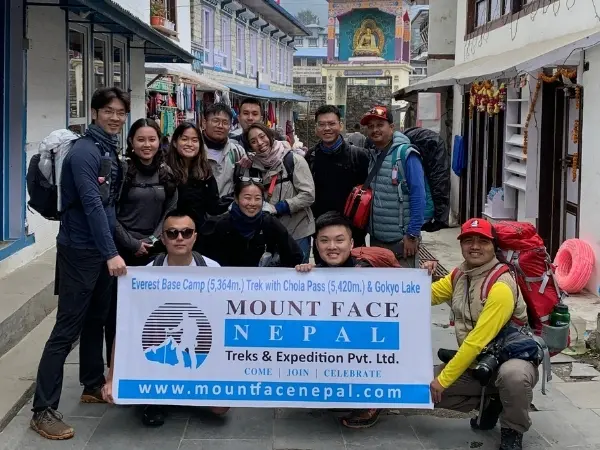
DetailsEverest Base Camp Luxury Trek with Heli Back (Best Alternative)Everest View TrekEverest Base Camp with Gokyo and Chola Pass Trek
Duration12 days7 days17 days
DifficultyModerate to challengingEasy to moderateChallenging
Cost (Starting From)USD 2,408USD 8,20USD 1,399
Key FeatureTrek up to EBC, then fly back by helicopter for comfort and time savingsShorter Everest-region trek with great mountain views, usually ending around Namche/Everest View Hotel areaCombines EBC, Gokyo Lakes, and Cho La Pass for a longer, more scenic adventure

Everest Base Camp with Heli Back is the best overall alternative for most trekkers because it keeps the full EBC trekking experience while saving time and reducing the tiring return descent.

Everest Base Camp Trek in December & January: Is It Worth It?

Everest Base Camp Trekking in December, January and February is another excellent season for an epic and memorable Himalayan journey. The tranquil Everest hiking path, clear blue skies and crystal clear mountain view makes this season very special for trekkers. 

Compared to the busy spring and autumn season, winter trekking in Everest region is much easier because trails remain quieter, allowing trekkers to enjoy the mountains with fewer crowds and more opportunities to 

During winter season, Lukla flights operates effectively, as weather remains generally stable with clear skies and lower chances of flight delays or cancellations. 

However, on Everest Base Camp Winter Trekking, temperatures generally range from around 10°C during the daytime to as low as -10°C at higher elevations during the night. So,  with proper winter clothing, good quality trekking gear and careful preparation, winter trekking offers a peaceful and rewarding trekking experience with spectacular mountain scenery and excellent visibility. 

A Typical Day on the Everest Base Camp Trek: Daily Schedule & What to Expect

During the Everest Base Camp Trek, every day follows a peaceful and enjoyable routine that combines mountain walking with the rich Sherpa culture of the Khumbu region. The morning usually begins around 6:30 AM when trekkers wake up with fresh mountain air and beautiful Himalayan views. Before breakfast, it is recommended to pack your duffle bag so that the porters can prepare for the day’s journey. Essential items such as water, snacks, camera and extra clothing should be kept in your daypack as the duffle bag will only be available after reaching the next overnight stop. 

Most of the time, the trekking begins around 7:30 AM as early starts are always better in the mountains. Lunch is normally served around midday at a teahouse along the trail, and larger groups often order meals in advance to save time. Daily walking usually lasts six to eight hours depending upon the trail conditions, altitude and walking pace. After reaching our tea house or hotel, we will have tea, snacks and short walks around the village before dinner. Every evening, our Mount Face Nepal guide will provide safety briefings while discussing the next day's plan. 

Accommodation on the Everest Base Camp Trek: Tea Houses, Lodges & What to Expect

Mount Face Nepal Guided Everest base camp trek packages include clean and comfortable mountain lodges where rooms are provided with basic amenities, including a bed, pillow, blanket with attached bathroom. However, in places where attached bathrooms are not available, shared bathroom facilities are provided. Upgraded accommodation with attached bathrooms can also be arranged in villages like Lukla, Phakding, Namche, Tengboche, Dingboche, and Lobuche on your demand. 

Most teahouses along the Everest trail have warm and cozy dining walls heated by wood or gas stoves, providing a comfortable place for trekkers to relax after a day of trekking. As room rates are kept affordable, guests are generally expected to have thier meals at the same lodge where they stay. 

Key Landmarks on the Everest Base Camp Trek Route

Lukla Airport (Tenzing-Hillary Airport) 2860m

Lukla Ariport, officially known as the Tenzing-Hilary airport is the major gateway for Everest region trekking. It was built in 1964 AD and its short 527m runway, steep slope, surrounding mountain terrain and unpredictable weather condition makes it as a dangerous airport in the world.

Despite these challenges, Lukla Airport really plays a vital role in the Khumbu region, which serves as the primary access point for thousands of trekkers, guides, and essential supplies each trekking season. The scenic flight from Kathmandu or Ramechhap to Lukla offers breathtaking aerial views of the Himalayas and marks the exciting beginning for Everest Base Camp trek.

Phakding Monastery

Approximately 8 KM walk from lukla takes you at Phakding. Phakding is a small town enroute to Everest Base Camp which is also the first overnight stop on Everest Base Camp Trek. If time permits, we also can explore the village or take a short hike to Phakding Monastery, also known as Rimijung Monastery.

Phakding Monastery is about a 30-40 minute uphill walk through pine forests, colorful fluttering prayer flags, and mani walls. It is located on a hillside and offers peaceful surroundings, beautiful valley views and mountain scenery. When visiting the monastery, meeting with monks, or spending a time doing meditation can be really memorable experience. This hike also serves as the gentle acclimatization walk, helping trekkers to prepare both physically and mentally for the higher elevations in upcoming days. 

Hilary Bridge on Everest Base Camp Trek

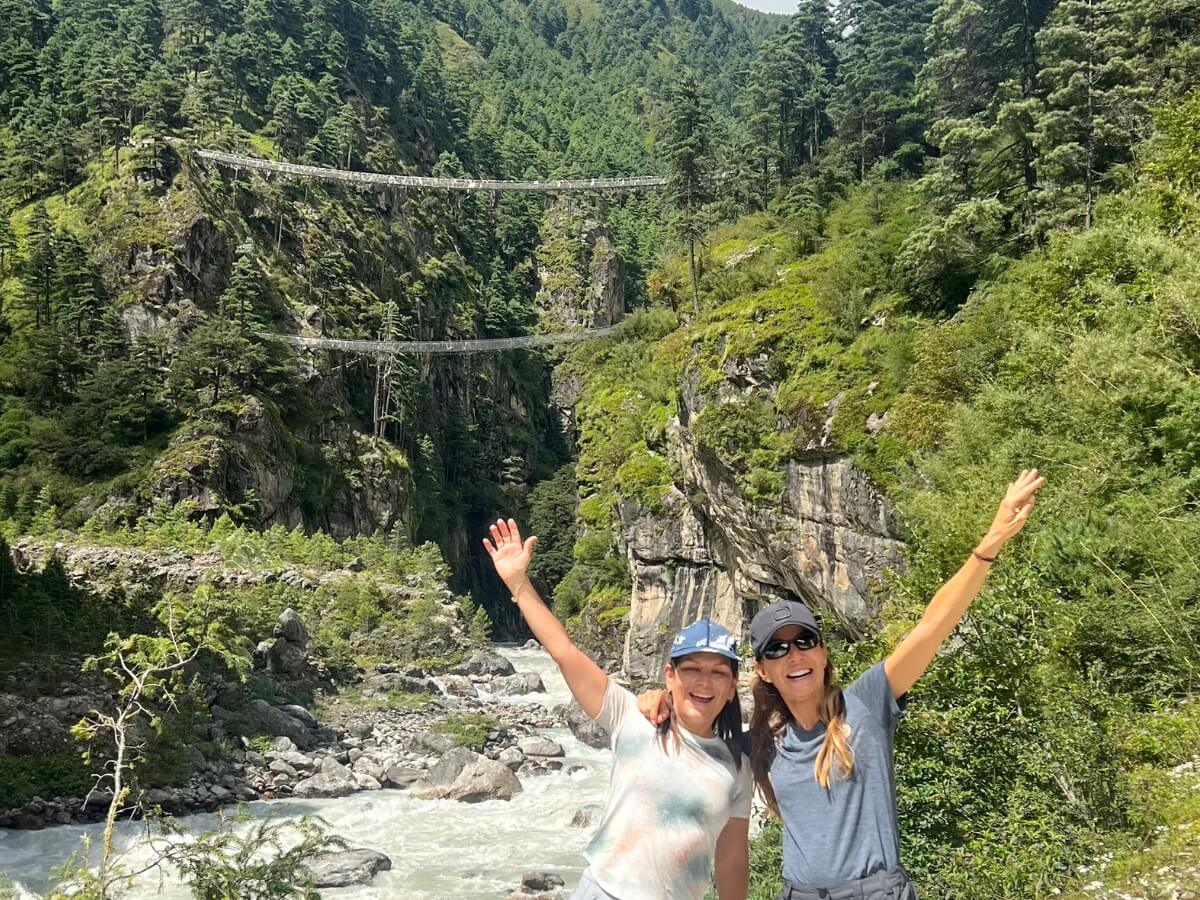
There is several suspension bridges between Lukla and Namche bazar during Everest Trek. But hillary suspension bridge at Larja Dobhan is the most famous one. After 30-40 walk from Jorsalle(Lunch place), you will see two bridges hanging and connecting two cliffs above the Dudhkoshi River. The lower bridge is the original Hillary Bridge, which is named after Sir Edmund Hillary. Rather than renovating it, a new bridge was built above it by government, while the original remains as a historic landmark and open musuem.

Namche and Chaurikharka village development committee started to build the 113 m long new bridge on 21 April 2011 and completed it on 31 July,2013. Locally this bridge is named as “Shree Larche Dovan Jholunge Pul”. While crossing the bridge, you can see Mt. Tabuche 6496m, Cholatse 6440m, and the dramatic Dudh Koshi Valley. After a walk of 15-20 min, trekkers can watch their first glimpse of Mt. Everest. 

Note: Always give way to mules and yaks crossing the bridge, and wait patiently until they have passed. 

Namchebazar (3,440m)

Namchebazar is the vibrant center of the Everest Region which is located at 3,440m from sea level and is surrounded by snow capped mountain. From the beginning of climbing and trekking history to till now, it has served millions of people to achieve their once in a lifetime journey. Once the historic trading center of the Khumbu Valley, now it has grown into a bustling mountain town which serves trekkers, climbers, and local communities with a wide range of facilities and services. 

Despite of its modern amenities, the town has preserved its ancient rich Sherpa culture and warm hospitality. 

Monastery, Irish Pub, Café, Wood fire pizza center, National Park Center, Sherpa Museum and local markets are the major highlights of Namchebazar.

Hotel Everest View (3,880m)

Hote Everest view is one of the highest altitude luxury hotels in the world. It offers dramatic panorama of Mount Everest, Lhotse, Ama Dablam and many more. Most of trekkers hike here during their acclimatization day in Namchebazar. Having a cup of coffee on the terrace of Hotel Everest View surrounded by tall peaks is a truly heavenly experience during Everest Base Camp Trek.

Khumjung Village and Hilary School

Khumjung village is a typical sherpa settlement that is located near Hotel Everest view at an altitude of 3790 meters. The Hilary School was built by Sir Edmund Hillary in 1961, which was also the first school established in entire region. Yeti Scalp is another major highlight of Khumjung village.

Tengboche Monastery (3,867m)

Tengboche Monastery is the largest Tibetan Buddhist Monastery in Khumbu region. It is also known as Dawa Choling Gompa and is situated at 3867m altitude. This monastery is exactly 9 KM far north from Namchebazar and takes about 7-8 hour walk to reach from Namche Bazaar. Before arriving at Tengboche, trekkers must complete one of the longest and most challenging uphill climbs on the Everest Base Camp trail.

Originally it was built by Lama Gulu in 1916.However, the monastery was damaged by the 1934 earthquake and later destroyed by a fire in 1989 before being rebuilt with the support of local communities and international donors. 

Tengboche Monastery is located in spectacular location, and offers breathtaking views of Mt. Everest, Mt. Lhotse, Mt. Ama Dablam, Mt. Nuptse, and several other Himalayan peaks. Monastery's peaceful atmosphere, spiritual significance, and the stunning surroundings really makes it as one of the major highlights of the Everest Base Camp trek. Here, visitors can observe different Buddhist ceremonies, interact with the resident monks, and experience the rich Sherpa culture, making a visit to Tengboche truly worthwhile.

Pangboche Village

Pangboche village is a historic Sherpa settlement located at an altitude of 3,985 meters (13,074 feet) in the Everest region of Nepal. It is considered as one of the oldest Sherpa villages that lies along the popular trekking route to Everest Base Camp and is surrounded by breathtaking Himalayan peaks such as the iconic Ama Dablam. The village is known for its rich Sherpa culture, Buddhist heritage, spiritual and scenic significance. Most trekkers spend time here to enjoy the serene environment and local hospitality.

A cultural highlight of the Pangboche is the Pangboche monastery which is also believed to be the oldest monastery in the khumbu region, dating back in the 17th century. It was once famous to be the house of a Yeti scalp and hand, attracting both pilgrims and curious visitors from around the world. Today, the Pangboche monastery remains an active center of Buddhist worship and local festivals. Pangboche village also serves as an important acclimatization stop, helping trekkers and climbers to prepare for the higher elevations ahead.

Thukla Pass: An Alpinist Memorial Monuments

After 2–3-hour gentle ascends from Dingboche, you will reach at Thukla. Thukla is only a food point in between Dingboche and Labuche where most of the trekkers have their lunch and climb acute uphill to reach Thukla Pass. This part of Everest Base Camp route can be little challenging and it takes about 1- 1.5 hour. Once our step touches the top of Thukla pass at altitude of 4800m from sea label, trekkers can witness the hundreds of memorials of climber and sherpa who lost their life during expedition of different mountain in Khumbu valley including Mt.Everest. 

“Go Sleep Forever in Everest, His soul will always remain Alive, and Rest in Peace” some of stone slap is decorated by this great statement to Honor their family member’s soul. The deceased family, friends and their well-wisher make this kind of monument to show respect and pray for peacefully set up in Heaven.

One of the most well-known memorials is dedicated to American mountaineer Scott Fischer, who lost his life during the tragic 1996 Everest disaster after helping rescue a fellow climber. He was a great personal with great heart and responsible climbing guide. During that expedition, he came down to basecamp from Cam II with ill Dale Cruise and get back to camp II to re -join his team. He took his last breath nearby to Southeast ridge balcony while descending down from very late summit at 3:45PM. He was able to save Dale Cruise life but not his own.

Thukla pass Alpinist memorial park also hold the memorial monument of great climber Babu Chiri Sherpa who died in Everest on April 25.

Walking among these memorials is a deeply moving experience, which offers a powerful reminder of the risks, resilience, and determination required to explore the world's highest mountains.

Labuche Village

Labuche village is a small, high-altitude settlement located at 4,949 meters (16,210 feet) near Mount Everest in the Khumbu region of Nepal. It lies along the main trekking route to Everest Base Camp and is one of the last overnight stops before reaching the base camp. Surrounded by peaks like Makalu, Cho Oyu and Nuptse,  it offers breathtaking views where village feels like gateway to the high Himalayas. It is an important acclimatization place for trekkers and climbers

What distinguishes the Lobuche from other village is its silent power. The Lobuche Memorial, located just outside hamlet pays tributes to climbers who never returned from Everest. It’s a deeply moving place that reminds you of the mountain’s magnificence and risks. Though it is remote and rugged, it is also a meeting point for mountaineers heading to Everest, Lobuche peak and Khumbu Glacier. Lobuche is noteworthy highlight of the Everest region because of its combination of breathtaking landscape, high altitude, culture and close proximity to popular climbing routes. 

Gorakhshep

Gorakshep is the last settlement on Everest Base Camp trek journey which is located at an altitude of 5,164 meters (16,942 feet). It is surrounded by iconic Himalayan peaks such as Pumori, Nuptse, and close views of Mount Everest. Although it offers only basic teahouse accommodation with limited amenities, the sense of being so close to Everest makes the experience incredibly rewarding. It serves as crucial launch point for trek to Everest Base Camp (EBC) and the Kala Patthar viewpoint.

A major highlight is the early morning hike to Kala Patthar (5,545 meters) where trekkers are rewarded with panoramic sunrise views of Everest’s summit. From Gorakshep it’s also the lauch point for the final hike to Everest Base Camp about 2-3 hours away, making it as a hub of activity despite its remote and harsh conditions. The thin air, raw landscape, and sense of achievement make Gorakshep not just a rest stop, but also a milestone moment on the Everest journey.

Kalapathar

Kalapathar literally means black rock. This whole word has two sub word Kala and Patthar means Black and Rock respectively. Kalapathar is the most popular spot in Everest Base Camp Trek route after the ultimate destination of  Everest Base Camp. The top of Kalapathar offer magical view of Mt.Everest, Mt.Nuptse, Mt.Lhotse, Mt.Amadablam, Mt.Changtse and many more. Located at an altitude of 5,545 m, Kalapathar provides closest and biggest view of Mt. Everest including Khumbu Ice Fall.

To reach Kalapathar, it is 1.5 KM ascend from Gorakshep and takes 2 hours climb. Most trekkers begin the ascent early in the morning to witness the spectacular sunrise over Mt. Everest and the surrounding Himalayan peaks. If the weather is clear, the sunset views from Kala Patthar are equally breathtaking, making it one of the best viewpoints on the Everest Base Camp trek. Another unique feature of Kala Patthar is the Mt. Everest webcam, believed to be one of the highest-altitude webcams in the world. It was first installed by Italian scientists as part of the NAST Pyramid Observatory Project to monitor Mt. Everest and the surrounding region. The webcam helps researchers collect valuable data to study the impacts of climate change in the high Himalayas.

Essential Safety Tips for Everest Base Camp Trek​​​​​​​

The Mount Everest base camp Trekking is a high-altitude trekking route and altitude sickness problem may occur from above 3000m. Along with altitude-related challenges, trekkers should also remain careful throughout the journey, as the terrain and weather conditions can change quickly. We Mount Face Nepal suggest recommend some safety tips while doing Everest Base CampTrek to ensure a safe and enjoyable experience in the Himalayas.

  • Walk Slow.
  • Drink plenty of water
  • Garlic and other soup are recommended.
  • Always check your foot carefully before taking out your camera.
  • Stay on the safe side of the trail when donkeys and porters are passing, follow your guide’s instructions.
  • Be careful on icy sections, even in common areas like toilets.
  • Mind your head, as doors in Nepalese lodges are often shorter than your height.
  • Please stay away with street and domestic pets, they may not vaccinated.
  • If you have headache at night, open the door and window take around 20 deep slow breaths.

How Far Do You Walk on the Everest Base Camp Trek? Everest Trekking Trail Total Distance

The total distance  during Everest Base Camp trek is determined from where you begin your high Himalaya adventure. If you start and end your adventure from Tenzing Hilary Airport, Lukla, the total trekking distance is closely 123.5 kilometers (about 77 miles).

However, mobile trekking apps and GPS devices may show a slightly longer distance, of around 130 kilometers. These variations depend on individual routes, side trips, and the walking pace. 

On this epic Everest Base Camp trekking route, the shortest hiking day is acclimatization day at Dingboche, whereas the longest day is from Pheriche to Namche, covering about 19–20 km. Additionally, your determination and courage are major key factors in making this challenging adventure a successful and memorable experience. 

Luggage Storage for EBC Trek 2026/2027: Where to Store Your Bags

If you are worried about extra luggage storage in Kathmandu before beginning your thrilling adventure in Everest Region, our Mount Face Nepal Treks and Expedition has solution for it. Trekkers who have joined with our team will have free luggage storage room in our office while they are hiking to Everest Base Camp.

However, most of the hotel in Kathmandu also provide free storage room to store your extra luggage and provide luggage tag for identification. Please ensure that you do not lose your luggage tag. The safety of you and your belongings is our responsibility, and we are committed to taking good care of them. Embark on the epic Everest Base Camp trek with complete peace of mind. 

Is Travel Insurance Required for Everest Base Camp Trek?

Having travel insurance is strongly advised and is also required in many cases weather you choose guided trek or travel independently. The majority of the trekking agencies demand a copy of such insurance covering emergency helicopter evacuation, high altitude trekking upto 6,000 meters and medical expenses before starting the journey. 
Whether you are on a budget trek or an all-inclusive Everest Base Camp package, having reliable insurance really ensures a safer journey through Sagarmatha National Park, the Khumbu region, and iconic viewpoints like Kala Patthar. Always confirm that your policy specifically covers trekking at extreme altitude.

Some recommended travel insurance companies that provide reliable insurance coverage are listed below. These are only suggestions, and we do not receive any benefit from them.

  • Allianz Care
  • World Nomad
  • Cover more Travel Insurance
  • Clements Worldwide
  • World Trips
  • Global Rescue
  • Fast Cover Insurance (Australia/ NZ)
  • True Traveller Insurance
  • Trail Finders Insurance
  • IM Global Insurance
  • ASC 360 Insurance

Extra & Hidden Costs on the Everest Base Camp Trek

Although the Everest Base Camp Trek is a life-transforming journey to the Himalayas, trekkers are highly advised to carry some extra costs besides the standard EBC Trekking Package. In the Everest Region Trekking, you are going to spend more on hot showers, charging phones, Wi-Fi, and bottled water in teahouses located at high altitude, which are not included in Everest Base Camp Trek Package. 

Additional expenses may includes snacks, energy drinks, personal gear rental, porter tips, and travel insurance (which is essential for high-altitude trekking in Nepal). 

In the case of a budget Everest Base Camp trek or solo Everest Base Camp trekking, these on-trail expenses can become significant over the course of the journey.

Last-Minute Everest Base Camp Trek Booking from Kathmandu

Planning a last-minute Everest Base Camp Trek from Kathmandu? Whether it is your last-minute booking to the EBC Trek Nepal or not, we Mount Face Nepal can conveniently make arrangements on your behalf, depending on the availability of the scenic flight to Lukla. As flights are limited and filled up fast, particularly in the Everest Trekking Adventure peak seasons, it is very important that consultations are done with us before payment. 

Whether you prefer a guided Everest Base Camp trek, or a budget trek, or a solo journey, we will do our best to organize all required permits, an experienced guides, porters, and overall logistics for a smooth experience. Even on short notice, trekkers can explore the Sagarmatha Base Camp trek, Kala Patthar viewpoint, and much more. Join Mount Face Nepal's EBC trekking package and also experience the panoramic Himalayas, Sherpa culture, and high-altitude adventure in Nepal, even at the last minute. 

Everest Base Camp Trek vs Annapurna Base Camp Trek: Which Is Better?

FactorEverest Base Camp TrekAnnapurna Base Camp Trek
Duration12–14 days7-10 days
Maximum altitude5,545 (Kalaptthar), 5,364 m (Everest Base Camp) 4,130 m (Annapurna Base Camp)
DifficultyChallenging, mainly because of altitude and longer trekking dayModerate, shorter and less extreme altitude
SceneryIconic Everest, Lhotse, Ama Dablam, rugged high-mountain landscapeGreen forests, terraces, rivers, and a dramatic mountain amphitheater
CultureStrong Sherpa culture in the Khumbu regionGurung and Magar village culture along the trail. 
CostAbout USD 1,200–1,500About USD 950–1,200
AccommodationMore basic teahouses, especially at higher altitudeGenerally more comfortable teahouses
Best ForTrekkers who want the classic world-famous Everest experience.Trekkers who wants a shorter, more varied and easier trek. 

Acclimatization Tips for Everest Base Camp Trek

Proper acclimatization is very important for your effective and safe Everest Base Camp Trek. The risk of altitude sickness increases as you go to high elevation and challenging terrain. The well-planned Everest Base Camp trek itinerary includs extra rest days in well planned locations such as Namche Bazaar and Dingboche, as it helps your body to adjust gradually. 

Weather you are on your Guided Trek to Everest Base Camp or Solo Everest Base Camp Trekking, always follow the golden rule: “climb high, sleep low.” Drink plenty of water, eat high-energy foods, and avoid alcohol and smoking. Listen to your body carefully while maintaining a steady and comfortable pace.  

Solo Everest Base Camp Trek: Is It Possible and Safe?

A solo Everest Base Camp trekking experience is an once in a lifetime dream for any adventurer who loves Himalayas. Going alone to the Mount Everest Base Camp is a freedom, flexibility, and personal accomplishment that is hard to match. With proper planning and a reliable Everest Base Camp trek guide, even solo trekkers can easily navigate the Everest trail and enjoy breathtaking views of peaks such as Ama Dablam and Lhotse. 

On this Everest trekking adventure, trekker will also pass through iconic landmarks of Sagarmatha National Park, reach to the famous Kala Patthar viewpoint, and also complete the classic EBC hiking route. A guided Everest Base Camp trek is much safer, but solo trekking is perfect for budget-conscious travelers who want to have a natural contact with wildlife. The solo Everest Base Camp trekking route provides a complete Himalayan experience. If you need any kind of help regarding experienced guides and porters, please feel free to contact us. 

Fitness Training Guide for Everest Base Camp Trek

The Everest Base Camp Trek, it really requires proper fitness level because of the challenging terrain and reduced oxygen levels at higher altitudes. Training your body to handle the physical demand which is required at high-altitude trekking in Nepal helps build endurance and reduces the risk of altitude sickness. 

Different workouts that builds stamina, such as cardiovascular exercises like hiking, running, and stairs climbing are highly recommended. Leg and core strength training also really help you assist in steep ascents and descents on rocky trails, glacial moraines and valley paths. Walking long distances with a loaded backpack is another useful way as it simulate real trekking conditions on the EBC Trek Nepal trails. 

With good fitness, your experience of Himalayan trekking in Nepal through teahouses, Sagarmatha National Park, and the Kala Patthar viewpoint becomes truly unforgettable. 

If you are still unsure, you can explore our comprehensive guide for preparation of Everest Base Camp Trek 2026.



FAQs about Everest Base Camp Trek 2026/2027 | 14 Days Itinerary, Cost, Map & Package – Mount Face Nepal

Expand allCollapse all

The Everest Base Camp Trek is one of the legendary and famous high altitude trekking journeys in Nepal that takes trekkers to the base of Mount Everest. This Everest trekking route passes through different Sherpa villages, monasteries, forests and glaciers where trekkers experience both Himalayan landscapes and local culture in single journey.

The Everest Base Camp is located at 5,364 meters while the highest point of the trek is Kala Patthar at an altitude of 5,545 meters.

The Everest Base Camp trek difficulty is considered as moderate to challenging trek because of its long walking hours and high altitude trekking days. Trekkers usually walk for about five to seven hours daily where steep ascents and descents and thinner air makes the journey more demanding.

Yes, with help from an experienced guides, and good physical fitness level, beginners can complete the Everest Base Camp Trek Nepal without prior trekking experience. Regular exercise, mental preparation and guidance from experienced trekking guides really helps beginners to safely enjoy the EBC trekking adventure.

The Everest Base Camp Trek offers close views of Mount Everest, rich Sherpa culture and historic monasteries in single journey. Walking through Sagarmatha region and reaching the world's highest mountain base camp really creates a memorable trekking experience, that no other trek can offer.
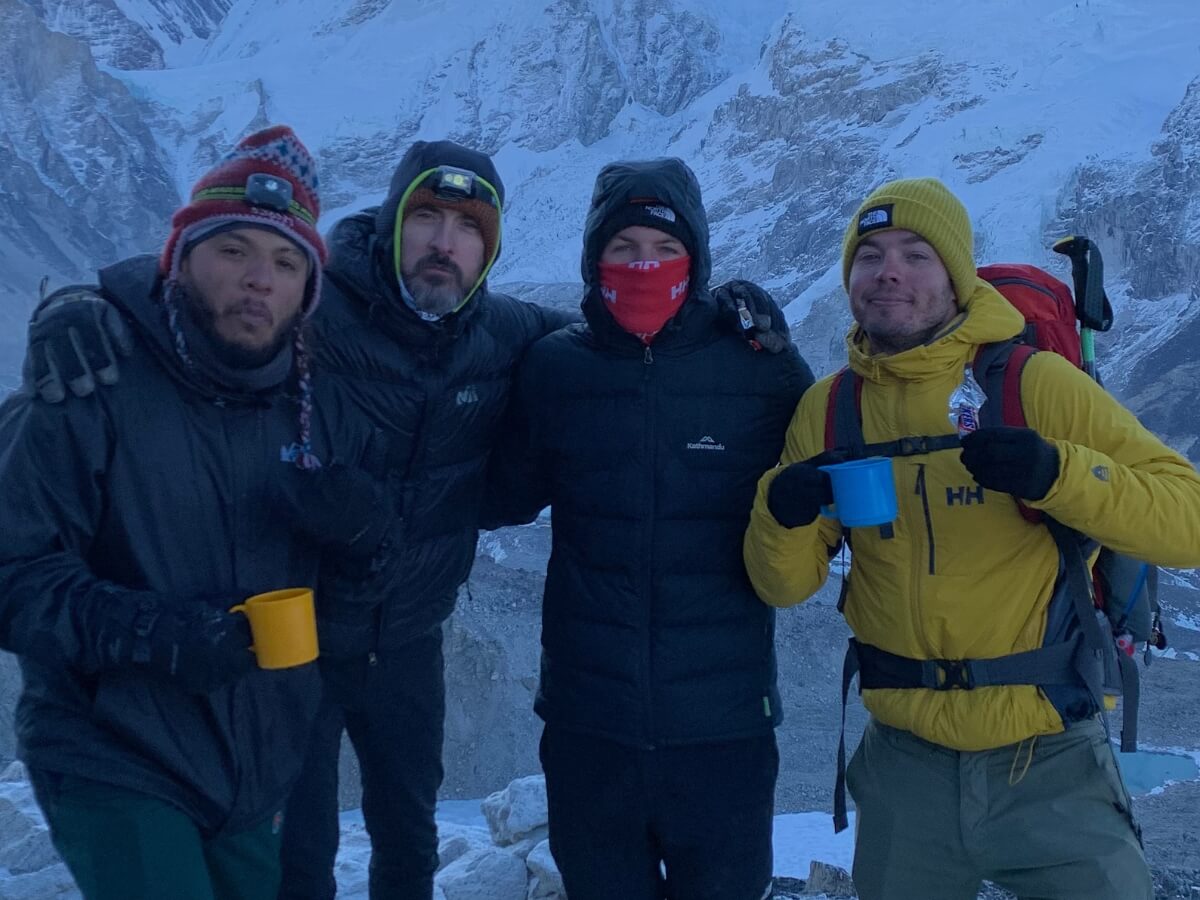
The standard Everest Base Camp trekking itinerary takes around 12 to 14 days including acclimatization days. Some longer itineraries include additional sightseeing and rest days which helps trekkers adjust properly to the increasing altitude.

The best time for Everest Base Camp Trek is during spring from March to May and autumn from September to November. These season offers stable weather conditions, clear skies and mountain views and comfortable temperatures for Everest trekking Nepal.
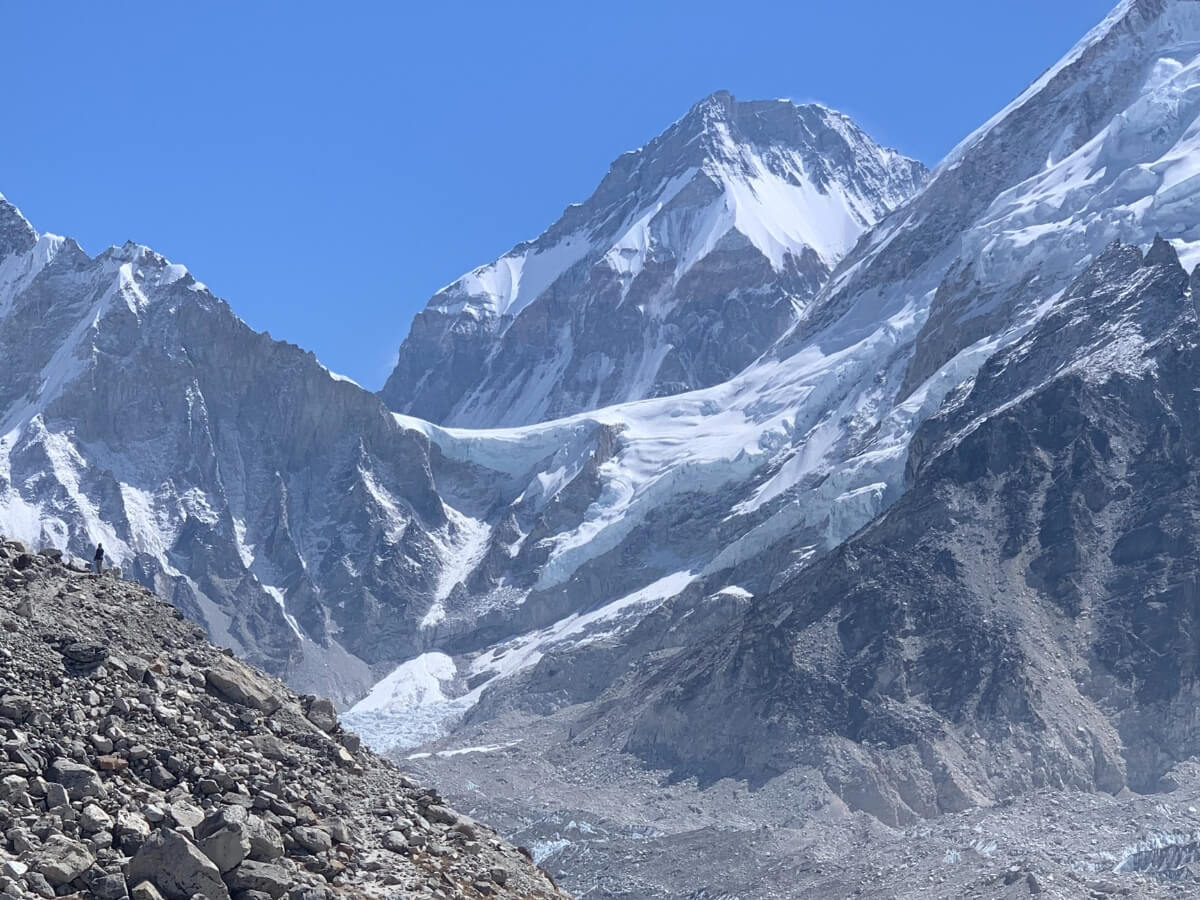
Standard budget for Everest Base Camp Packages includes permits, accommodation, meals, guide service, and transportation. However, Luxury package includes all facilities from standard package plus upgraded lodges, private rooms, and helicopter services.

No, previous trekking experience is not required or mandatory to join the Everest Base Camp trekking adventure. However, prior hiking experience can be really helpful for you, as it makes journey much easier and helps trekkers to adjust with the long walking hours and changing mountain conditions.

Currently, most trekkers are highly recommended to hire licensed guides for the Everest Base Camp Trek Nepal. Guides provide route information, safety assistance, shares cultural knowledge and helps you in case of any emergencies.

Sagarmatha National Park Entry Permit and Khumbu Pasang Lhamu Rural Municipality Permit are required to join Everest Base Camp Trekking Nepal. Please carry it with you because these permits are checked at several locations during the Everest trekking route.

Trekkers are required to carry a valid passport, Nepal visa, and passport-size photographs for obtaining Everest Base Camp permits. Permits are arranged by Mount Face Nepal as these are included in Everest Base Camp Packages, so trekkers won't have to worry about arranging it.

Yes, the Everest Base Camp Trek for first-timers is highly rewarding and suitable because it perfectly blends mountain scenery, Sherpa culture, and personal achievement in one journey. Reaching to the base camp of the world’s highest mountain really creates unforgettable memories for many trekkers.

Highlights of the Everest Base Camp Trek Nepal include Namche Bazaar, Tengboche Monastery, Kala Patthar, and Everest Base Camp itself.

Your endurance training and leg strength must be your top priority. Build from 3 hour to 6-hour hikes with elevation up and down is extremely important. You can train with biking, swimming and weights.

Accommodation during the Everest Base Camp trekking route mainly consists of teahouses which are basic and simple but comfortable rooms, blankets, pillows and dining halls. Attached bathrooms are available at lower altitudes, but at higher altitudes shared bathroom facilities is provided.  

Food mainly includes Dal bhat, noodles, pasta, rice, soups, potatoes, and Tibetan bread. These are some of the foods available on the Everest Base Camp Trek and is freshly cooked, delicious, and offered with warm hospitality.

Yes, many villages on the Everest Base Camp Trekking route offer WiFi facility. However, the internet speed slows down as we move to high elevations and paid internet services are common in teahouses and lodges. 

Mobile network services by NTC/Ncell are available in some villages during Everest trekking Nepal. Internet connectivity becomes rare at higher elevation villages, so its advised to inform your families and friends before starting your journey.

Good acclimatization process, consumption of sufficient water, and proper ascent are essential measures to prevent altitude sickness during Everest Base Camp Trek. Additionally, its important to avoid smoking and alcohol.  

Our Mount Face Nepal success rate of the Everest Base Camp Trek Package is above 95 percent as we follow proper acclimatization schedules and offer trekkers an experienced guides.

The Everest Base Camp Trek Cost usually varies between USD 1,200 – USD 2,500 according to the services and facilities included in the packages. Luxury packages and helicopter return cost more in total. 

From Lukla, it requires about eight to nine days to reach Everest Base Camp safely. Rapid ascent is not recommended during EBC trekking because acclimatization days are very important to prevent from altitude sickness.

Different exercises such as cardio, hiking, and strength building training are really important preparation for the Everest Base Camp trek. Additionally, practicing walking with a backpack really improves your endurance while trekking in real time.

Absolutely. The Everest Base Camp Trek is one of the world's most iconic bucket-list adventures, and once in a lifetime journey. The breathtaking Himalayan scenery is awe inspiring, and you'll enjoy spectacular views of the world's highest mountain, Mount Everest, making every step well worth the effort.
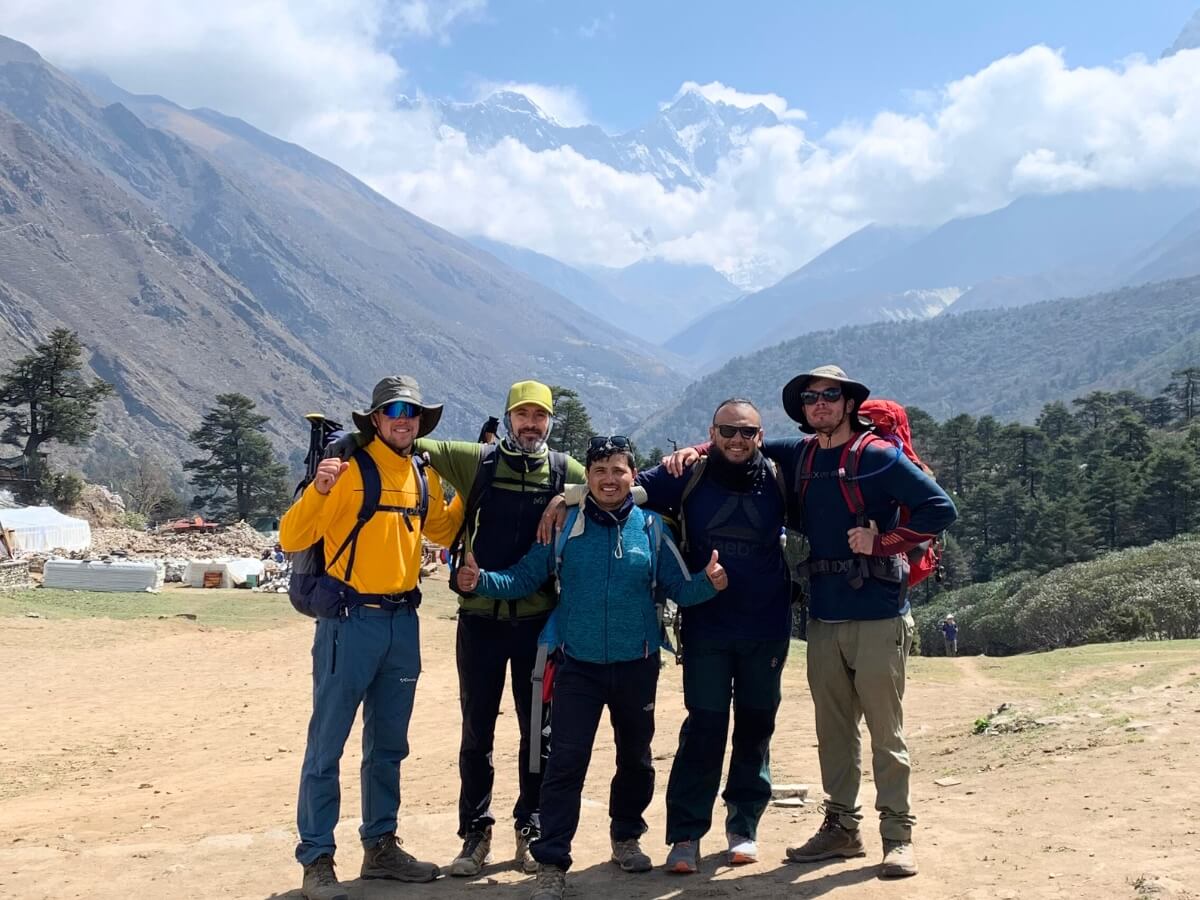
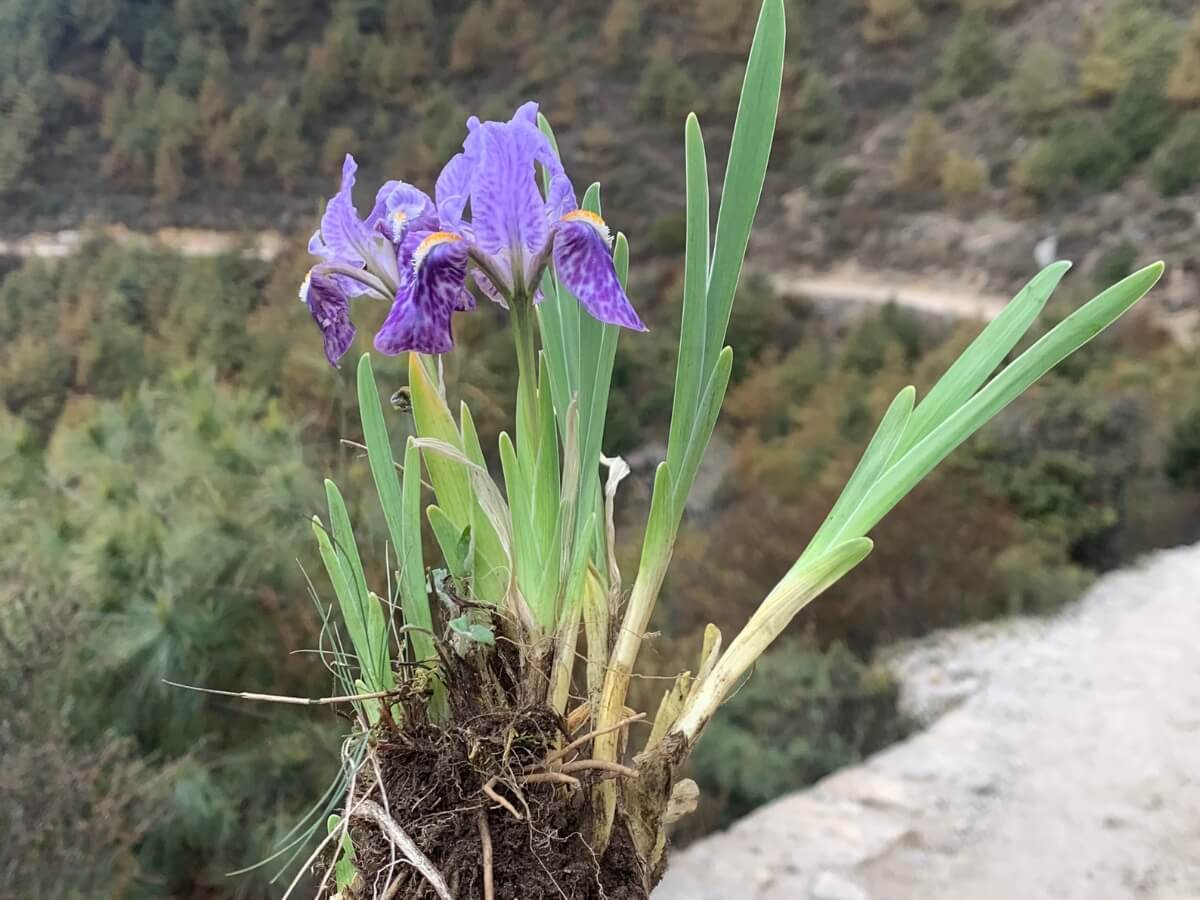
Essential packing list for the Everest Base Camp trekking adventure includes warm clothing, sleeping bag, trekking boots, gloves, down jacket, sunglasses, and water bottles.

Gorakshep is the last permanent settlement village before we reach the Everest Base Camp. Trekkers stay in this village before their trip to both Everest Base Camp and Kala Patthar.

Continuous elevation gain, various ascents and descents, and daily altitude changes are there in the Everest Base Camp Trek Nepal. So, it’s important that you are mentally prepared for it before starting the journey.

Everest Base Camp trek Nepal is generally safe if trekkers follow proper safety measures and listen to their guides regularly. Main challenges such as altitude sickness, weather changes, and trail conditions can be really dangerous if not planned properly.  

Trekkers are advised to follow environmentally friendly practices such as minimum waste creation, avoidance of using plastic and respecting local culture during Everest Base Camp Trek.