Food during the Kailash Mansarovar Yatra
Food during the Kailash Mansarovar Yatra Package for Indians from Nepal is planned to support health, energy, and spiritual focus throughout this high-altitude pilgrimage. Until Kerung, meals are taken at trusted Nepali restaurants, while in Tibet, Mount face Nepal arranges a dedicated kitchen for Kailash Yatra for Indian passport holders. Simple, nourishing Indian and Tibetan vegetarian dishes are included such as rice, lentils, vegetable curries, potatoes, noodles and eggs along with Tibetan meals like Thukpa, momos and Tsampa. These meals help pilgrims to adjust to the Tibetan Plateau during this sacred Kailash Journey.
During the Kailash Mansarovar Yatra for Indian citizens, special care is taken to reduce altitude sickness risk on the Kailash Circuit Trek. Light, warm meals, proper hydration, and easy-to-digest food play a key role in this high-altitude pilgrimage. Pilgrims during the Mount Kailash tour for Indians are advised eat in small portions but frequently and carry energy snacks, as these provide consistent energy which is required for Kailash Pilgrimage Tour.
Accommodation During Kailash Mansarovar Tour
The Accommodation During Kailash Mansarovar Package for Indians is designed to provide the right balance between comfort and the spiritual experience at the high-altitude Kailash Mansarovar trek. During the Kailash Mansarovar Yatra for Indians via the Nepal route, the tourists will be staying at three-star hotels that provide attached bathrooms, hot shower facility, heater, and Wi-Fi connectivity at hotels in Kathmandu, Kerung, Saga, Darchen, and other places.
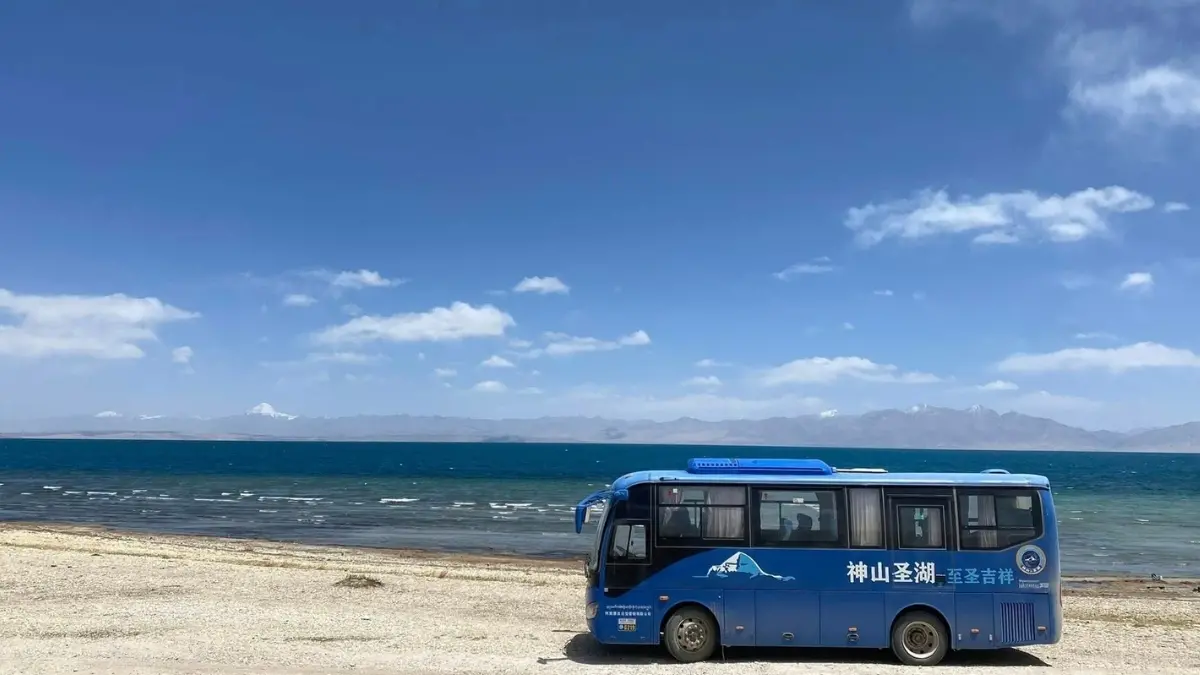
However, during the Kailash Mansarovar tour, the tourists will stay at government guesthouses or basic mud houses as the journey gets closer to Kailash Circuit Trek on places like Lake Mansarovar, Derapuk and Zuthulpuk. These guesthouses are simple, clean, and comfortable with shared bathroom facility and are located near to the Mount Kailash Parikrama (Kora) route, as it allows pilgrims to focus on the sacred essence of the Kailash Yatra for Indians 2027.
Best Time for Kailash Mansarovar Yatra for Indians
The Best time Kailash Mansarovar Yatra Indians is during May to October, as it offers the most favorable weather and trekking conditions. Mount Kailash Journey is ideal in May-June, as majestic views of snow covered mountains and the auspicious Saga Dawa Festival create a vibrant spiritual atmosphere. The trails during this time are accessible via the Nepal Tibet Overland Kailash Route and pilgrims can comfortably perform rituals at holy Lake Mansarovar.
September-October is also highly recommended for the Kailash Mansarovar Tour Package for Indians, as post monsoon skies are clear, landscapes are dry and Holy Mountain Kailash views are absolutely stunning. Kailash Yatra for Indians 2027 during these months ensures safer paths over Dolma La Pass (5,630 meters) and the stable conditions for the Kailash Circuit Trek. While winter (November-March) is avoided due to heavy snow and extreme coldness.
Altitude Sickness Risk on Kailash Mansarovar Yatra
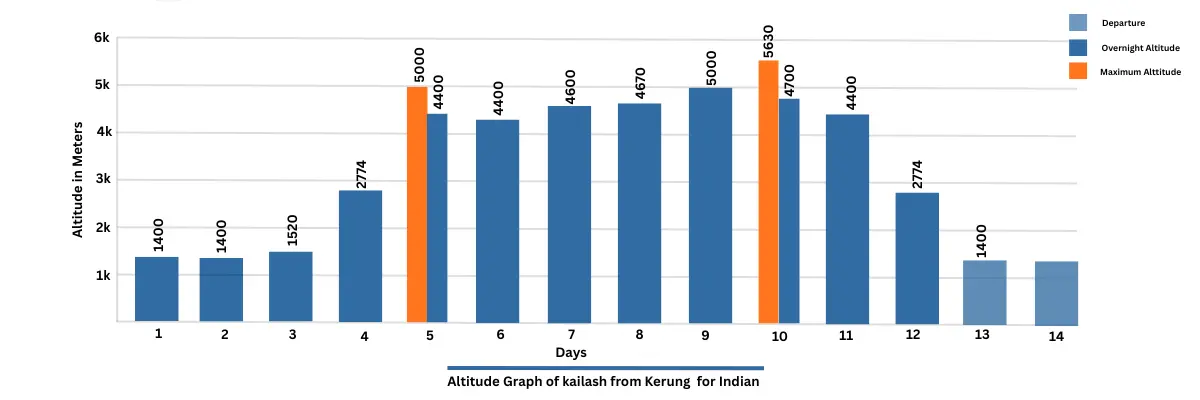
During the Kailash Mansarovar Yatra for Indians from Nepal, altitude sickness is a key concern, as much of the journey lies above 4,500 meters and reaches the highest point of 5,630 meters at Dolma La Pass during the Kailash Circuit Trek. Reduced oxygen levels can cause headache, dizziness, nausea, fatigue, and sleep disturbances along the Mount Kailash Journey for Indian Citizens, especially during the Saga, Derapuk, and Zuthulpuk segments of the Kailash Mansarovar Tour.
Therefore, it becomes important for the pilgrims to take adequate rest, eat light meals frequently, drink a lot of water, and avoid smoke and alcohol to reduce risk of Acute Mountain Sickness (AMS) on the Kailash Outer Circuit. By following these important precautions, it becomes easier for the pilgrims to make their Kailash Pilgrimage Tour a hassle-free experience, allowing them to focus more on the spiritual importance of the Kailash Mansarovar Yatra.
Required permits for Indians for the Kailash Mansarovar Yatra
For Indians, those who are joining on Kailash Mansarovar Yatra, several permits are mandatory to ensure a smooth Kailash Journey. Travelers are required a valid passport with at least 6 months of validity, a Chinese Group Visa, and a Tibet Travel Permit (TTP). Other special permits like Alien’s Travel Permit (ATP) and Frontier/Military Permit are also required for restricted areas like Ngari, which includes Mount Kailash and Lake Mansarovar. These documents must be arranged through the licensed agencies at Kathmandu, as individual applications are not accepted and making an early planning is crucial for a hassle-free Kailash Mansarovar Tour Package for Indians.
All travelers or pilgrims who are taking Kailash Mansarovar Package for Indians must submit their passport in Delhi at least 10 days before departure and confirm travel dates at least 30 days in advance. After that Mount Face Nepal team manages the visa process, including Tibet Group Visa processing, so travelers do not need to visit Delhi for Visa collection. Once the visa is ready, pilgrims can explore Nepal before the Kailash Mansarovar Yatra for Indians from Nepal, while Mount Face Nepal team ensures all permits, documentation and logistics are arranged for a safe and spiritually enriching Mount Kailash Tour for Indian Passport holders.
Is Travel insurance mandatory for Kailash Mansarovar Tour Package for Indians?
Yes, it is mandatory to have Travel Insurance for Kailash Mansarovar Yatra for Indians, as this Yatra takes devotees to high altitude places, going up to 5,630 meters at the Dolma La Pass. Therefore, for a smooth Kailash Mansarovar Tour Package for Indians, the travel insurance should definitely include high-altitude trekking, emergency evacuation and medical coverage, as it is major part of the preparation of High-Altitude Trekking Nepal Tibet Kailash Journey.
Due to remote terrain and altitude sickness risk during Kailash Circuit Trek and Mount Kailash Journey for Indian Citizens, most operators strictly require valid insurance before starting the Kailash Mansarovar Yatra from Nepal. Without proper coverage, emergency rescue and medical cost can be very high, so travel insurance ensures peace of mind during this sacred pilgrimage.
Can beginner join Kailash Yatra for Indians 2027?
Yes, beginners can definitely join the Kailash Yatra for Indians 2027. The Kailash Mansarovar Yatra for Indians from Nepal mostly follows the Nepal Tibet Overland Kailash route, where long drives for many days significantly reduces the walking distance. However, the main challenge is the Kailash Circuit Trek, more specifically at Dolma La Pass (5,630 meters), but with good health and positive mindset it is achievable.
The Kailash Mansarovar Tour Package for Indians is designed for pilgrims, not professional trekkers. So, with guided support, acclimatization days, and proper Preparation for the High-Altitude Trekking Nepal Tibet Kailash Journey, even first-time trekkers can safely and successfully complete Mount Kailash Journey for Indian Citizens and enjoy this once in a lifetime sacred Kailash Pilgrimage Tour successfully.
Kailash Mansarovar Yatra Cost for Indians
The Kailash Mansarovar Yatra Cost for Indians usually depends on route, duration and the service label weather it is budget friendly or luxury option. For the Nepal Tibet Overland Kailash Journey, the Kathmandu to Kailash Mansarovar Yatra cost for Indian travelers usually ranges between INR 220,000 to INR 2,45,000 per person. This estimated Kailash Mansarovar Yatra cost for Indians from Nepal normally covers a 14-day itinerary which includes Tibet permits, Chinese Group Visa, comfortable accommodation, vegetarian meals, ground transportation, and an experienced guides throughout the sacred Kailash journey.
However, the Kailash Yatra Cost for Indians 2027 may vary based on group sizes, hotel category and an additional acclimatization day. Luxury Kailash Mansarovar Yatra or smaller groups under the Kailash Manasarovar Yatra Cost for Indians can go slightly higher, but offers better hotels and an added comfort. However, on Kailash Mansarovar Tour Package for Indians, international flights to Kathmandu, travel insurance, personal expenses and tips are excluded. Booking with an authorized operator like Mount Face Nepal ensures transparent pricing, proper limits and a smooth spiritual journey to Mount Kailash and Lake Mansarovar.
Visa and Entry Procedure for Indian Passport Holder
- All Indian Travelers intending to take Kailash Journey via Kathmandu must deliver their passport in Delhi at least 10 days prior to departure and confirm their travel dates no less than thirty (30) days in advance.
- Traveler can travel Nepal once they get Tibet Group Visa at Delhi- Visa Processing part – Mount Face Nepal team will look after. Traveler do not need to go Delhi to collect Visa.
- If they want to explore Nepal, they can travel Nepal earlier too.
Prohibited Items and Activities During Travel In Tibet
To ensure compliance with local regulations and to facilitate a smooth visit, all travelers to Tibet are required to observe the following rules and restrictions:
- Travel Arrangements: Independent travel is not permitted. All visitors must be accompanied by a licensed guide and adhere strictly to a pre-approved travel itinerary.
- Restricted Areas: Entry into restricted or non-designated areas without prior authorization is strictly prohibited.
- Politically Sensitive Materials: The carrying, display, or distribution of politically sensitive materials is not allowed. This includes, but is not limited to, books, printed materials, audio or video recordings, and digital content referencing the Dalai Lama. Such materials may also include photographs stored on electronic devices, including mobile phones.
- Political and Religious Activities: Participation in or promotion of political or religious activities without official authorization is prohibited.
- Aerial Equipment: The use of drones or any form of aerial photography equipment is not permitted without special approval from the relevant authorities.
- Photography Restrictions: Photographing military installations, government buildings, or security personnel is strictly forbidden.
- Weapons and Controlled Substances: The possession or transport of firearms, weapons, or controlled substances is strictly prohibited.
- Public Order and Cultural Respect: Any behavior that disrupts local customs, religious practices, or public order is not permitted. Visitors are expected to show respect for local traditions and regulations at all times.
Safety Guidelines for Kailash Yatra
The Kailash Yatra via Kerung involves travel through high-altitude regions, remote terrain, and environmentally sensitive areas. For the safety, health, and well-being of all participants, strict adherence to the following safety guidelines is mandatory throughout the journey.
Medical Fitness and Health Requirements
- All participants must ensure they are medically fit to undertake high-altitude travel. Individuals with pre-existing conditions related to the heart, lungs, blood pressure, or respiratory system are strongly advised to obtain medical clearance prior to departure.
- The prescribed acclimatization schedule outlined in the approved itinerary must be followed without exception.
- Symptoms of Acute Mountain Sickness (AMS)—including headache, nausea, dizziness, loss of appetite, fatigue, or breathlessness—must be reported immediately to the guide or tour leader.
- Participants are required to carry adequate personal medications and essential medical supplies for the duration of the journey.
- Comprehensive travel and medical insurance, including coverage for high-altitude travel and emergency evacuation, is strongly recommended.
Role of Nepali and Tibetan Guides
- Licensed Nepali and Tibetan guides are appointed to ensure the safety, coordination, and smooth conduct of the yatra.
- Participants must strictly follow all instructions, directions, and safety decisions made by the Nepali and Tibetan guides at all times.
- The guides’ decisions regarding pace, route adjustments, acclimatization, weather conditions, and emergency response are final and binding in the interest of participant safety.
- Any deviation from the guide’s instructions or independent movement is strictly prohibited.
Altitude Safety and Physical Conduct
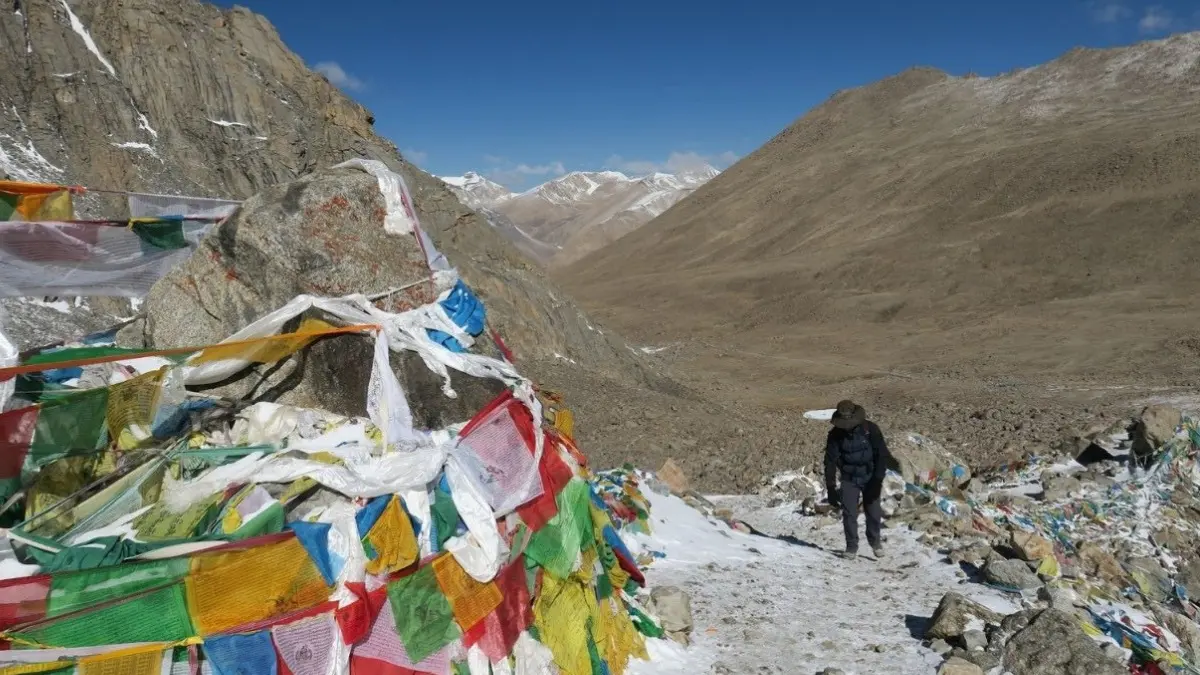
- The yatra reaches elevations exceeding 5,600 meters, particularly during the Parikrama at Drolma La Pass.
- Participants must maintain a slow and steady pace during Kora, avoid physical overexertion, and remain adequately hydrated.
- Physical activity must be conducted in accordance with guidance provided by the appointed guides and tour staff.
Weather and Environmental Conditions
- Weather conditions in the Kailash region are unpredictable and may include snow, strong winds, and sudden temperature changes.
- Participants must carry appropriate cold-weather, windproof, and waterproof clothing, as well as suitable trekking footwear.
- Protection against intense ultraviolet radiation is essential; sunglasses, sunscreen, and head protection must be used.
- Leaving designated routes or entering restricted areas without authorization is strictly prohibited.
Transportation and Road Safety
- Travel involves long driving hours on mountainous and uneven roads. Participants must remain seated during transit and use seat belts where available.
- All safety instructions issued by drivers, guides, and tour staff must be followed without exception.
Food, Water, and Hygiene
- Only boiled or sealed bottled water should be consumed.
- Proper hygiene practices must be maintained at all times to reduce the risk of illness.
- Consumption of alcohol and smoking is strongly discouraged, particularly at high altitudes.
Cultural, Religious, and Legal Compliance
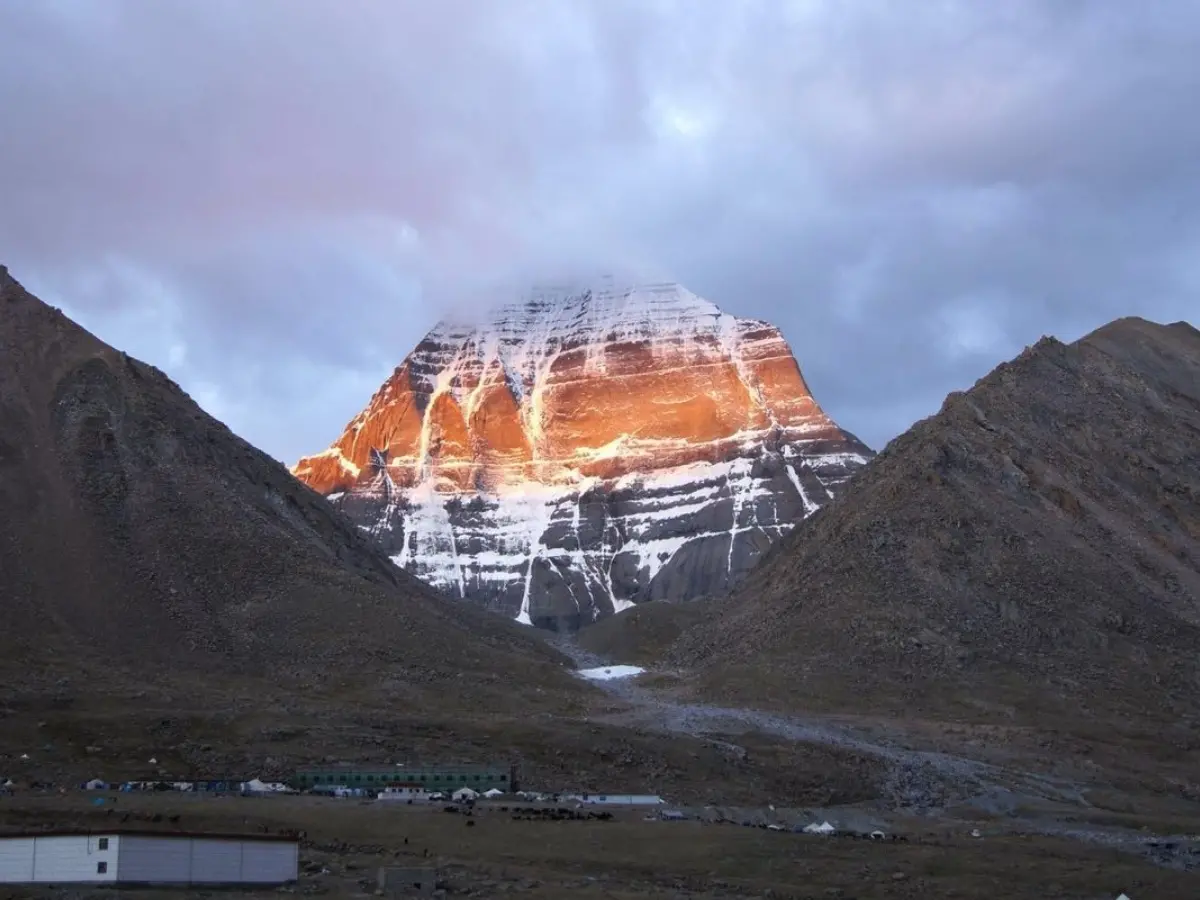
- Mount Kailash and surrounding areas are of exceptional religious significance. Participants must conduct themselves respectfully toward local customs, religious practices, monasteries, and fellow pilgrims.
- All local laws, regulations, and administrative requirements must be strictly observed.
- Photography and other activities must comply with restrictions as advised by the guides.
Emergency Procedures and Group Discipline
- Communication facilities may be limited or unavailable in remote regions.
- Participants must remain with the group at all times and are not permitted to travel independently.
- In the event of an emergency, participants must follow evacuation and safety procedures as directed by the Nepali and Tibetan guides and tour leader.
Environmental Protection and Responsibility
- The Kailash region is ecologically fragile. Participants must adhere to environmental protection principles and responsible travel practices.
- Littering, environmental damage, or disturbance to sacred sites and wildlife is strictly prohibited.
- All non-biodegradable waste must be carried back and disposed of responsibly.
Alternative Kailash Yatra Route for Indian Nationals
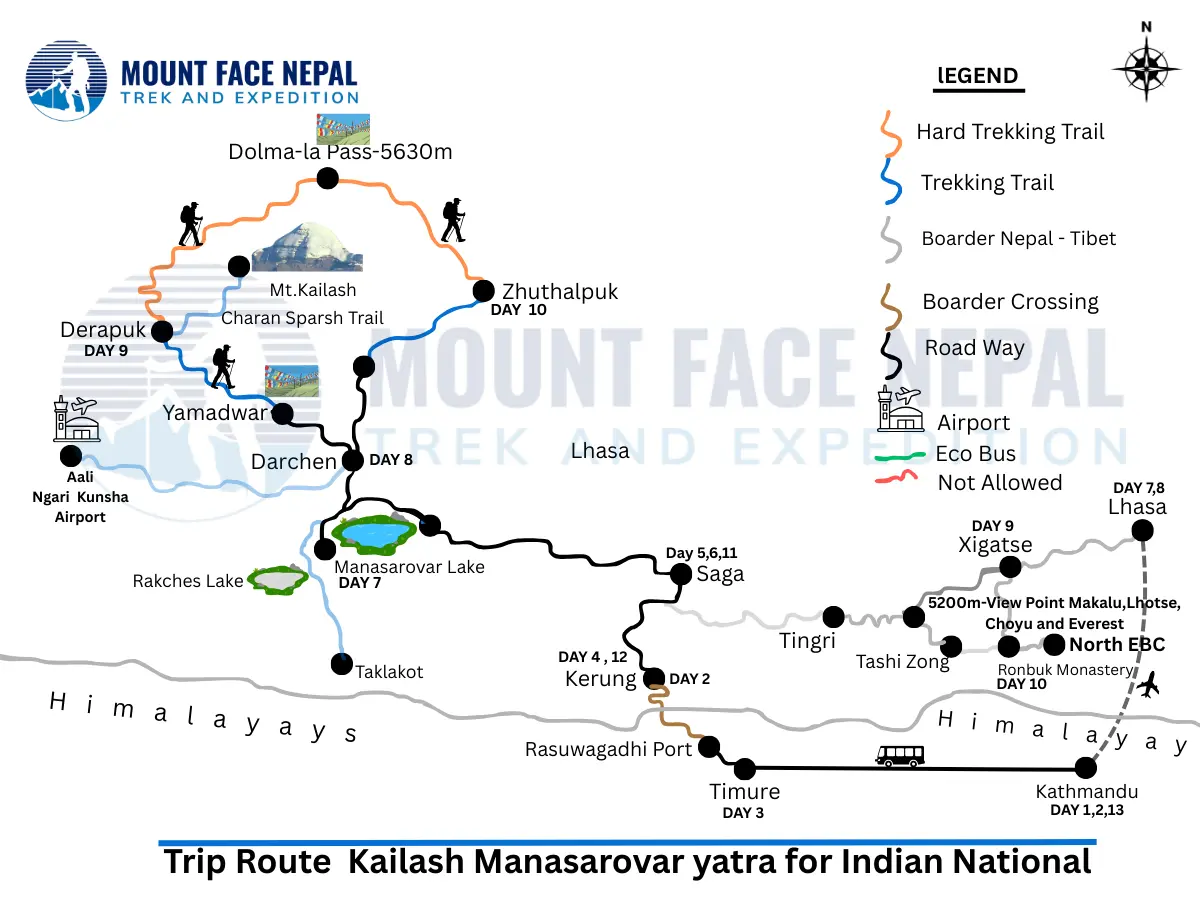
Apart from the well-known Kathmandu–Kerung overland route, Indian nationals also have alternative pathways to reach Mount Kailash, offering faster and more refined travel experiences. One such option is the Kathmandu–Simikot–Hilsa route, widely regarded as a premier spiritual and adventure journey. Pilgrims fly early morning from Nepalgunj to Simikot on a scheduled flight, then continue by helicopter to Hilsa. After a brief ten-minute walk across the border to complete immigration formalities, the Kailash journey for Indians continues by road to Taklakot, also known as Purang.
Another exclusive option available for Indian nationals is the Kathmandu–Lhasa route by flight, considered the most comfortable way to approach the Kailash region. Pilgrims fly directly from Kathmandu to Lhasa, bypassing several days of rugged overland travel and enjoying the striking aerial views of the Himalayan range, including highest peak on the Earth Mount Everest (8,848.86 meters). Upon arriving in Lhasa, the journey proceeds by road through the Tibet’s vast landscapes toward Saga, gradually acclimatizing pilgrims while maintaining a smoother and more relaxed pace on Kailash Mansarovar Package for Indians.
 141 reviews
 20 reviews
 Dipendra Simkhada(DIPU)
 Kisan Adhikari