Everest Helicopter Tour Types: Flyover vs Landing
Everest Helicopter Tours are generally available only in two forms, flyover tours and the landing tours.
Everest Helicopter Flyover Tour
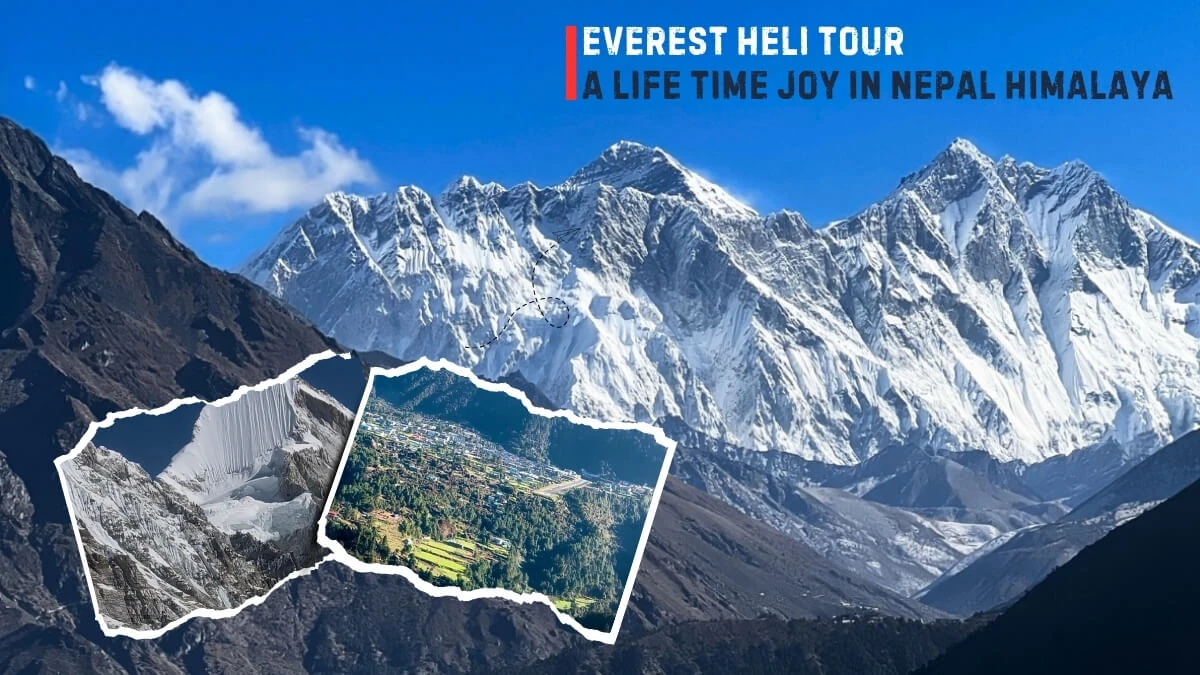
A flyover tour offers breathtaking and unreal aerial views of Mount Everest, Lhotse, Nuptse, Ama Dablam, Pumori, glaciers, valleys, and famous landmarks such as Everest Base Camp and Kala Patthar from a bird's eye- perspective. Passengers enjoy panoramic sightseeing from the helicopter without leaving the aircraft, making this the safest and most practical option for most travelers. Due to the aviation rules and safety requirements, the Everest Helicopter Tour Package includes aerial sightseeing rather than landing at Everest Base Camp or Kala Patthar.
Everest Helicopter Landing Tour
Landing tours may include a brief stop at an approved location, such as the Hotel Everst View area or Kala Patthar, depending upon the weather, permissions, aircraft performance, and the operational conditions. Landing at high-altitude places like Kala Patthar is restricted and may be only allowed for one or two passengers after their weight has been checked and verified by officials. These limitations help to maintain the safe helicopter operations in the thin mountain air.
Therefore, the Everest Helicopter Tour package generally focuses on sightseeing from the air rather than landing at Everest Base Camp or Kala Patthar.
Where Does the Everest Helicopter Tour Land? Landing Locations Explained
Hotel Everest View Landing
The helicopter lands at Syangboche, right beside Hotel Everest View at around 3,880 m, for a relaxed breakfast stop with Everest and Ama Dablam filling the valley in front of you. The stop usually lasts 30–60 minutes, and breakfast is included in most packages (though it’s still worth double-checking with your operator). It’s the most comfortable part of the tour — time to eat, take photos and simply take in the scenery without the extreme altitude of the higher points.
Kala Patthar Landing
Kala Patthar sits at roughly 5,545 m and is the classic Everest viewpoint, giving a direct line of sight to the summit that Base Camp itself can’t match. Landing here isn’t guaranteed as CAAN has restricted regular commercial landings, and it’s mainly available on private charters in peak season. Weight limits tighten sharply above 4,200 m (around 250 kg combined), and the pilot makes the final call based on weather, wind and aircraft performance. Also if it does happen, the ground stop is short usually of only 5 to 15 minutes.
Everest Base Camp Flyover
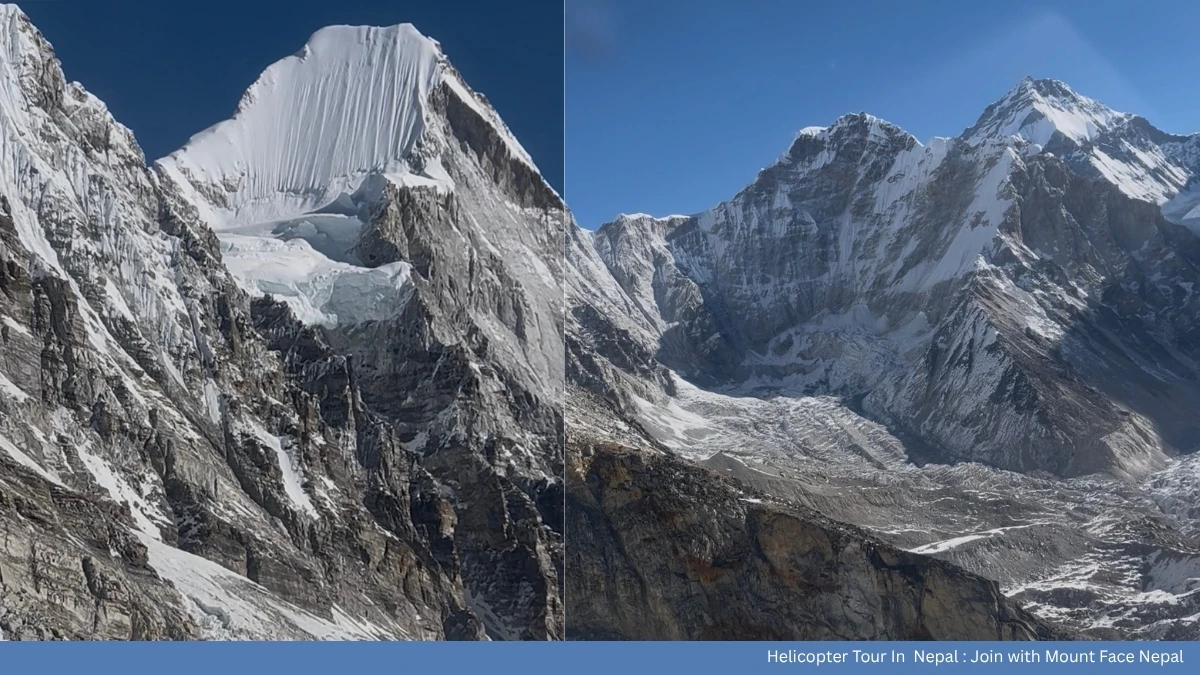
From the air, Everest Base Camp looks like scatter or colorful expedition tents on the Khumbu glacier, with the Icefall's jagged and crevasses rising behind it. The helicoper doesn't land here, as base camp sits on moving glacier ice and has been closed to tourist landings since 2021, so the route includes an aerial pass instead. Flying over gives you the full scale of the camp and Icefall in one sweep, something you simply can’t get from standing on the ground.
Kala Patthar Landing 2027 Update: Is It Available Again?
Kala Patthar is situated at approximately 5,545 meters and offers an extraordinary viewpoint of Mount Everest, Nuptse, Pumori, Lhotse, Changtse and the surrounding peaks. However, landing plans strictly depend on aviation regulations, pilot approval and real-time weather conditions. October 14 is expected to mark the transition from the unstable monsoon period to clearer autumn conditions, but cloud, fog, and strong winds can still occur before or after this date. Your flight will proceed only when visibility, landing conditions, and safety requirements are satisfactory; otherwise, the pilot may arrange a scenic flyover or an alternative landing. With Mount Face Nepal, every Kala Patthar flight or landing is carefully planned with safety, flexibility, and an unforgettable Himalayan experience in mind.
What Mountains Can You See During Kathmandu to Everest Helicopter Tour?
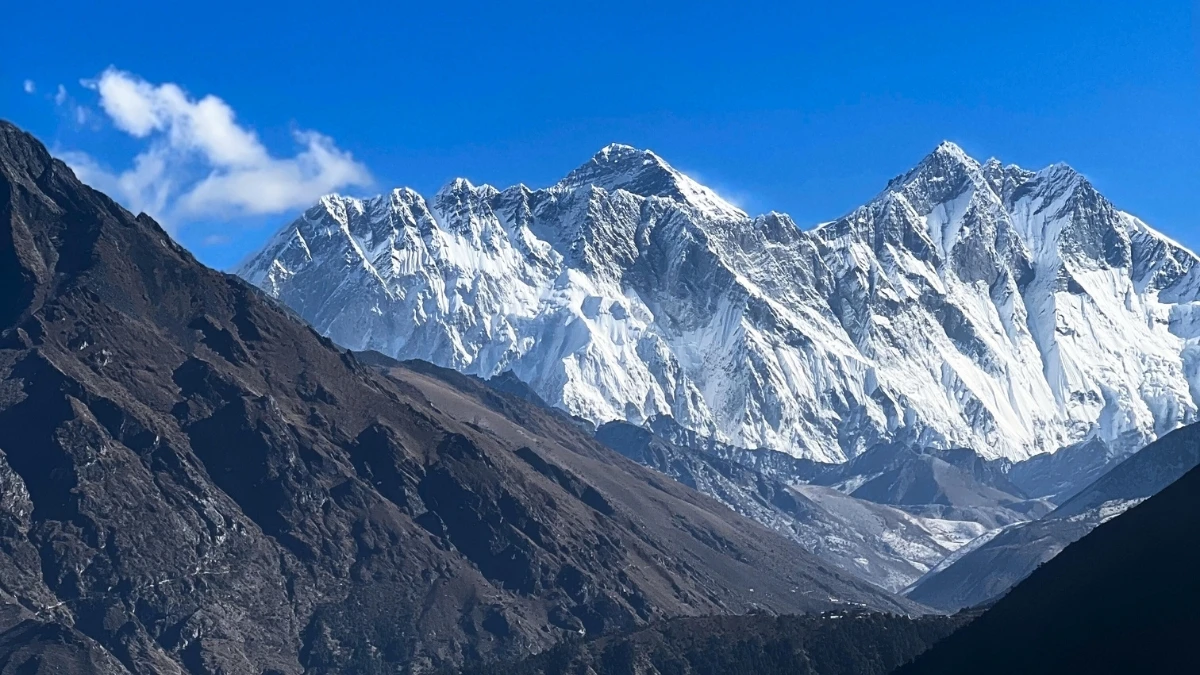
During the Everest Heli Tour, you can get close-up views of Mount Everest (8,849 m), the main draw, along with several other giants in the Mahalangur range. Lhotse (8,516 m), Nuptse (7,861 m), and Makalu (8,463 m) are clearly visible, while Ama Dablam (6,812 m) stands out for its distinctive pyramid shape. Travelers will also spot Pumori, Thamserku, Cho Oyu, Cholatse, Taboche, and Kusum Kanguru, with the exact lineup shifting a bit depending on the flight path and weather that day.
Best Time for Everest Base Camp Helicopter Tour Nepal
The best time for Everest Helicopter Tour is during spring from March to May and autumn from September to November, when the skies are generally clearer, winds are more stable and mountain visibility is excellent. October and April are often considered especially favorable for panoramic views of Everest, Lhotse, Nuptse, Ama Dablam and the Khumbu valley. Winter also can offer clear skies but brings very cold temperatures, while the monsoon season may cause cloud, rain, and flight delays. Even in the best seasons, all departures and landing remain subject to real time weather and aviation clearance. We Mount Face Nepal carefully monitors conditions to plan your journey safely and comfortably.
Safety, Altitude and Passenger Requirements
Altitude Sickness Risk on Everest Heli Tour from Kathmandu
Altitude sickness risk on the Everest Helicopter Tour is generally low because you only spend a short time at high altitude, usually no more than 10-15 minutes at Kala Patthar (5,545 m) and about an hour at Hotel Everest View (3,880 m). However, the rapid altitude gain from Kathmandu to above 5,000 m can still cause mild symptoms like headache, dizziness, nausea, or shortness of breath in some people, even without prior warning. You don't have to worry much though becuase the helicopter carries oxygen, the pilot keeps the engine running during landings. And anyone with heart or lung conditions should check with a doctor before booking.
Fitness Requirement for Everest Base Camp Helicopter Tour
The Everest Base Camp Helicopter Tour requires minimal physical fitness and only enough mobility to board and leave the aircraft and manage short and gentle walks at the landing locations. No trekking experience, special training, or athletic stamina is necessary, making the 4–5-hour experience suitable for many children, seniors, and non-trekkers. From Syangboche to Hotel Everest View, the walk may take around 30 minutes, so comfortable shoes and a relaxed pace are recommended. Move slowly at high altitude, drink water, and avoid alcohol. Travelers with medical conditions or a history of altitude problems should consult a doctor about suitability and medication beforehand.
What is the Passenger & Weight Limits for Everest Heli Tour?
The Everest Helicopter Tour carries a maximum of 5 passengers plus the pilot, with a combined weight limit of around 500 kg at lower altitudes. Above 4,000–4,400 m, thin air cuts the safe payload to roughly 220–250 kg per shuttle, so groups of five are often split into two or three loads for the Kala Patthar landing. Passengers are weighed at check-in along with their small daypack, and the pilot makes the final call on load distribution based on the day's temperature, fuel, and wind conditions.
Everest Helicopter Tour for Families, Senior Travelers and Children
The Everest Helicopter Tour works greatly for families, senior travelers and children since there is no trekkig involved and the time at high altitude is kept short. Kids of any age can join easily but those under 5 need parent or guardian with them. Also, older travelers including people in thier 80s regularly do this Everest Helicopter Tour without any issue. So, anyone with heart, lung or blood pressure concerns should check with a doctor before booking.
Permits Required for Everest Base Camp Helicopter Tour
For the Everest Base Camp Helicopter Tour, travelers will need two permits: the Sagarmatha National Park Entry Permit and Khumbu Pasang Lhamu Rural Municipality Permit. Sagarmatha National Park Entry Permit costs NPR 3,000 per person for foreign nationals and NPR 1,500 for SAARC nationals while municipality permit costs NPR 2,000 per person. You don't have to worry about managing it as these permits are covered in the Everest Heli Tour Package, so Mount Face Nepal handles it.
Kathmandu to Everest Helicopter Tour: Weather, Safety & Cancellation Policy
Everest Helicopter flights operate only when visibility, wind, cloud cover, and other conditions meet aviation safety requirements. The pilot has the final authority to delay, modify, divert, or cancel the flight and may return to Kathmandu or land at the nearest safe location if conditions get worse. Weather-related cancellations are safety decisions, not business choices, so depending on the confirmed booking terms, guests may be offered rescheduling. Also, we at Mount Face Nepal closely monitors forecasts and communicate updates regularly, helping you to enjoy a carefully planned Everest Helicopter experience while keeping passenger safety as the highest priority.
What Happens If the Everest Helicopter Tour Is Cancelled?
If the Everest helicopter tour gets cancelled due to weather or other operational issues, Mount Face Nepal's first move is to reschedule the flight to the next available slot, keeping your booking and price intact. If the weather clears later that same day, the flight may simply be delayed and pushed to a later departure time. If rescheduling is not possible within your travel window, you'll get a refund minus a small administrative fee. Since Himalayan weather is unpredictable, its is really smart to keep a spare day or two in your Nepal itinerary in case a rebook is needed.
Everest Helicopter Tour vs Everest Base Camp Trek: Which Is Better?
| Details | Everest Helicopter Tour | Everest Base Camp Trek |
| Duration | 4–6 hours (same-day from Kathmandu). | 12–16 days (including acclimatization). |
| Main Experiences | Scenic aerial flight with a short landing near Hotel Everest View. | Complete ground level trekking journey through the Khumbu Valley to Everest Base Camp. |
| Physical Demand | Low, minimal walking, no trekking fitness needed. | Moderate to high, 5–8 hours daily walking at higher altitude. |
| Maximum altitude | 3,880 meters at Hotel Everest View or around 5,545m at Kala Patthar | 5,364m at Everest Base Camp or 5,545m at Kala Patthar |
| Altitude Exposure | Rapid jump to 5,000+ m in under an hour, no acclimatization. | Gradual ascent with rest days in Namche and Dingboche. |
| Main Highlights | Aerial views of Everest, Lhotse, Nuptse, Ama Dablam; optional landing. | Full Khumbu region journey with villages, monasteries, suspension bridges, teahouse culture and breathtaking mountain views. |
| Cost | Shared costs 1,200–1,350 per person, private charters cost $5000 to $5500. | Cost ranges from 1,400–2,000 per person, depending on inclusions and group size. |
| Best For | Time-limited travelers, non-trekkers, photographers. | Trekkers seeking full immersion, culture, and gradual altitude gain. |
| Weather Depedency | High, flights often delayed or canceled in poor weather. | Moderate, trek continues in most weather. |
Is the Everest Helicopter Tour Worth the Money?
Yes, the Everest Helicopter Tour is worth it if you want to actually stand in the Khumbu region rather than just look at it from a plane window. Unlike a mountain flight, which stays at eye level with the peaks and never lands, the helicopter takes you into the region itself, with a possible short landing at Kala Patthar (5,545 m) and a breakfast stop at Hotel Everest View (3,880 m). Here, you can feel the actual altitude, the cold, and the scale of the mountains up close, but you won't get the two-week trekking experience or the cultural immersion of Sherpa villages. This Everest Helicopter Flight suits for those travelers who are short on time, older visitors, or anyone who wants Everest without the physical demands of a trek. If budget is your priority, a mountain flight costs a fraction of the price and if you have two weeks and the fitness, the Everest Base Camp Trek offers a deeper journey.
Can solo travelers join a shared Everest helicopter tour?
Yes, solo travelers can absolutely join a shared Everest helicopter tour. You simply need to book one seat on a group-joining flight, which departs once enough seats are filled. This way helicopter cost gets split across everyone on board. This is really the most affordable way to do the trip, usually running around USD 1,200-1,500 per person, and it really works well for solo travlers, couples, and small groups alike. The only thing to keep in mind is that the departure dates depend on seat availability, so some flexibility with your schedule helps.
Why Book Your Everest Helicopter Tour with Mount Face Nepal?
Choose Mount Face Nepal an organized Everest Helicopter Tour backed by an experienced guide, an experienced support team, and excellent customer services starting from the airport pick up to drop off. As a government-registered trekking company (License No.2154/073), we take care of your all permits, flights scheduling, weather monitoring, and well organized emergency responses during your whole trip. Our professional services include transparency in prices, private departure schedule according to your itinerary, passengers’ needs, and choice of landings. With a strong commitment to safety, responsible tourism, and reliable service, Mount Face Nepal helps to make your Himalayan adventure smooth, meaningful, and unforgettable.
How to Book Everest Helicopter Tour from Kathmandu?
Booking your Kathmandu or Everest Helicopter Tour with Mount Face Nepal is quite easy and simple. You can either book your tour on our site through the online inquiry form/booking form or contact us via WhatsApp or Gmail to check for availability, get the recent price and talk about the number of people, landing sites, and more. Please give us your travel date, number of passengers, total weight, hotel name and address, and the Everest Helicopter Tour Itinerary you prefer. And then our Mount Face Nepal team will explain the booking procedure, required documents, payment terms and weather-related arrangements before confirming your reservation and coordinating your hotel transfer and airport departure.
Final Thoughts: Is the Everest Helicopter Tour Worth It?
Everest Helicopter Tour offers an amazing opportunity for experiencing the world’s highest mountains within just one day. Starting with the exciting flights over Khumbu Valley and Everest Base Camp to the chance of landing at Kala Patthar and having breakfast at Hotel Everest View, all these things make the tour unique, comfortable, and full of the Himalayan scenery. With minimal physical requirements, the journey is perfect for those travelers who want to witness Everest without undertaking a challenging multi-day trek.
At Mount Face Nepal, we take care of everything, including permits, transfers, flight coordination, and itinerary support, which will allow you to focus on enjoying the experience. As the weather in the mountains and the conditions of aviation are unpredictable, flexibility and safety really remains important. Contact Mount Face Nepal now through our website, WhatsApp, or Gmail to plan this unforgettable Everest Helicopter Tour escape with confidence.
 169 reviews
 22 reviews



 Dipendra Simkhada(DIPU)

 Kisan Adhikari