Overview
Nepal is a multi-religious, multicultural and multi lingual country where festivals are deeply tied to its religion, seasons, and local identity. The autumn seasons brings biggest festival dates with Dashain and Tihar. Other major celebrations fall in clear seasons, such as festivals 2026 including Holi in spring and Buddha Jayanti in early summer. These events genuinely reflect the vibrant spirit of the people here. From the harvest rituals to spiritual observances, festival calendar 2026 offers a vibrant glimpse into ’s living heritage and diverse cultural landscape.
As the dates follow the lunar i calendar, festivals 2026 with dates shift slightly each year on the Gregorian calendar, so this guide provides all important festival dates in with dates in both formats. Below table shows all festivals in 2026, so readers can understand the cultural flow. Use this data to coordinate your travel with local traditions and witness the one of the most unique heritages of the Himalayas and world.
List of festivals in Nepal 2026 with date
| S.N. | Name of Festival | Season / Dates | Significance |
| 1. | New Year (Naya Barsha), Biska Jatra (Bisket Jatra) | Spring / April 14 | This day marks as the beginning of the Bikram Sambat calendar in Nepal. It is celebrated with different cultural activities like Biska Jatra in Bhaktapur, family gatherings, feasts and wishes for the prosperity and new beginnings. |
| 2. | Buddha Jayanti, Ubhauli Parba | Spring/ May 2 | Celebration of the birth, enlightenment, and Parinirvana of Lord Gautama Buddha. |
| 3. | Dhan Dibaas (Dahi Chiura Khane Din), Ropain Dibas | Summer/June 29 | A simple yet joyful farmer’s festival where people eat yogurt (dahi) and beaten rice (chiura) to celebrate the monsoon planting season and agricultural abundance, also known as National Paddy Day. Farmers plant rice seedlings, sing, dance, and play in the mud. |
| 4. | Guru Purnima | Summer/July 29 | This day is for honoring teachers and spiritual gurus. Students and disciples offer respect, gifts, perform rituals, and express the gratitude for guidance in knowledge and life to their teachers. |
| 5. | Khir Khane Din | Summer/July 31 | Celebrated by eating rice pudding (khir). It marks a seasonal observance that is tied to agricultural cycles and family bonding through simple, sweet rituals. |
| 6. | Janai Purnima (Rakhsa Bandan) | Summer/ Aug. 28 | Hindus change their sacred thread (janai) and tie protective rakhi threads from Brahmin priest. Sisters tie rakhi on thier brothers’ hand for protection, emphasizing familial bonds and the spiritual renewal |
| 7. | Gai Jatra | Summer/Aug. 29 | Newar community festival honoring the deceased. Families parade decorated cows or children in humorous costumes, promoting satire, social commentary, and consolation for loss. |
| 8. | Shree Krishna Janmastami | Autumn/ Sep.4 | Celebration of the birth of Hindu god, Lord Krishna with fasting, bhajans, and temple visits. |
| 9. | Teej, Ganesh Chaturthi | Autumn/Sept.14 | Women’s festival dedicated to Goddess Parvati. Involves fasting, red attire, singing, dancing, and prayers for longevity of husband’s life, and family well-being. This day also coincides with Ganesh Chaturthi, also known as Vinayaka Chaturthi. It is a major Hindu festival in celebrating the birth of Lord Ganesh, who is the deity of wisdom and prosperity. Devotees install Ganesha idols and performs pujas, prayers and offerings. |
| 10. | Indra Jatra & Kumari Jatra (Yenya Punhi) | Autumn/Sept.25 | Kathmandu Valley festival honoring Indra, the rain god. Features chariot processions of Kumari, masked dances, and cultural performances celebrating divine blessings on Kathmandu Durbar Square. |
| 11. | Jitiya Parba | Autumn/Oct.4 | Celebrated mainly by Maithili women for the well-being and longevity of their children. This day involves strict fasting and rituals. |
| 12. | Ghatasthapana | Autumn/Oct.11 | It is the first day of Dashain where a kalash (pot) is filled with holy water. And barley seeds are planted to grow Jamara, symbolizing the blessing and power of Goddess Durga. |
| 13. | Fulpati | Autumn/Oct.11 | Seventh day of Dashain. Sacred flowers, leaves, and fruits are carried in procession to temples and homes. It signifies the arrival of auspicious energies for the festival. |
| 14. | Maha Astami | Autumn/Oct.18 | Eighth day of Dashain. This day is dedicated to Goddess Kali. Animal sacrifices and intense worship occur to seek protection and strength against evil forces. |
| 15. | Maha Nawami | Autumn/Oct.19 | Ninth day of Dashain. Weapons, tools, and vehicles are worshipped. Marks the culmination of Durga’s battle against demons. |
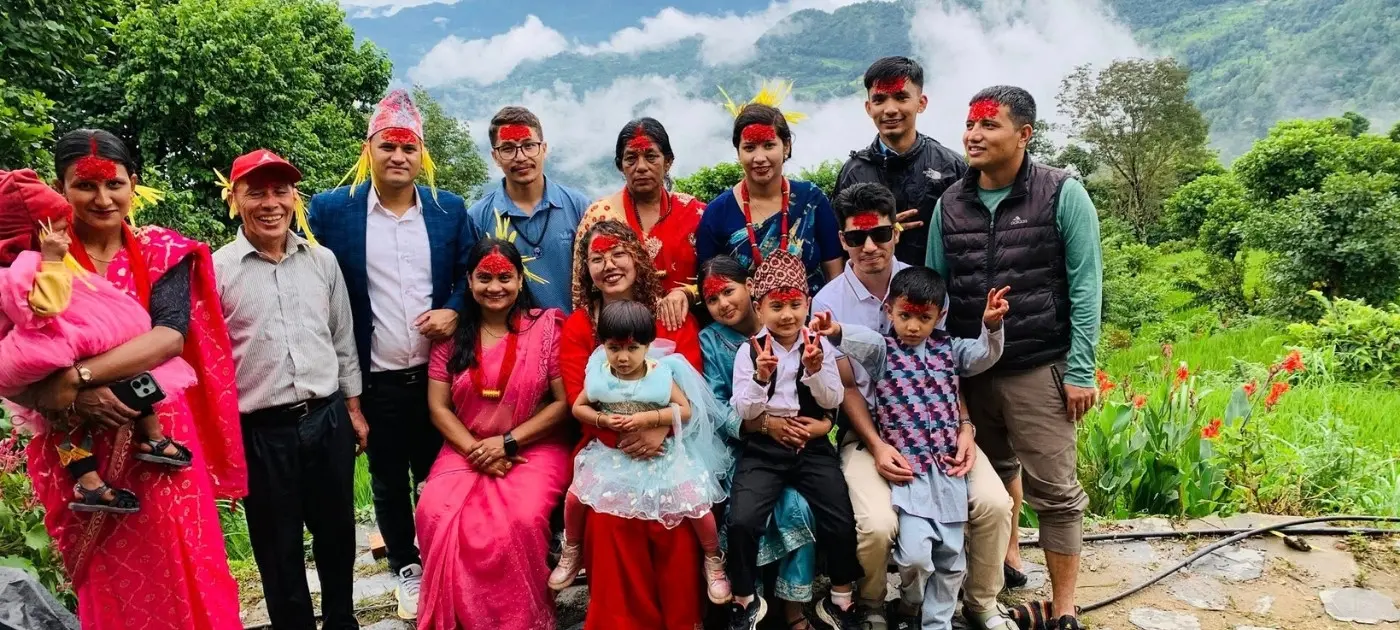
| 16. | Dashain Tika (Vijaya Dashami) | Autumn//Oct.21 | The most important day of Dashain. Elders put tika and jamara to younger ones, blessing them with prosperity and victory. Family unites while sharing feasts |
| 17. | Kaag Tihar | Autumn/Nov.7 | First day of Tihar, the Festival of Lights. Crows, seen as messengers of Yama (god of death), are worshipped with offerings of food and sweets to bring good news and prevent fortune. |
| 18. | Kukur Tihar | Autumn/Nov 8 | Today dogs who are regarded as guardians and messengers of Yama are honored with tika, garlands. This shows the gratitude toward animals, and highlights the special bond between humans and loyal companions. |
| 19. | Laxmi Puja | Autumn/Nov 8 | Laxmi Puja is the central day of Tihar festival which is dedicated to Goddess Lakshmi, who is symbol of wealth and prosperity. Homes are cleaned, lit with oil lamps and colorful rangoli. And prayers are offered for financial well-being and happiness. Cities looks beautiful with colorful lights. |
| 20. | Gai Puja | Autumn/Nov 9 | Celebrated on 4th day of Tihar, it is a significant Hindu ritual honoring cows as a symbol of prosperity, wealth, and maternal love. |
| 21. | Gobardan Puja, Mha Puja | Autumn/Nov.10 | Commemorates Lord Krishna lifting Govardhan Hill to protect villagers.Mha Puja- Newar community self-worship ritual on this full moon night, with mandalas, rice offerings, and family feasts to honor one's inner self. Celebrates personal identity and prosperity. |
| 22. | Bhai Tika (Tihar) | Autumn/Nov.11 | Grand finale of Tihar where sisters apply tika and pray for brothers’ long life and prosperity. Brothers offer gifts in return. It strengthens sibling bonds and celebrates family love and protection. |
| 23. | Chhath Parba | Autumn/Nov.15 | Major festival of the Terai/Madhesh region honoring the Sun God (Surya) and Chhathi Maiya. Involves fasting and river-side offerings (Arghya) for health, prosperity, and purification. |
| 24. | Udhauli Parba (Yomari Punhi) | Winter/Dec.24 | Kirat community celebrate a harvest festival. In Newari communities, Yomari (rice flour dumplings) are prepared and offered while celebrating abundance, ancestors, and seasonal change. |
| 25. | Christmas Day | Winter/Dec.25 | Celebrated by Nepal’s Christian community with church services, prayers and family gatherings. Symbolizes the birth of Jesus Christ, spreading messages of love, peace, hope, and goodwill. |
| 26. | Tamu Lhosar | Winter/Dec.30 | This day is Gurung (Tamu) community’s New Year festival. It features cultural dances with traditional dress or costumes, feasts, and the rituals to honor ancestors while welcoming prosperity in the new Tamu calendar year. |
| 27. | Maghi Parba (Maghe Sankranti) | Winter/Jan.15 | Marks the transition to longer days (Uttarayan). Celebrated with sesame sweets (chaku, til), lentils soups, holy dips, and feasts. Signifies the harvest gratitude, purification, and the start of the auspicious Maghi season. |
| 28. | Sonam Lhosar | Winter / Feb.7 | Tamang community’s New Year festival. This day includes colorful processions, traditional dances, music, and different pujas to welcome the new year according to the Tamang lunar calendar. |
| 29. | Vasant Panchami (Saraswati Puja) | Winter/Feb.11 | This day is dedicated to Goddess Saraswati deity of knowledge and arts. Students worship books, musical instruments, and pens, while encouraging the learning and creativity. |
| 30. | Maha Shivaratri | Spring//March 6 | This day is dedicated to Hindu god Lord Shiva. Hindu devotees fast, chant mantras and stay awake performing pujas at temples like Pashupatinath for spiritual purification and blessings. |
| 31. | Gyalpo Lhosar | Spring/March 9 | Gyalpo Lhosar is sherpa community’s New Year festival. Celebrated with traditional dances, feasts, butter lamp offerings, and the cultural performances to welcome prosperity and honor Tibetan-Buddhist heritage. |
| 32. | Fagu Purnima (Holi) | Spring/ March 21 and 22 | Holi is the festival of colors and joy marking the victory of good over evil (Holika Dahan). People play with colored powders and water, sing, dance, and enjoy the day. |
| 33. | Ghode Jatra | Spring/April 6 | Ghode Jatra is Kathmandu’s historic horse parade festival that honors both the goddess and military of Nepal. Cavalry displays, cultural shows, and chariot processions honoring the defeat of a demon. |
Final Words
The above listed Festivals in Nepal 2026 are celebrated widely and fully across the country where each festival carries its own meaning and importance according to people’s respective culture and beliefs. This guide of Nepal festivals 2026 with Important festival dates in Nepal and Nepal biggest festival dates gives a clear understanding of when these vibrant celebrations take place.
From seasonal changes to the different religious traditions, these festivals directly reflect the deep cultural roots and unity of Nepalese society from centuries. By timing your journey with these Nepal festivals 2026 with dates, you can get a great experience and witness the true cultural spirit and lively atmosphere of Nepal’s festivals. The list mentioned above for all Nepal Festivals with dates helps visitors to plan their visit in an organized manner while letting them to understand the cultural timing and significance of each festival.