The sacred four faces of Mount Kailash are located in the remote Tibet Autonomous Region of China near the borders of Nepal and India where this sacred peak rises as one of the most mysterious spiritual mountains in the world. Mount Kailash is described as a four-faced mountain where the North, South, East and West sides precisely align with the cardinal directions and each face carries different spiritual meanings in Hinduism, Buddhism, Jainism and Bon traditions. Ancient Hindu and Buddhist scriptures describes these sacred sides as formed from crystal, gold, ruby and lapis lazuli, symbolizing divine energies, cosmic balance and the spiritual power of this unclimbed mountain. The mountain is also revered as the Axis Mundi or cosmic pillar of the universe where devotees believe it connects heaven, earth and spiritual worlds together.
Pilgrims joining Kailash Mansarovar Yatra witness these sacred directions while travelling through the remote Tibetan landscapes which makes the journey both visually and spiritually powerful. During the sacred Outer Kora or Kailash Parikrama around the 52-kilometer base trail, pilgrims gradually witness the North Face of Mount Kailash, South, East and West sides in sequence where each face reveals different moods, energies and natural formations. These sacred directions also feed four major Asian rivers including the Indus, Brahmaputra, Sutlej and Karnali which further increases the spiritual importance of the mountain. By choosing Mount Face Nepal, pilgrims can fully enjoy and experience this once in a lifetime sacred pilgrimage with reliable logistics, experienced guides and local teams and dedicated support throughout the entire Kailash Mansarovar journey.
Book your sacred journey to abode of lord shiva with Mount Face Nepal.17 Year Experience team will take care you during Yara.
Four Sacred Faces of Mount Kailash: What Every Pilgrim Must Know Before Visiting
South Face of Mount Kailash: The Lapis Lazuli Face
The South Face of Mount Kailash is the first sacred darshan that pilgrims usually witness when arriving from Lake Mansarovar side through Yam Dwar which is known as the spiritual gateway for beginning the Kailash Parikrama journey. Visible from Rakshastal, Mansarovar Parikrama route and Yam Dwar, this face of Mount Kailash is deeply connected with Hindu mysticism where devotees believe the long vertical line running from summit to base resembles Lord Shiva’s spine and eternal meditation seat with Goddess Parvati. According to ancient Vishnu Dharmottara Purana, this South Face OM symbol Kailash associate with lapis lazuli brings spiritual awakening and divine protection against untimely death. This south face also represents the spiritual strength, wisdom, and the divine energy of Lord Shiva. Buddhist and Bon traditions views it as the guardian of the southern universe which protects pilgrims during Kailash Mansarovar Yatra.
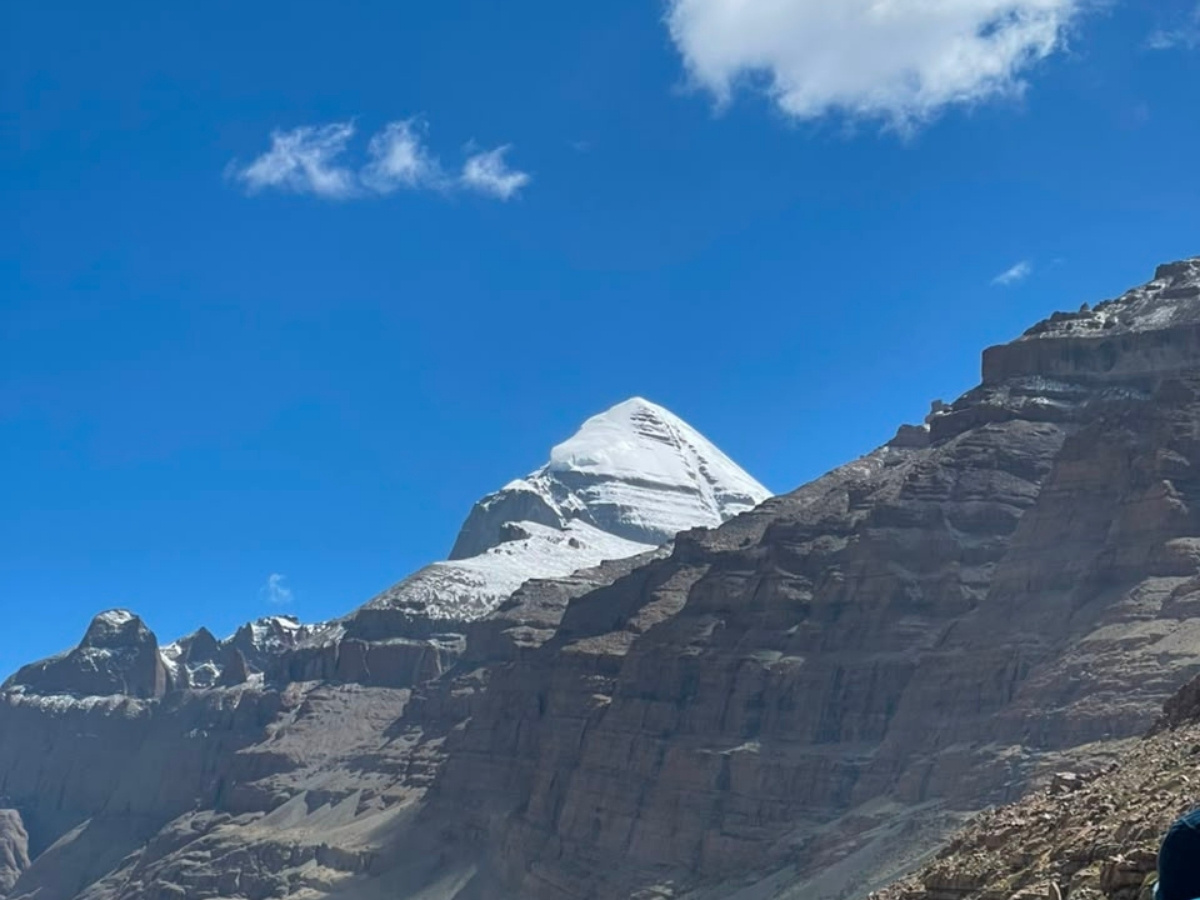
West Face of Mount Kailash
The West Face of Mount Kailash is the main face visible during the first day of Kailash Parikrama after leaving Yam Dwar and Mansarovar where the holy Karnali river flows beside the trail with crystal clear water. Known as the compassionate side of Mount Kailash, this face is associated with ruby, emotional healing, inner peace and divine radiance linked with Lord Varuna. During sunset, the golden and pink light across the Ruby West Face of Kailash creates calming scenery where many devotees believes they can observe the sacred face of Lord Shiva within the mountain rocks and snow
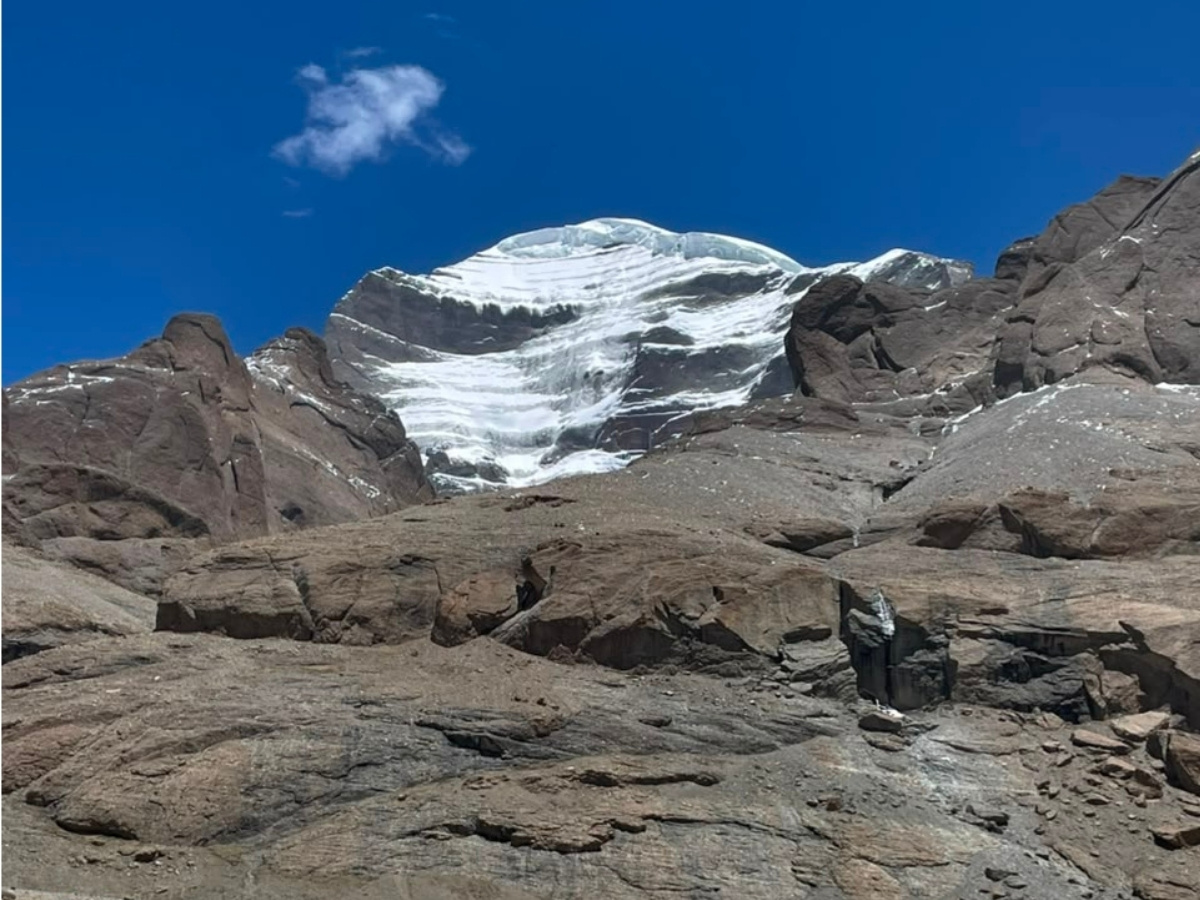
North Face of Mount Kailash
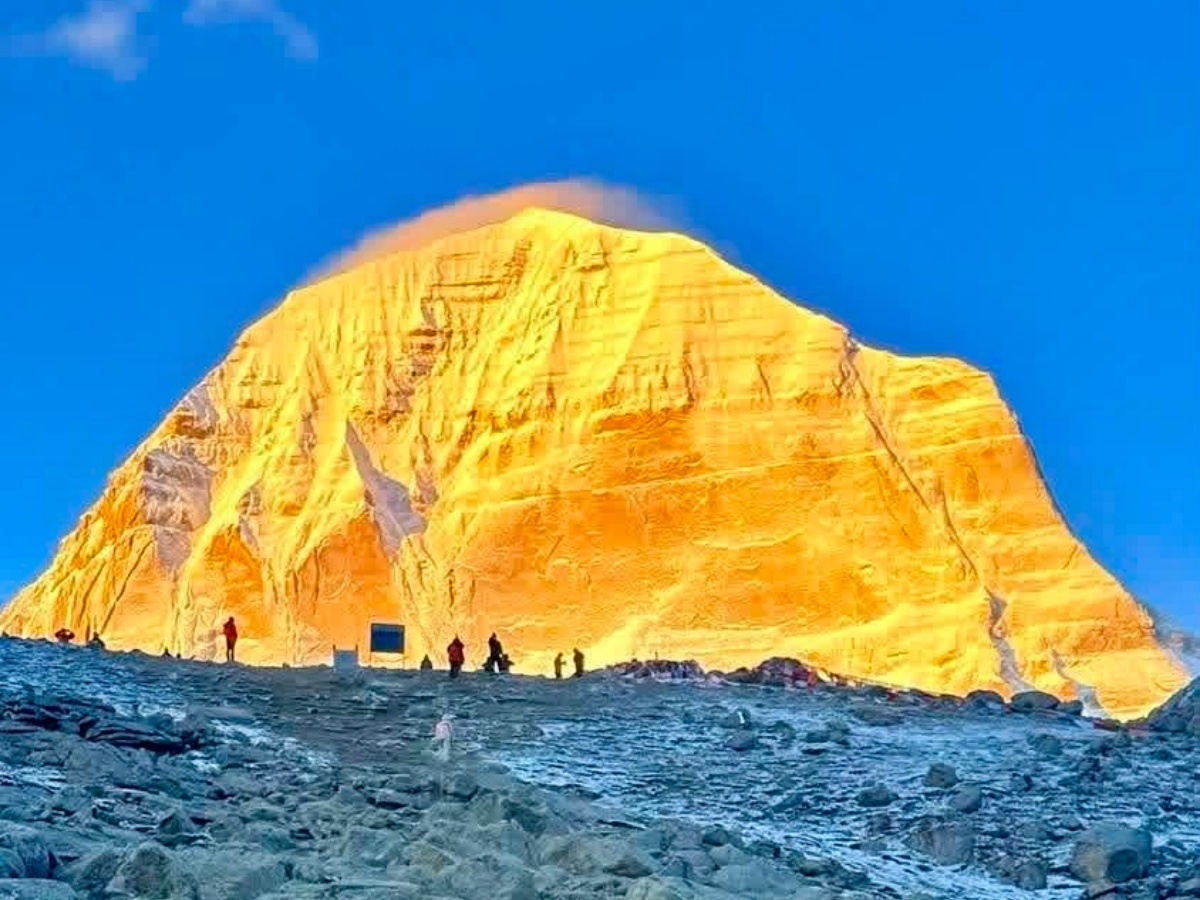
The North Face of Mount Kailash, also known as Golden Kailash is the most iconic and widely photographed side of Mount Kailash which are mostly captured from Dirapuk Gompa and higher viewpoints during Kailash Parikrama. This dramatic Golden North Face of Kailash appears between two mountains and creates one of the most surreal sceneries in Tibet where sunrise and sunset transforms it into the glowing golden face. Ancient Hindu traditions connect this sacred side with gold, Lord Kubera, spiritual wealth and divine power while the steep cliffs and powerful vertical lines reflects the strong energy and strength of Lord Shiva.
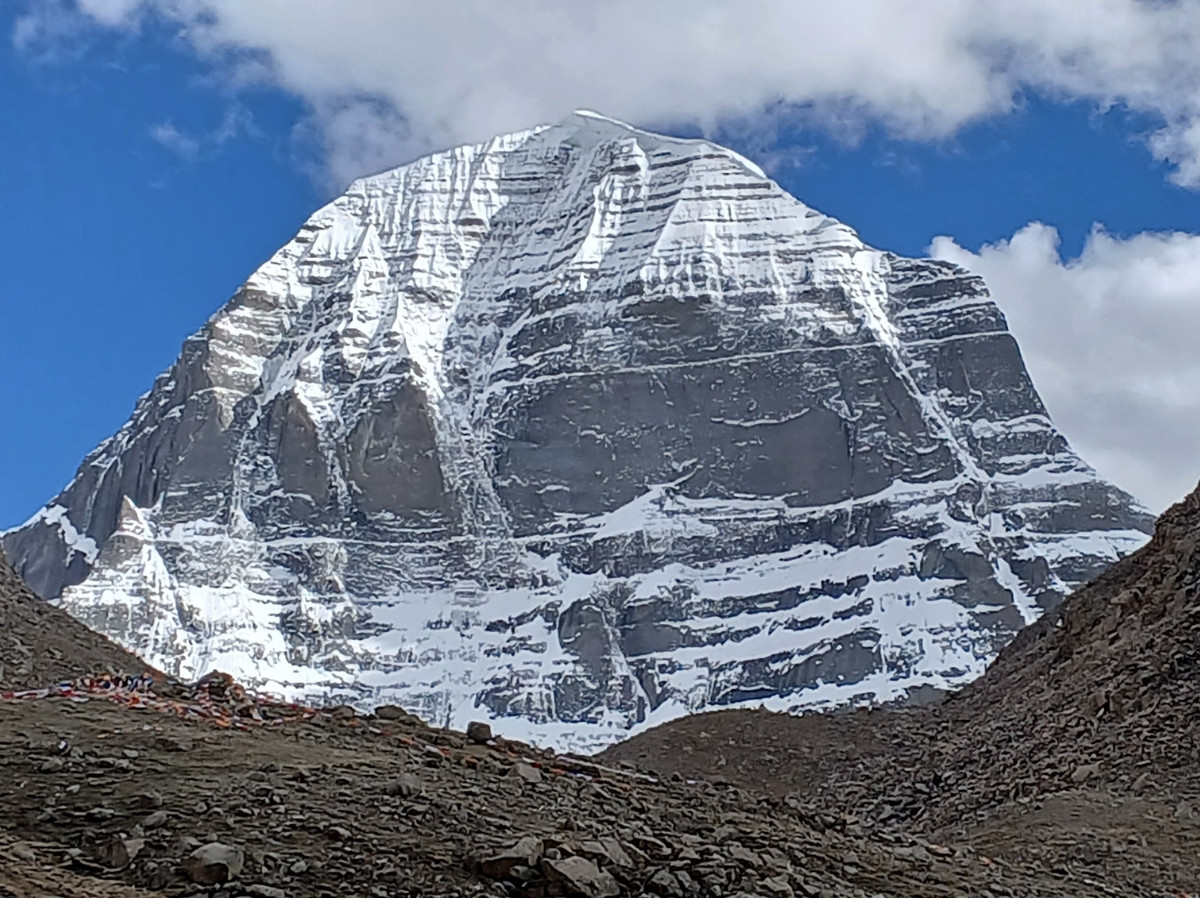
East Face of Mount Kailash
The sacred East Face of Mount Kailash is considered the most mysteriou and difficult to access among the Kailash Four Faces. Pilgrims usually witness it during the Inner Kora or while crossing Dolma La Pass toward Gauri Kund and Zuthulpuk on the second day of Kailash Parikrama. According to ancient Hindu scriptures, this Crystal East Face of Kailash represents purity, enlightenment and spiritual truth where sunrise over this sacred side symbolizes awakening and inner wisdom. During the challenging descent from Dirapuk, trekkers gradually witness this hidden face where the spiritual atmosphere, rugged ridges and silence create one of the deepest moments of transformation on Mount Kailash journey.
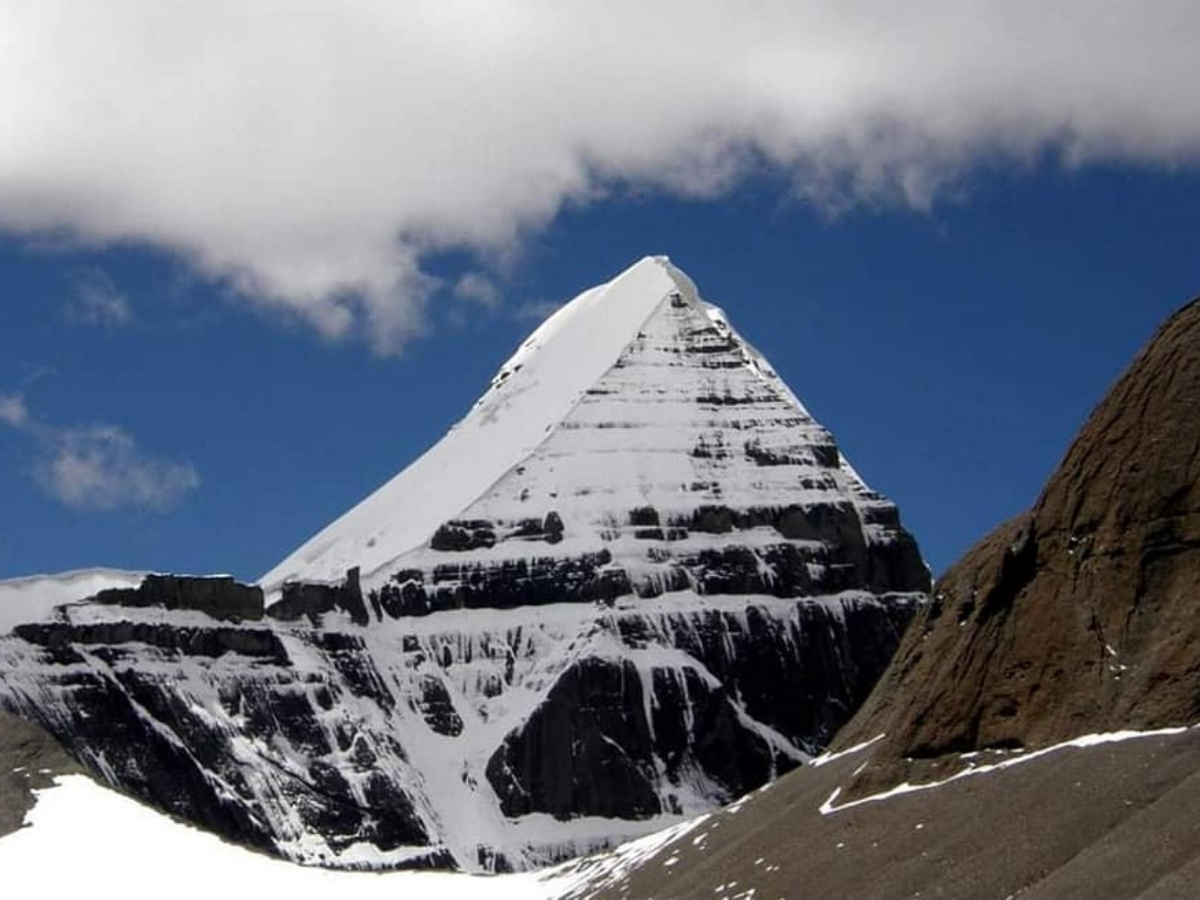
Mount Kailash as the Axis Mundi: How Its Four Faces Represent the Center of the Universe
Axis Mundi is a Latin phrase and it means axis of the world. Mount Kailash is widely regarded as the Axis Mundi or the cosmic pillar of the universe where heaven, earth and the underworld spiritually connects together through this sacred Himalayan peak. In Hindu and Buddhist cosmology, the Four faces of Mount Kailash precisely align with the four cardinal directions, forming the central summit of Mount Meru inside the sacred cosmic mandala. Ancient traditions describe this mountain not simply as rock and ice, rather as a living temple of the universe where divine energies flow continuously across the planet through the sacred cardinal lines of the mountain.
The spiritual importance of Kailash as cosmic pillar of the universe becomes even more powerful because Hinduism, Buddhism, Jainism and Bon traditions all identifies this exact peak as the center of creation and divine balance. During the Kailash Parikrama, pilgrims circumambulate around the sacred cosmic center where each face reveals another layer of spiritual awakening, wisdom and transformation. Many spiritual masters and pilgrims believes that the Sacred faces of Mount Kailash acts like a cosmic antenna which receives divine vibrations from higher realms, while mystical experiences such as unusual nail and hair growth during Kora are connected with the mysterious “space of zero time” surrounding this sacred mountain.
Can You See All Four Faces of Mount Kailash during Kailash Mansarovar Yatra 2026? Here's What Pilgrims Actually Experience
Kailash Parikrama is not just a journey around mountain but a walk-through divine vision where Mount Kailash as the Axis Mundi, the sacred center of universe, slowly reveals its four cosmic faces. Yes, pilgrims can witness all four faces of Mount Kailash during the Outer Kora (Parikrama) of Kailash Mansarovar Yatra 2026, but never simultaneously. Each face of holy mountain Kailash appears in sequence as you move around the mountain, and the view changes as you cross different ridges and passes.
Day 1: South and West faces:The South Face is the first darshan you see, starting from Yam Dwar and throughout the Mansarovar Parikrama. The West Face becomes visible as you continue on Day 1, especially from the mid‑way halt, and shines with its compassionate, softer glow.
Day 2: North Face (the highlight):The North Face is the most iconic and widely seen face, best viewed from Dirapuk Gompa and its viewpoint. It’s the spiritual high point of Day 2 on Kailash yatra, often glowing golden at sunrise and feeling the most powerful and imposing.
Day 3: East Face (the most hidden):The East Face is the most mysterious and hardest to see, visible mainly during the strenuous section from Dirapuk over Dolma La Pass down to Gauri Kund, and continuing partway to Zuthulpuk. It is clearly visible until a short distance after Gauri Kund, after which the view gradually fades as the other ridges take over.
Kailash Outer Kora vs Inner Kora
On the standard Outer Kora, pilgrims witness all three faces clearly (South, West, North) and glimpse the East Face during the challenging and highest point of the journey Dolma La Pass (5,630 meters) and Gauri Kunda section. The East Face is more prominently visible only during the Inner Kora, which is more advanced and demanding and less commonly done.
Why Mount Face Nepal for Kailash Journey ?- Explore our Kailash Yatra Package HERE
- Professional Services
- Best Prize Guranteed
- Flexible and Quality Services
- Happy and well -cared for Team
- Safety and Responsible
- Experience Team - Since 2009 AD
Why Is the South Face of Kailash the Most Sacred? The OM Symbol, Lapis Lazuli & Shiva Connection?
The Mount Kailash Shiva Face is most strongly experienced through the South Face, where pilgrims during Kailash Mansarovar Yatra first receive its long and continuous darshan, visible from Yam Dwar and Mansarovar side. The south face becomes the spiritual anchor of Four faces of Mount Kailash, guiding devotees through early connection with the sacred mountain energy and deep inner reflection. Hindu tradition describe as an Aghora and also OM symbol is hidden in rock patterns, linking it with Kailash Faces as cosmic vibration, while the deep blue essence of lapis lazuli reinforces its role as spiritual transformation in sacred Himalayan vision.
Within Four Jewel Faces Kailash, the South Face is seen as the most powerful gateway of Sacred faces of Mount Kailash, representing Aghora energy of dissolution, ego death, and liberation. During Kailash Parikrama, devotees feel it as “door to liberation,” where Mount Kailash Shiva Face symbolizes protection against untimely death and ultimate spiritual cleansing through divine Himalayan energy. South Face is deeply linked with lapis lazuli symbolism which represents truth, clarity, and liberation from samsara, making it central to Four faces of Mount Kailash understanding.
Why Mount Kailash's North Face Called the Golden Face?
The North Face of Mount Kailash is also widely known as the “Golden Face” or “Golden Kailash” because when the sunlight strike on this snow-covered cliffs and sharp rocky ridges, the mountain glows up into a deep golden color that appears almost unreal and divine. During the time of sunrise and sunset, the low-angle sunlight reflects beautifully from the ice and snow, and creates a fiery metallic shimmer across the Golden North Face of Kailash. In ancient Hindu traditions, this sacred side among the Four Faces of Mount Kailash is believed to be formed completely of gold, which symbolizes divine purity, spiritual wealth, and the eternal radiance of the cosmic mountain itself.
The North Face of Kailash is also considered as the most emotionally powerful and spiritually dramatic among the Sacred Faces of Mount Kailash, where devotees during Kailash Parikrama and Outer Kora witness its overwhelming golden glow directly from Dirapuk Monastery. Ancient scriptures connects this face with Brahma, Lord Kubera, and the idea of spiritual abundance rather than material riches alone. In Buddhism, the northern direction is linked with Amoghasiddhi Buddha, whose wisdom represents fearless action and transformation into pure golden awareness. The glowing ridges and divine appearance strengthen the belief that Mount Kailash, the cosmic mountain, is truly a living temple and Axis Mundi the cosmic pillar of the universe for 4 different religion Hinduism, Buddhism, Jainism, and Bon traditions.
Why Mount Kailash East Face is called Crystal Face?
The eastern face of Mount Kailash is also known as the crystal face. According to ancient Hindu scriptures like Shiva purana and Vishnu Purana, the eastern side of the mountain is believed to be fully formed by crystal. Among the Four Jewel Faces Kailash, the east face represents purity, radiance and spiritual clarity. The soft shining appearance of the crystal east face of Kailash during sunrise creates a stunning glow across the snowy ridges which makes this sacred face look full of light and divine energy.
The eastern direction is connected with sunrise, awakening and also the beginning of spiritual consciousness which gives the deeper symbolic meaning during darshan of all four faces of Kailash pilgrim guide 2026. The crystal symbolism is also associated with Lord Shiva as a teacher and a giver of the knowledge where confusion clears into truth and the illumination.
Why Mount Kailash West Face is called Ruby Face of Kailash?
The west face of Mount Kailash is also known as the Ruby face, where this sacred western wall among the Four faces of Mount Kailash is believed to be formed of ruby and copper. Ruby symbolizes warmth, compassion, emotional healing and heart energy, which gives the Ruby West Face of Kailash a softer and more nurturing spiritual meaning. During sunset, the wester cliffs glow into crimson and golden colors as the late afternoon sunlight strikes the massive ice and rock walls, creating dramatic ruby like radiance across the holy mountain.
In Buddhist cosmology, the western quadrant is ruled by Amitabha Buddha, whose ruby red form represents infinite compassion and the transformation of attachment into wisdom. The glowing appearance of the Kailash Mansarovar faces strengthens the belief that the mountain is a living spiritual center that is filled with grace and the divine consciousness. For most pilgrims who are visiting for Mount Kailash four sacred faces 2026, the Ruby face symbolizes emotional balance, rebirth and the comforting energy of compassion itself.
Spiritual significance of Mount Kailash across four religions
- Hinduism sees the four faces as forms of Shiva or his four‑faced manifestation.
- Buddhism associates them with the four protective deities of the directions.
- Jainism links them to four stages on the path to liberation (Ashtapad).
- Bon religion views them as four deities maintaining balance between earth, heaven, and human life.
What Makes Each Face of Mount Kailash Unique? A Complete Comparison of All Four Kailash Faces ?
| ASPECT | SOUTH FACE | NORTH FACE | EAST FACE | WEST FACE |
| Sacred Jewel | Lapis Lazuli | Gold | Crystal | Ruby |
| Spiritual Meaning | Liberation, Transformation, also called the Door to Liberation | Power, Justice, Spiritual Wealth, Divine power | Purity, Clarity, Enlightenment, Spiritual awakening | Compassion, Emotional Balance, Healing, Inner Peace |
| Associated Deity | Aghora (Fierce form of Lord Shiva) | Brahma (Universe creator) and Lord Kubera (God of Wealth) | Shiva as Teacher | Lord Varuna (God of water) |
| Key Symbol | Om Symbol – Natural Om seen in rock or snow. | Golden Kailash- Glowing golden at sunrise and sunset | Crystal- Shimmering, soft and clear light. | Sunset Glow- Red or Pink hues like Ruby. |
| When Pilgrims see it | First day from Yam Dwar and Lake Mansarovar | Second day- Best seen from Dirapuk Monastery | Mostly hidden- Visible from Dolma La Pass to Gauri Kund | First day mid-way- Visible until turning toward North Face |
| Unique Feature | Most sacred, first darshan, believed to be Shiva’s literal face with OM. | Most Photographed face | Most mysterious and hardest to access. | Breathtaking sunset glow. |
The Hidden Spiritual Meaning of Shiva Tsal, Dolma La Pass & Gauri Kund on Kailash Mansarovar Yatra
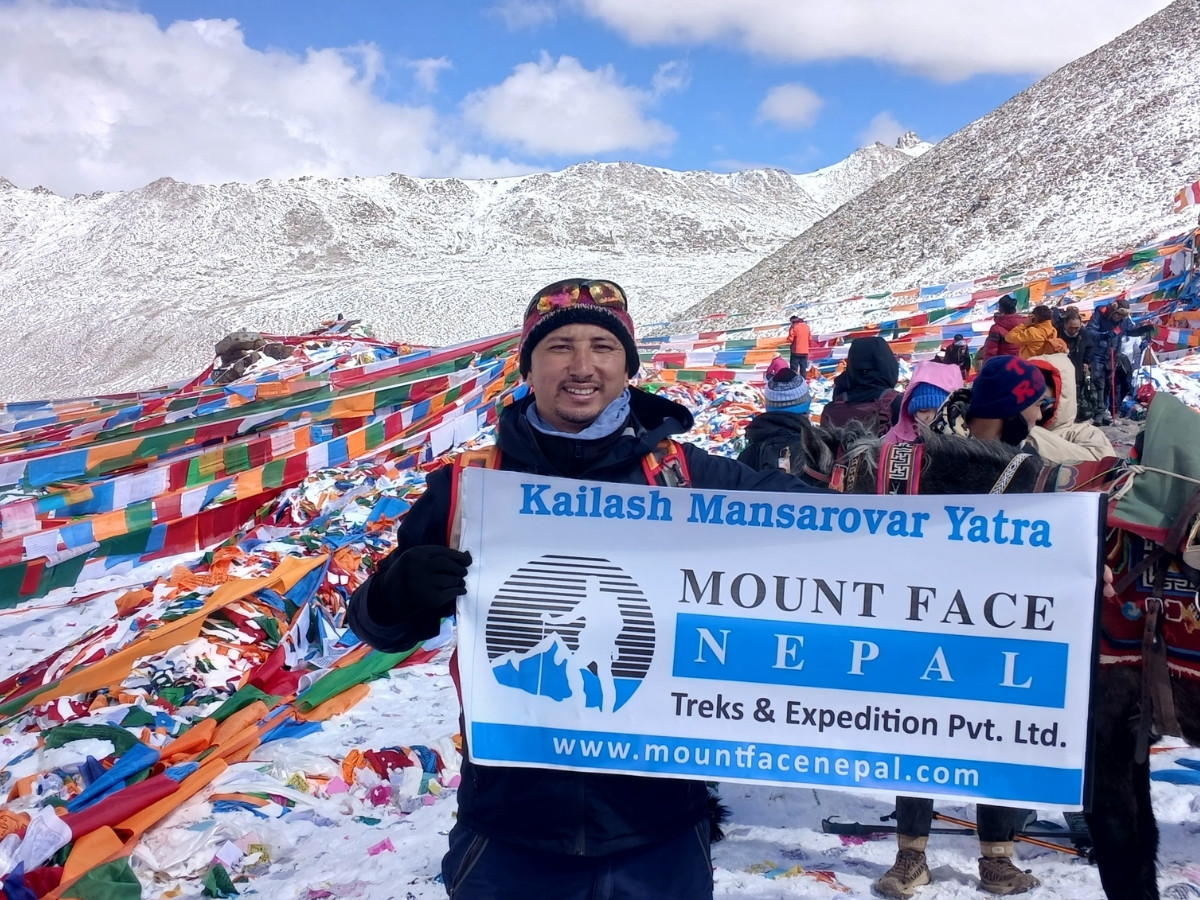
Shiva Tsal, Dolma La Pass and Gauri Kund holds the deepest spiritual significance on Kailash Mansarovar Yatra. Shiva Tsal lies on the ascent towards the Dolma La Pass, above Dirapuk, at over 5,000 m, before the final steep push towards the pass. Devotees treat Shiva Tsal as the place of symbolic death and judgment, associated with Yama, the god of death. Pilgrims here leave old clothes, a lock of hair, nail clippings, photos, or small personal items believing that it washes away past sins, misfortunes, and ego before crossing into a new life. In Hindu tradition, Shiva is the destroyer of ignorance and ego, while Yama represents death and judgment, making Shiva Tsal a sacred place where the “old self” is left behind before pilgrims continue the journey.
The route from Dirapuk to Shiva Tsal gradually enters and many pilgrims call this path the spiritual “judgment valley” where prayers, reflection, and inner surrender become more important than the physical trail itself. After completing rituals at Shiva Tsal, pilgrims continue towards Dolma La Pass and it symbolizes rebirth and spiritual transformation. In Tibetan Buddhism, Tara (Dolma) is regarded as the compassionate savior and mother who guides people through suffering and toward spiritual peace, making Dolma La the sacred crossing point into a new and purified life. Additionally, the descent toward Gauri Kund represents emerging into the new life and spiritual release.
Overall, Shiva Tsal symbolizes the death, Dolma La Pass represents rebirth, and descent towards Gauri Kund marks the completion of this spiritual transformation, by making this sacred passage as one of the most powerful and life-changing experiences during Kailash Yatra.
Final Words
The journey around the Four faces of Mount Kailash is far more than just a pilgrimage through remote Tibetan landscapes, rather it’s a spiritual path into the heart of the Mount Kailash cosmic mountain where every sacred direction reveals different energies, symbolism and divine presence. From the glowing Golden North Face of Kailash to the mystical southern Shiva side, completing this Kailash Parikrama leaves pilgrims with unforgettable spiritual memories and deep inner transformation. If you’re planning to undertake this sacred journey, we Mount Face Nepal offers the best Kailash Mansarovar Yatra package for pilgrims and trekkers who wants a safe, reliable meaningful, and well-organized experience.
those devotees who are seeking for a darshan of the Sacred faces of Mount Kailash and hoping to complete the sacred Kora with confidence, we Mount Face Nepal delivers reliable services, experienced guides, quality accommodation, hygienic meals and carefully managed high-altitude support throughout the Kailash Mansarovar Yatra 2026. Our trained teams are deeply familiar with Dolma La Pass, sacred monasteries and remote Tibetan routes where comfort, acclimatization and spiritual well-being are prioritized at every step. Whether it is nutritious meals, permits, logistics or emergency support, we Mount Face Nepal can happily guide travelers through one of the world’s most sacred and life changing Himalayan journeys.