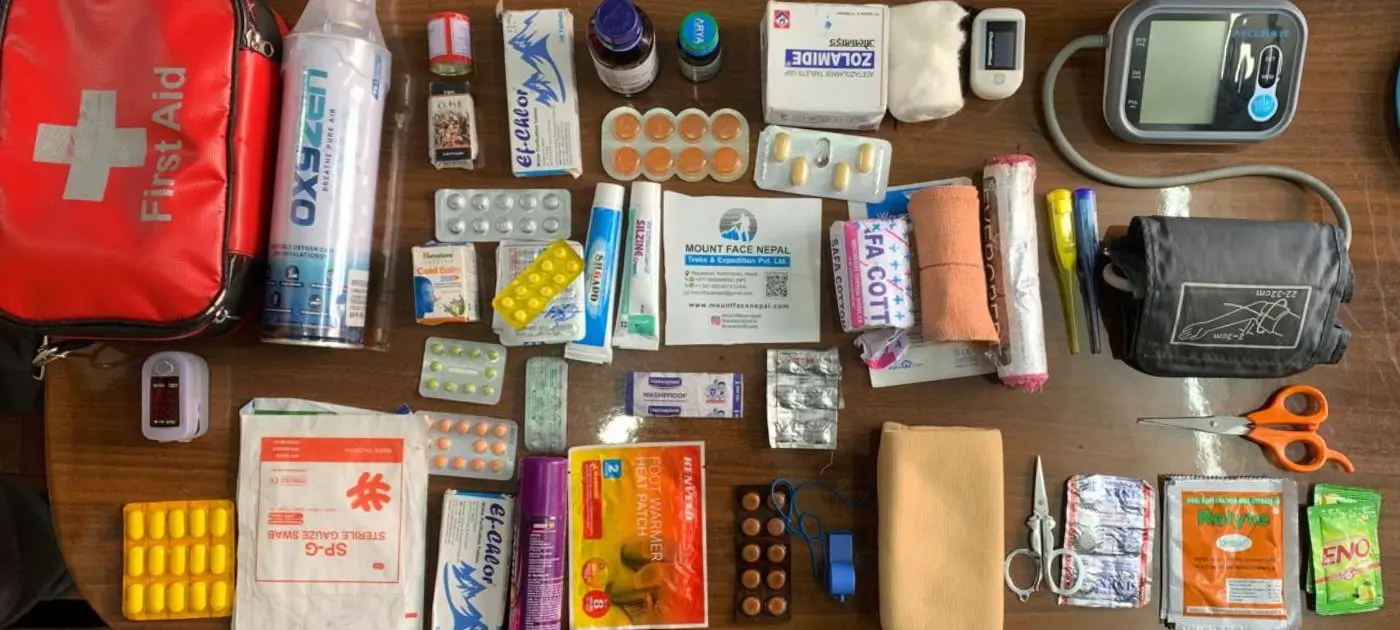
Recommended Medical Kit for Trekking in Nepal: Complete First-Aid Checklist
It’s very important to carry the right medical kit while trekking in Nepal since small issues like blisters, cuts, stomach illness, cold symptoms, pain and sun exposure can become very uncomfortable in the middle of the trek. Carrying a simple kit with blister care, bandages, pain relief, rehydration salts and personal meds can make your journey much easier.
Why You Need a Medical Kit for Trekking in Nepal
Nepal treks like Everest Base Camp, Annapurna Circuit or Langtang region Trekking often pass through high altitude remote areas with limited facilities, variable weather, high altitude, and long walking days on basic trails. A personal medical kit really helps you manage minor issues like blisters, cuts, or stomach problems early, before they become bigger problems for you. However, for serious symptoms, especially related to altitude, the priority is to descend, seek evacuation if needed, and get professional medical care.
Nepal Trekking First-Aid Kit — Complete Checklist
| Category | Must-Pack Items |
| Wound Care | Adhesive bandages, sterile gauze, medical tape, antiseptic wipes, antibiotic ointment (e.g., Neosporin). |
| Blister Care | Moleskin, hydrocolloid pads, blister plasters, small scissors. |
| Sprains & Support | Elastic/crepe bandage, triangular bandage, safety pins, disposable gloves. |
| Diarrhea & Hydration | Oral Rehydration Salts sachets, antacid, anti-nausea medicine, water-purification tablets or drops. |
| Pain Relief | Paracetamol (500 mg tablets, 125 mg/5 ml syrup); Aspirin (300 mg tablets); Ibuprofen only if suitable for you. |
| Fever | Paracetamol/acetaminophen (500 mg tablets, 125 mg/5 ml syrup). |
| Cold Relief | Throat lozenges, decongestant if appropriate. |
| Allergy | Avil (25 mg tablets), Benadryl syrup, Trexyl (60 mg tablets, 30 mg/5 ml syrup), Cetirizine. |
| Altitude Sickness | Acetazolamide (Diamox) only if prescribed/advised by a clinician. |
| Infections - Eye | Neosporin Ophthalmic Cream. |
| Infections-Throat & Lung | Amoxicillin (125 mg/5 ml syrup, 250 mg and 500 mg tablets). |
| Infections-Abdomen | Metronidazole (200 mg, 400 mg tablets), Tinidazole (500 mg tablets). |
| Infections-Open Wounds | Cloxacillin and Cephalexin (125 mg/5 ml, 250 mg and 500 mg tablets). |
| Infections Urinary | Norfloxacin (200 mg, 400 mg tablets). |
| Disinfectants | Betadine (solution and cream), Miconazole cream (fungal infection); Silver sulfadiazine (burn injury). |
| Skin Protection | High-SPF sunscreen, SPF lip balm, moisturizer, saline or lubricating eye drops. |
| Tools | Thermometer, tweezers, scissors, penlight, waterproof pouch, emergency contact card. |
Important note: Antibiotics (amoxicillin, metronidazole, norfloxacin, cloxacillin, cephalexin) should only be carried and used under medical advice, do not self-treat serious infections on the trail.
Advanced Kit for Guides, Climbers & Remote Expeditions
An advanced medical kit is needed not only for trekkers but also should be carried by guides, climbers and remote expedition teams for emergencies beyond basic first aid. In remote areas where help may be far away, the advanced medical supplies listed below and proper training can make a big difference in handling serious injuries, altitude issues, or other emergencies until professional help arrives.
- Pulse oximeter
- Blood-pressure monitor/sphygmomanometer
- Digital Thermometer
- Stethoscope
Emergency communication plan and evacuation contacts
At Mount Face Nepal, we provide our guides with proper training on how to use this advanced equipment and ensure they are equipped with these kits and other important medicines on every high-altitude trekking expedition.
What NOT to Put in Your Nepal Trekking Medical Kit?
Trekkers should not self-prescribe antibiotics or carry syringes and injectable medicines unless medically necessary and legally permitted. Avoid using aspirin casually, especially if you have bleeding risks, stomach ulcers, or are on blood thinners. Additionally, don’t rely on loperamide for every diarrheal illness, and never ignore severe altitude symptoms or keep ascending while feeling worse. Most importantly, don’t carry items prohibited by Nepali law.
What is the most common medical problem on Nepal treks?
Common problems during Nepal treks include sore muscles, blisters, minor cuts, stomach upset, dehydration, cold symptoms, and mild headaches related to altitude, so prevention and early treatment are most important. Among these, blisters and gastrointestinal upset are particularly common because of long hours of walking, changeable weather and unfamiliar food and water. So, drinking enough water, practicing good hygiene, wearing comfortable and broken-in trekking boots, and allowing enough time for acclimatization is important.
Final Words
A well-equipped medical kit can really make a big difference on a Nepal high altitude trek, especially at high altitude where help may be far away. It helps you to tackle the little things early, and can even save your life in an emergency. Being prepared with the right medical supplies and knowing when to seek help is as important as the trekking gear itself.