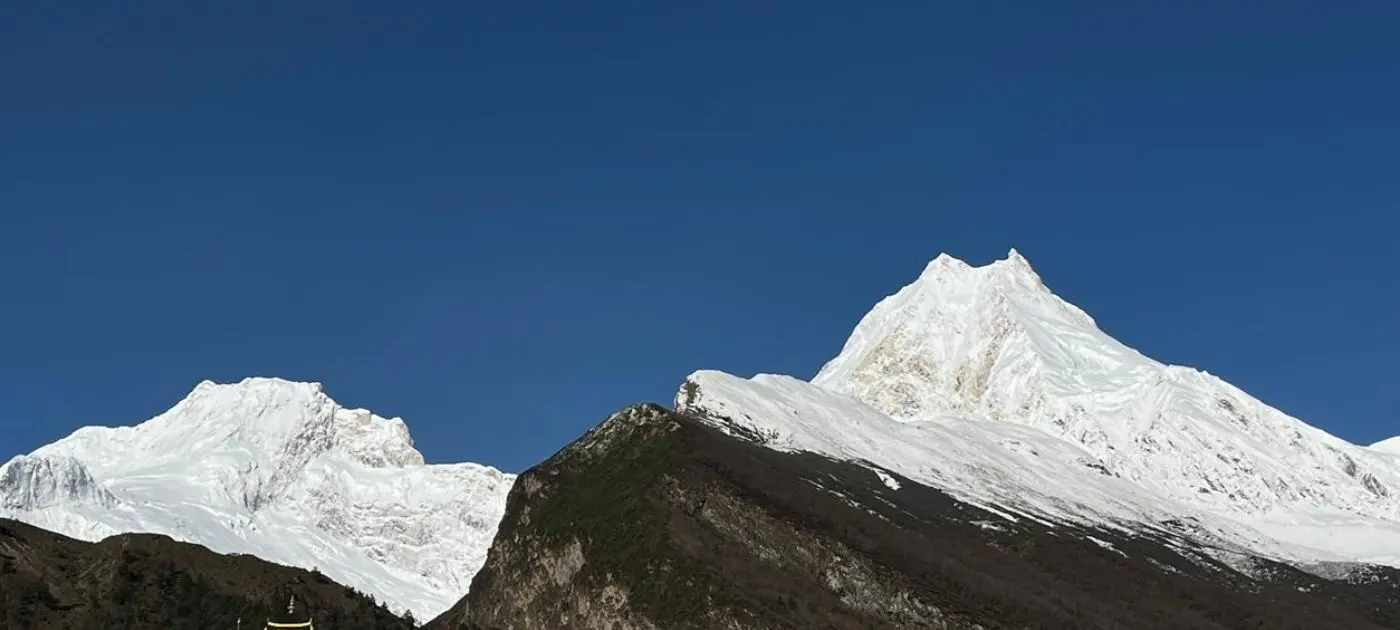
The Manaslu Circuit Trek is a 14-day journey that covers roughly 177 km around Mount Manaslu, the eighth-highest mountain in the world. It leads you through the remote villages, deep river valleys and over the demanding Larkya La Pass at 5,106 m. The trail is tough but deeply rewarding, mixing rugged ground, real cultural encounters and some of the most dramatic mountain scenery in Nepal without the crowds you find in the Everest region.
Manaslu Trekking Difficulty sits at a moderate-to-challenging level, mainly because of the length, the altitude and how remote the route feels. Most days involve six to eight hours of walking on uneven paths, stone steps and rocky stretches, with the biggest test being the Larkya La crossing. Since a large part of the trek stays above 3,000 m, proper acclimatization and a steady pace are very important if you want to avoid altitude problems and still enjoy the days.
trail itself changes a lot with well-worn paths through forest and villages lower down, then rougher and more exposed ground higher up, especially near the pass. Weather can shift quickly and some sections feel properly wild and isolated. With experienced guides from Mount Face Nepal handling the logistics, pacing and safety, the whole thing becomes far more manageable, so you can simply focus on the scenery and the journey rather than the challenges.
How Difficult Is the Manaslu Circuit Trek?
The Manaslu Circuit Trek Difficulty sits at moderate-to-challenging level. You don’t need any technical climbing skills, but you do need solid stamina, a bit of mental strength, and the ability to handle several days of walking in remote country. The route covers about 177 km over 14 days, with most days involving five to seven hours of hiking, and the pass-crossing day stretching even longer.
The biggest challenge is the Larkya La Pass at 5,106 m, which means an early start in freezing temperatures and thin air, making every step feel harder. The trail itself is rugged too with steep stone stairs, rocky paths, loose soil, and long suspension bridges all add to the effort. Since Manaslu is a restricted area, teahouses are basic, with limited electricity, patchy Wi-Fi, and cold rooms at higher elevations. It’s a real adventure, but one that rewards you with incredible scenery and a genuine sense of remoteness.
The Hardest Day: Larkya La Pass Crossing
Crossing Larkya La is the toughest single day on the whole Manaslu Circuit. You leave before dawn, usually around 3 or 4 am, in freezing cold and complete darkness, following the beam of your headlamp. The climb to the pass at 5,106 m is long and steady, and the thin air makes every step feel heavier than it should. When you finally reach the top of the pass, you’re tired, but the views stretch out in every direction and make it all feel worthwhile.
After a short rest at the summit the descent starts, and it brings its own problems with loose rock, steep drops and already-tired legs. The whole day can run to eight or ten hours of walking, which makes it the longest and hardest stretch of the route. Proper acclimatization in the days before, plenty of water, and a steady pace are key to getting through it safely. It’s a hard day, no doubt, but crossing Larkya La is also the moment the whole trek feels most earned.
Is Manaslu Circuit Trek harder than Everest Base Camp Trek?
Yes, the Manaslu Circuit Trek is generally considered harder than Everest Base Camp. EBC does take you higher at Kala Patthar sits at 5,545 m but overall Manaslu is tougher because of the rugged, remote terrain, longer daily walks (often six to nine hours) and the demanding Larkya La Pass crossing at 5,106 m. The paths are steeper, less developed and more self-reliance than the well-trodden EBC trail.
Everest Base Camp has better infrastructure with more comfortable lodges, bakeries, Wi-Fi and easier access if something goes wrong which makes the journey feel more manageable even though it’s still physically hard. Manaslu, by contrast, has basic teahouses, fewer facilities and a wilder and more isolated feel. So while EBC mainly tests how well you handle altitude, Manaslu tests your endurance, resilience and ability to deal with rougher conditions. That makes Manaslu Trek Difficulty the harder trek overall, even though the maximum height is a bit lower.
Can beginners do Manaslu Circuit Trek?
Yes, beginners can do the Manaslu Circuit Trek, but only if they prepare properly and have the right support. It’s a demanding route with long walking days, high altitude landscapes and the tough Larkya La Pass crossing. However, it is still achievable if you are in a decent physical shape. A few months of regular hiking, cardio and some leg-strengthening work before you leave really makes a big difference in how manageable the days feel once you’re on the Manaslu Trekking trail.
Travelling with experienced guides from Mount Face Nepal makes the whole thing much safer and more realistic for first-timers. Our experienced sherpa guides look after the pacing, the acclimatization schedule, the permits and the day-to-day logistics, so you can concentrate on walking and adjusting to the height instead of stressing about the details. With a steady pace, the right gear and a guide who knows the route well, even someone new to high-altitude trekking can finish the trip successfully.
Teahouses, Food and Facilities on Manaslu Trek: How Comfort Affects Difficulty
on the Manaslu Circuit are basic, especially at higher altitudes, and this directly can affect how hard the trek feels. Rooms are simple with shared bathrooms, limited heating, and thin walls, so cold nights can be unforgettable. Food is usually dal bhat, noodles or momos which are filling but can feel repetitive after several days. Since Manaslu is a restricted area, facilities are more limited than on the Everest route, with patchy electricity and little to no Wi-Fi- at higher villages.
lack of comfort adds to the overall Manaslu Circuit Trek Difficulty because your body has less chance to recover properly between long walking days. A basic meal and no hot shower in higher altitudes can make you mentally weak as well, especially when you are already tired from the trail. Bringing a good sleeping bag, thermal layers, and some snacks really helps a lot. With Mount Face Nepal arranging reliable teahouses and meals along the route, the comfort level improves enough to keep your trekking journey enjoyable.
Trail Surfaces and Terrain on the Manaslu Trekking 2026
The trail on the Manaslu Circuit keeps changing as you move along. It starts out as gentle dirt paths through forest and villages, then gradually becomes steeper and rockier higher up. Trekkers will be walking on stone staircases, loose gravel and uneven ground that needs careful footing, especially after rain when some stretches turn slippery. There are also long suspension bridges crossing deep river valleys that add a little extra edge to the day.
As you climb toward Larkya La, the terrain becomes more rugged and exposed, with rocky trails, moraine, and patches of snow near the pass. The descent on the other side is equally tough on the knees too, especially on loose rock and steep drops. Overall, the trail is raw and less developed than Everest’s which is part of what makes the trek feel wild and rewarding, but it also means good trekking shoes and careful footing matter a lot.
Manaslu Trek Training Plan: 8–12 Weeks Before Departure
For Manaslu Trek Nepal, it’s best to start training about 8–12 weeks before you start the trek, where you can mix cardio with some strength work. Aim for three or four cardio sessions a week with brisk walking, jogging, cycling or climbing stairs as it helps to build the stamina you’ll need for six- to eight-hour days on the trail. Add two or three strength sessions that focus on your legs, core and back: squats, lunges, step-ups and planks work well. That combination gets your body ready for the long climbs and uneven ground ahead, helping to reduce overall Manaslu Circuit Trekking Difficulty.
As the departure date gets closer, increase an intensity by doing weighted walks with a daypack and longer weekend hikes on hills or stairs. It mimics the real conditions and helps your body get used to carrying a load for hours. In the last two weeks ease off slightly so your muscles can recover, but keep some light activity going. With Mount Face Nepal looking after the logistics and guiding, your main job is simply to turn up fit and ready as this training plan should get you there.
Can I do Manaslu Circuit without a guide in 2026?
you cannot do the Manaslu Circuit Trek without a guide in 2026. Since Manaslu is a restricted area, the Nepal government requires all trekkers to be accompanied by a licensed guide and travel through a registered agency. This rule isn’t just about paperwork but it’s for your safety in a remote region where trails are rugged and rescue access is limited.
Having a guide is genuinely needed, as they handle navigation, permits, teahouse bookings, and pacing, which really takes off a huge load off your shoulders. Most importantly, they know the terrain, weather patterns, and altitude risks. This helps to keep you safe on tough sections like the Larkya La Pass. With Mount Face Nepal, everything is arranged from permits to experienced guides and accommodations where trek becomes far smoother and safer, which lets you to focus on the journey instead of the logistics.
What is the highest point on Manaslu Circuit Trek?
The highest point on the Manaslu Circuit Trek is the Larkya La Pass, located at an altitude of 5,106 meters. This is the big moment of whole trek and the day you have been building toward since leaving the lower valleys. Crossing it means an early start in freezing temperatures and thin air, with a long steady climb before you reach the top. Upon reaching the highest point, the reward is a sweeping panorama of snow-capped peaks and a real sense of achievement. Here, Manaslu Circuit Trek Difficulty feels challenging, but it’s also what makes the trek feel like a true high-altitude adventure.
What is the highest sleeping altitude on Manaslu Circuit Trekking?
The highest place you sleep on the Manaslu Circuit is Larkya La Phedi, also called Dharamsala, at 4,460 m. That’s the night before you cross Larkya La Pass, so this is where the altitude really starts to make itself felt. The air is thin, nights are freezing, and the teahouses are basic, making proper acclimatization in the days before essential. Most trekkers start to feel the effects here, so taking it slow, staying hydrated and listening to your body matter a lot before the big pass crossing day.
Altitude Sickness Risk on Manaslu Trekking trail
Altitude sickness is a genuine risk on the Manaslu Circuit. The trail climbs steadily, and the highest exposure comes around Larkya La Phedi at 4,460 m and the pass itself at 5,106 m. Thin air, cold nights and long days of walking can bring on headaches, nausea, dizziness and fatigue, especially if you gain height too quickly or skip the rest days. Because the area is remote and rescue options are limited, it’s important to take the risk seriously and pay close attention to how your body is feeling.
How to avoid altitude sickness on Manaslu Circuit Trek?
best way to avoid altitude sickness on the Manaslu Circuit is to climb slowly and give your body time to adjust. Follow the “climb high, sleep low” principle and please make sure your itinerary includes proper acclimatization days, especially before heading toward Larkya La Phedi at 4,460 m. Drink plenty of water, avoid smoking and alcohol and eat well. Don’t rush the pace just because others are moving faster, because everyone adjusts differently.
It’s important to listen to your body and know the warning signs like headache, nausea, dizziness, or unusual fatigue. If symptoms show up, rest, hydrate and don’t push higher until you start to feel better. If things get worse you need to descend immediately and it is the most reliable fix. Carrying medication like Diamox can help but only use after talking to a doctor. With experienced guides from Mount Face Nepal monitoring your pace and health along the route, travelers will have someone watching for early signs and adjusting the plan if needed, which makes a huge difference in staying safe at altitude.
Final Words
The Manaslu Circuit Trek is a real test of endurance, patience, and mental strength, but that’s exactly what makes finishing it so rewarding. From the remote villages and rugged trails to the tough Larkya La Pass crossing, every day pushes you a little further than the last. Manaslu Circuit Trekking is not the easiest trek in Nepal, but it’s one of the most genuine, wild, quiet, and full of views that feel earned rather than handed to you.
If you’re up for the challenge, the key is preparation. Build your fitness, pack smart, and take the altitude seriously. With experienced guides from Mount Face Nepal handling the permits, route, pacing, and safety, the Manaslu Trek Nepal becomes far more manageable and enjoyable. They know the terrain very well and also know how to keep travelers safe, so all that’s left is for you to only show up ready, take it one step at a time, and let the mountains do the rest.