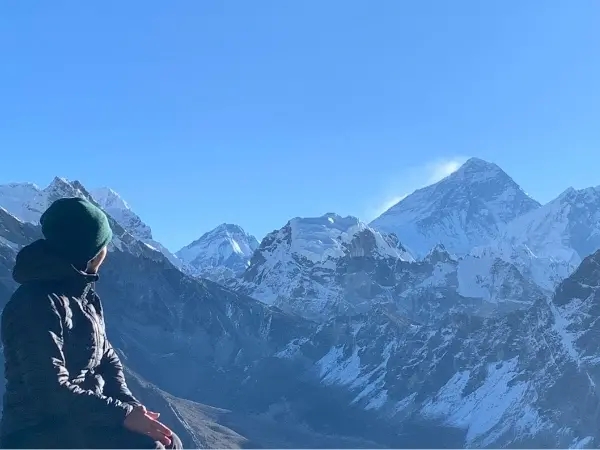
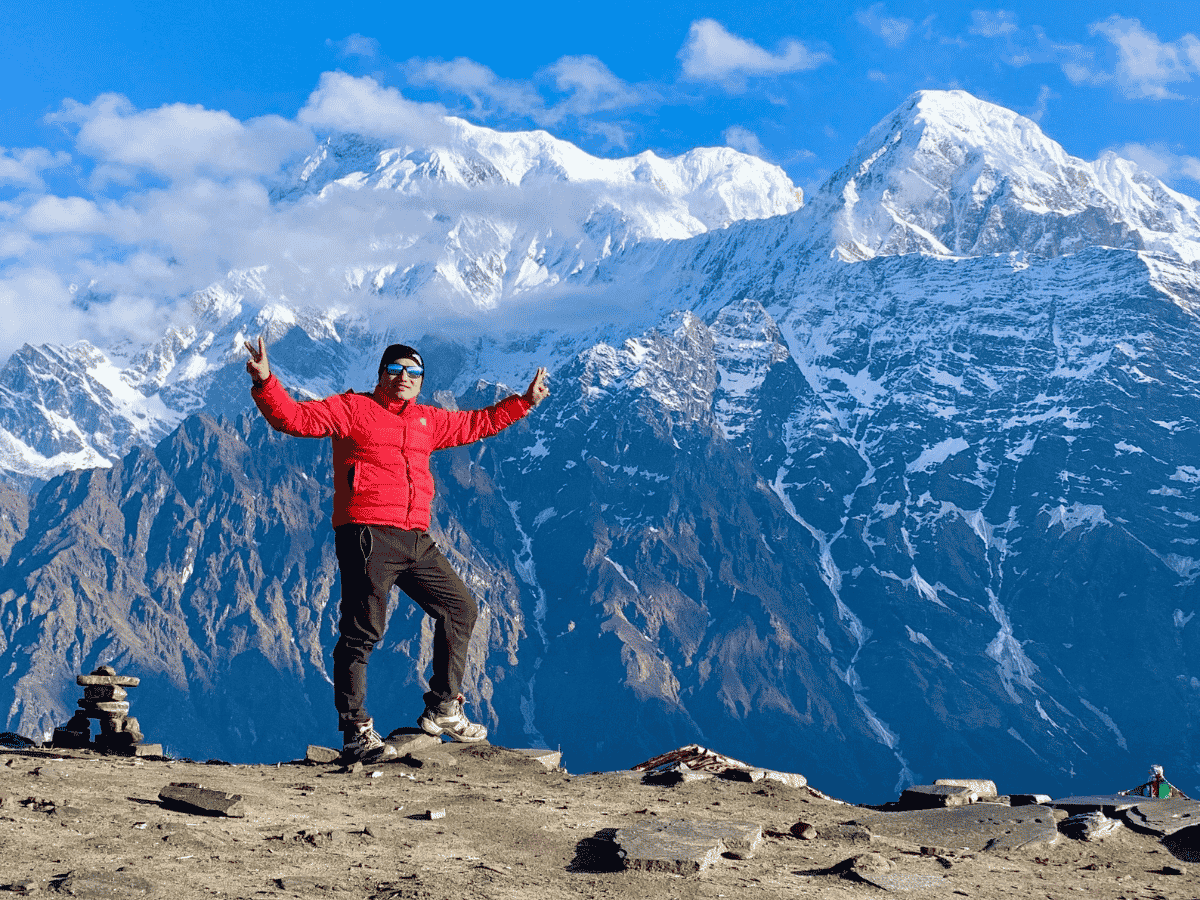
The Mardi Himal Trek is one of most rewarding short treks located in the Annapurna region of Nepal, which offers a peaceful trail, dramatic mountain views and a less crowded experience than many other popular routes in Nepal. It starts near Pokhara, and then the trail gradually climbs through forests, villages and ridge lines before opening up to stunning views of Mardi Himal, Macchapuchhre, Annapurna South and Hiunchuli. Mardi Himal Trek is really a great choice for trekkers who wants a Himalayan adventure without committing to a long or technical expedition.
What makes Mardi Himal Trekking route especially attractive is because of its perfect balance of beauty and challenge. The Mardi Himal Trekking Route Difficulty is usually considered moderate, with some steep climbs, narrow ridges and altitude gain that becomes noticeable around High Camp and the upper viewpoint. In the rest of this blog, readers can expect to learn about the trail sections, trek difficulty, daily walking hours, scenic highlights and what kind of fitness is required to complete the journey comfortably.
Mardi Himal Trekking Quick Details
| Details | Mardi Himal Trek |
| Trek Region | Annapurna Region, Nepal |
| Duration | 5-7 Days |
| Trek Distance | 40-45 kilometers |
| Maximum Altitude | Around 4,500m at Mardi Himal Base Camp |
| Starting Point | Usually Pokhara, Trek from Kande |
| Ending Point | Siding Village |
| Difficulty | Easy to Moderate |
| Best Season | Spring and Autumn |
| Accommodation | Teahouses and lodges along the trail |
| Meals | Basic teahouses meals (dal bhat, noodles, soups, eggs and more) |
| Required Permits | ACAP Permit and TIMS Card |
| Guide Requirement | Licensed guide is required in the Annapurna Conservation Area for foreign trekkers |
| Mobile Network | NTC and Ncell usually work in lower areas. But signal can be weaker at higher altitudes. |
| Electricity and Wi-Fi | Electricity is available in teahouses, and Wi‑Fi exists in many lodges but can be slow or unreliable at higher altitude. |
Mardi Himal Trekking Route (General)
Day 1: Drive or flight from Kathmandu (1,400 meters) to Pokhara (822 meters) (200 KM, 7-8 hours)
Our first day of Mardi Himal journey begins in the early morning from Kathmandu. We will board a comfortable tourist bus or private vehicle for drive. The drive starts with a busy street of the Kathmandu Valley and then quickly moves into the climb up to Nagdhunga. From Nagdhunga checkpoint, the road drops down through the series of sharp turns into the Trishuli River Valley. From here the scenery changes from city buildings to green hills, small roadside shops and terraced farmlands and also the highway stays close to the Trishuli River for much of the drive.
Around the middle of the day, we will stop on a roadside restaurant for lunch near Malekhu or Mugling. Here you can rest, stretch our leg and enjoy a hot meal such as dal bhat, eggs, noodles or soups while looking out the beautiful Trishuli river. After having lunch the road continue passing Mugling, where the route follows the Marsyangdi River for a while. This part of the drive feels wider and calmer, with open fields, riverbanks, and village life all around.
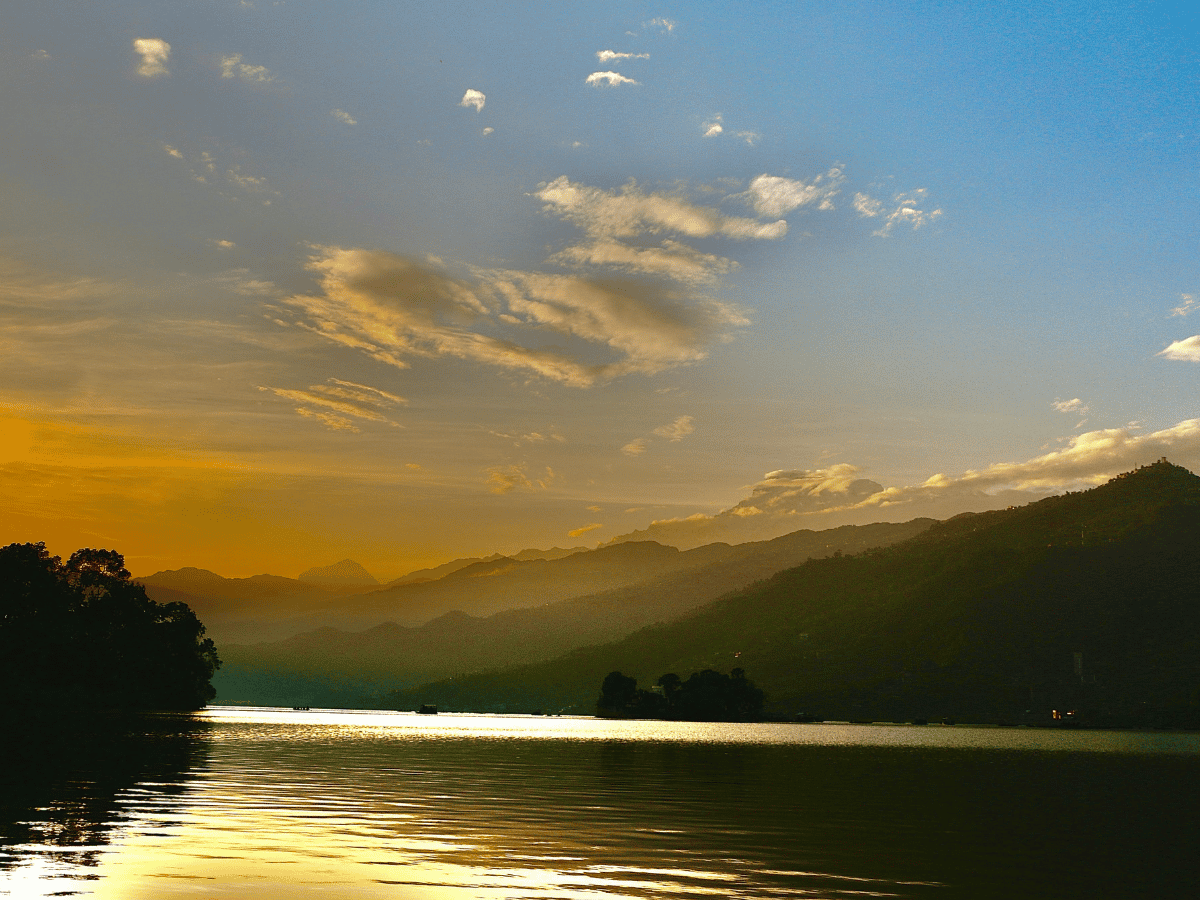
As we move farther west, we will move towards towns like Dumre and Damauli. The landscapes here starts to become more open, and if the weather is clear, you may catch your first distant view of the Himalayan peaks. By late afternoon, we will arrive in Pokhara, which is peaceful city known for its lakes, mountain views, and relaxed atmosphere. The drive here feels long as we cover 200 km in about 7-8 hours, but the changing scenery makes it more interesting all the way. After checking into our hotel near Lakeside, trekkers can walk around the area, enjoy the sunset over Phewa Lake, and prepare for the trekking days ahead.
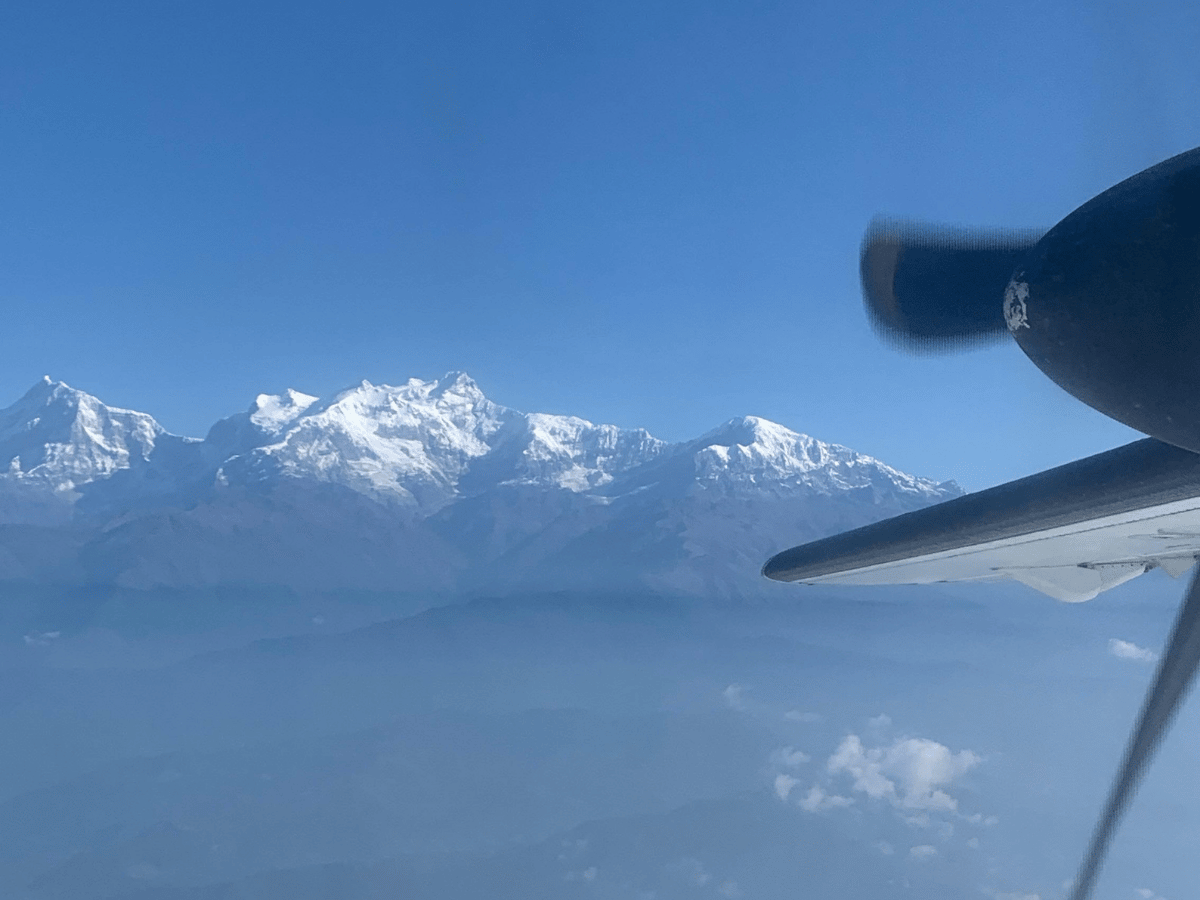
However, if you take flight, it takes about 30-35 minutes where you can enjoy a distant but breathtaking views of Himalayan Peaks.
Best Photography Point: Phewa Lake Sunset at Pokhara
Day 2: Drive to Kande (27km) than hike to Deurali Via Pothana(4km)-5/6 Hours
Today we will first take a drive to Kande (27 km) which takes about 2-3 hours. Then we will start our trekking journey from Kande (1,770 m) to Deurali (2,125 m), covering approximately 4 km and 2-3 hours. The trail begins with a steep stone-stair ascent to Australian Camp, followed by gentle forest paths through Pothana and rolling ridge trails, ending at the peaceful mountain settlement of Deurali.
Best Photography Point: Australian Camp
Section A: Drive from Pokhara (822 m) to Kande (1,770 m)
Our day starts with a short and scenic drive from Pokhara to the trailhead at Kande. The drive is about 33 kilometers along the winding Bhupi Serchan Highway and takes about 1-1.5 hours. We will take private vehicle or local jeep depending upon the package and trekkers preferences.
- Drive from Pokhara (822 m) to Ghattekhola (1,050 m):The drive from Pokhara to Ghatte Khola is about 22 km and takes about 30. Leaving Pokhara, the drive to Ghattekhola is smooth and wide, which runs alongside the scenic Seti River with beautiful mountain views in the distance. On the way, we will also pass through Hemja, which is a lively village known for its Tibetan refugee camp, potato farms, and adventure spots like bungee jumping, giving the journey a mix of nature, culture, and local color.
- Drive from Ghattekhola (1,050 m) to Kande (1,770 m):From Ghattekhola, the drive to Kande becomes narrower and more winding, with a steady ascent and multiple turns that open up stunning views at every bend. Here we will cover about 11 Km in 20 minutes. As we climb higher, the scenery starts to become more dramatic, with extraordinary mountain ranges and a close view of Mt. Fishtail adding to our excitement. We can also stop for tea at a scenic point near the top of the climb before continuing to Kande, which the main starting point of the Mardi Himal Trek.
Section B: Trek from Kande (1,770 m) to Australian Camp (2,100 m)
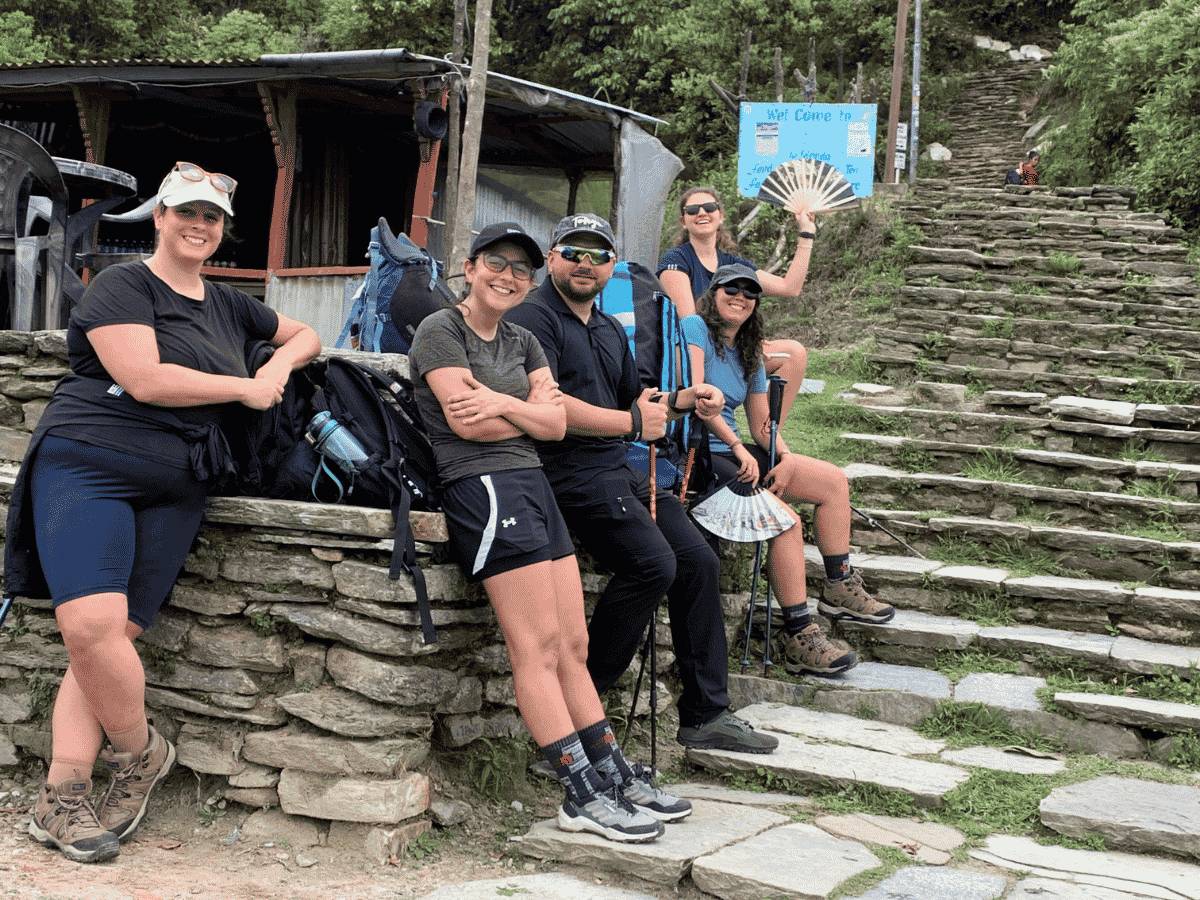
The trekking distance from Kande to Australin Camp is about 1 km and take 25-30 minutes. From Kande, the trek begins with a gentle descent on a well-set trail through a small local village before the real climb starts toward Australian Base Camp. This Kande to Mardi Himal trekking route involves a steep uphill path with beautifully carved steps, and as we gain height, we can find that Kande village slowly disappearing behind us. Along the way, there are also a few resting spots where we can buy drinks and recharge before continuing through forested terrain toward Pothana and onward to Deurali.
From here, 10 minutes’ walk takes us to Australian Base Camp. It is famous for its stunning location and especially its beautiful sunset views. From here the view opens fully, giving us the stunning and wide panorama of Annapurna South, Hiunchuli, and the sharp peak of Machhapuchhre.
Section C: Trek from Australian Camp (2,100 m) to Pothana (1,890 m)
The trekking distance from Australian Camp to Pothana is 2.7 Km, taking about 1.5 to 2 hours. From Australian Camp, the Mardi Himal Trekking trail drops into a forest section. The route here is not just downhill, as trekkers also need to face short climbs and steady ups and downs along the way. The walk here is easy to moderate and very scenic which also passes through peaceful woodland before we reach Pothana. Before entering village, here we have to verify our ACAP trekking permits. Pothana is such a lovely village on Mardi Himal Route where we will have our lunch.
Section D: Trek from Pothana (1,890 m) to Deurali (2,100 m)
lunch in Pothana, we continue toward Deurali on a pleasant trail that begins with a small descent before joining a natural forest path with occasional road sections. The trekking distance from Pothana to Deurali is about 3-4 kilometers and takes roughly 1.5 hour. The route has gentle ups and downs, which makes it a comfortable and scenic walk as the landscape becomes quieter and wilder. Along the way, you can enjoy open glimpses of the deep Modi Khola valley dropping sharply on the left, adding another beautiful view to the journey. Deurali is the first real stop in the wilder section of the Mardi Himal trekking route where we will spend our first overnight.
Day 3: Deurali (2,125 m) to Low Camp (2,970 m) (11.7 km – 7/8 hours)
From Deurali, climb steeply through dense jungle on the rugged Forest Camp ridge, reaching Forest Camp for lunch before continuing to Low Camp. Total distance we will cover today is around 12 Km in 7-8 hours. Stunning Machhapuchhre views reward this demanding wilderness ascent.
Best Photography Point: Lovely Hill and Low Camp (Stunning close-up views of Machhapuchhre)
Section A: Deurali (2,125 m) to Lovely Hill (2,280 m) (Hill Gauda)
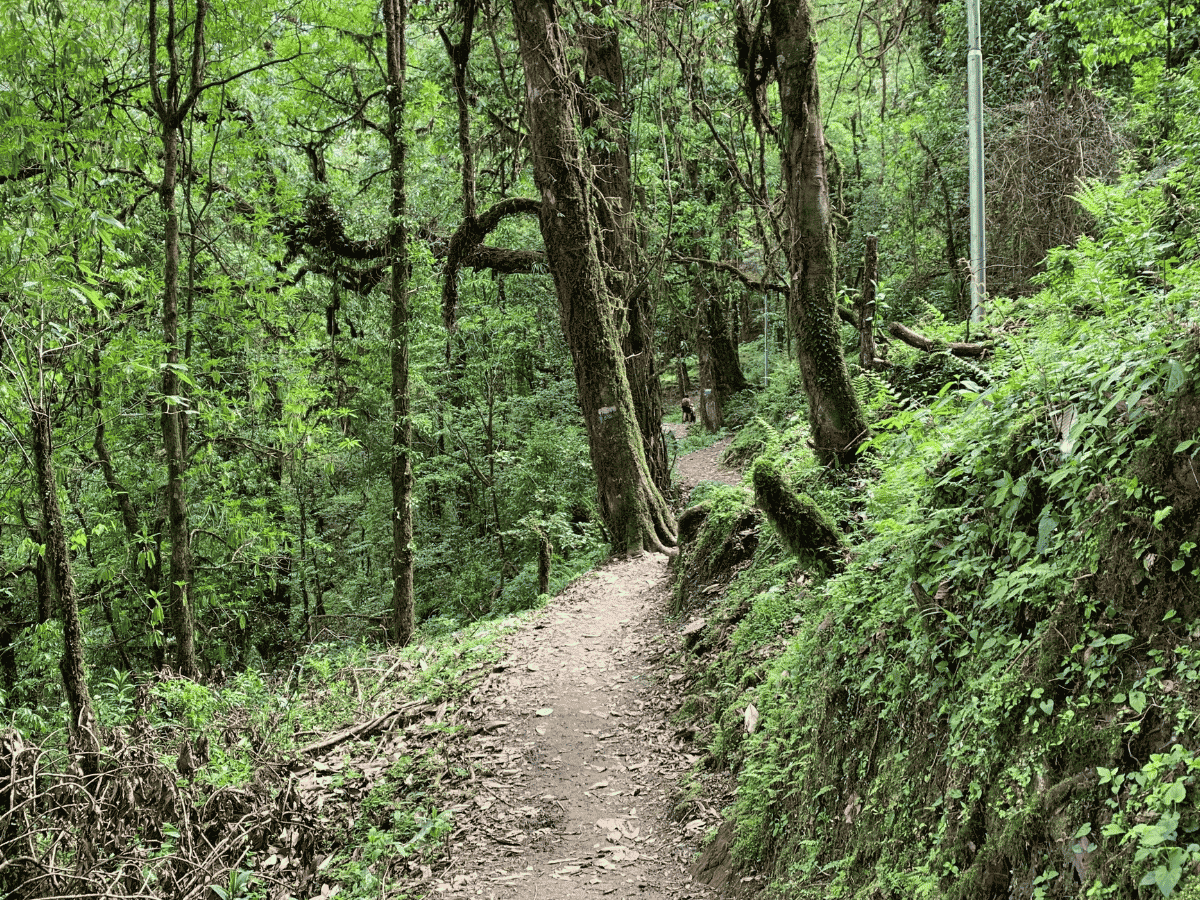
We will start our today’s journey early in the morning after having breakfast. From Deurali to Lovely Hill, also called Hill Gauda, the trek is around 4–5 km and usually takes about 2.5–3 hours, depending on pace and trail conditions. This part of Mardi Himal Base Camp trek is quite interesting, starting with a walk under large trees and passing a tea shop where the trail splits, with the new left-hand route being easier and shorter than the older straight-up path. The trail stays gentle here at first, then mixes small ups, downs, stone steps, and natural forest track. However, to reach lovely hill, we need to take some tough hill climb at last. Lovely Hill is known for its stunning mountain views in the middle of the forest and makes a refreshing break before the tougher climb ahead.
Section B: Lovely Hill (2,280 m) to Forest Camp (2,500 m)
The trail from Lovely Hill to Forest Camp stretches roughly for 4-5 km and usually takes around 3.5- 4.5 hours, depending upon pace and stops. This section includes some steep uphill climbs along a natural forest trail. Continue walking through the forest to reach a tea shop, from where you can enjoy beautiful views of the villages on the way to Annapurna Base Camp. Take a short rest before continuing through the forest, where the trail has plenty of ups and downs. Trekkers may come across tree roots and fallen leaves, making the path slippery and a little difficult to walk, so be careful. This is a truly dense forest section, so you will not find many tea houses along the way, but there are a few. Passing through Dudhkarka and Besal Bari, we will eventually reach Forest Camp. Forest Camp is the lunch stop and has more than four tea houses. Before this new trail was introduced, Forest Camp was the second overnight stop, but now trekkers usually continue to Low Camp. There are also lodges at Dudhkarka, Besal Bari, and just before Forest Camp for those who wish to stay overnight.
Section C: Forest Camp (2,500 m) to Low Camp (2,970 m)
From Forest Camp to Low Camp, the trail is about 3-4 km and takes roughly 2–3 hours, depending on pace and weather. After lunch, you continue on a mix of gradual climbs, short downhill sections, and natural forest paths, with one steeper climb near Rest Camp before reaching Low Camp. The route stays inside a beautiful rhododendron forest, creating a peaceful and cool walking atmosphere. As you move higher, the forest begins to thin and the mountain views improve, making Low Camp a rewarding stop for the night.
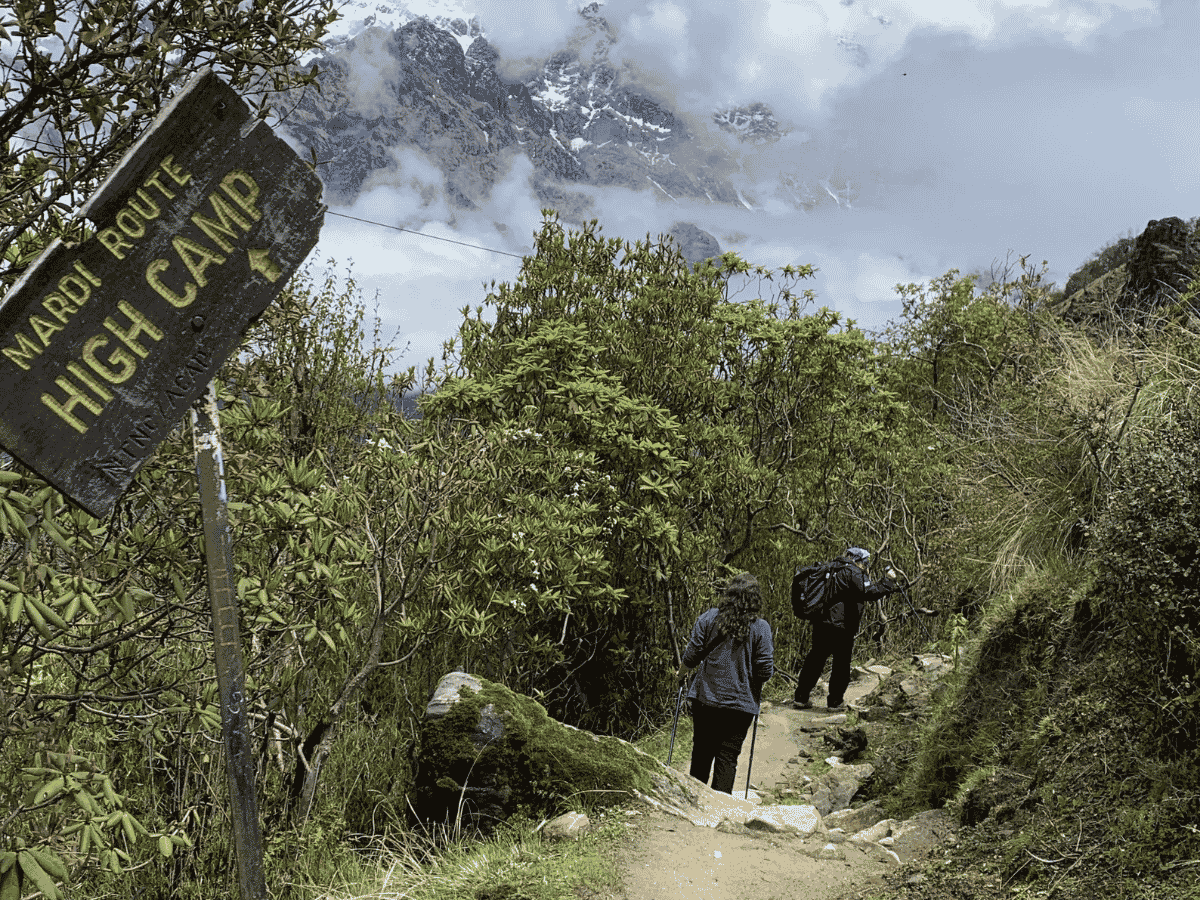
Day 4: Low Camp (2,970 m) to High Camp (3,580 m) (6-7 Km – 4/5 hours)
Today's trek covers approximately 6 km in 4–5 hours, climbing from Low Camp to High Camp (3,580 m). The trail ascends beyond the rhododendron forest onto an exposed alpine ridge with panoramic mountain views, ending at High Camp for acclimatization before the pre-dawn Base Camp hike.
Best Photography Point: Upper Badal Danda: Spectacular 360-degree panorama with Pokhara valley.
Section A: Low Camp (2,970 m) to Mid Camp (3,150 m)
Low Camp to Mid Camp, the trail is about 4–5 km and usually takes around 2.5–3 hours. This section path follows the well-paved stone stairways through a lush rhododendron forest, though it can feel muddy and slippery in the rainy season. Along the way, you’ll find a few rest spots and occasional mountain views between the trees. Just before Mid Camp, we will get a wide viewpoint opens up over the lower valley, and a few minutes later we will reach the lodge area, where Annapurna, Machhapuchhre, and Badal Danda come into view.
Section B: Mid Camp (3,150 m) to Upper Badal Danda (3,250 m)
trekking distance from Mid Camp to Upper Badal Danda is about 3–4 km and usually takes around 2–3 hours. After a short descent from Mid Camp of about 5 minutes, we will re-enter the forest before reaching the lower part of Badal Danda. Then we will cross above the tree line and continue on an alpine path with some natural uphill sections. The climb becomes steeper with acute climb hill near Upper Badal Danda, also called the panoramic viewpoint, where we can enjoy a wide 360-degree mountain view, including the Pokhara Valley and surrounding Himalayan peaks.
Section C: Upper Badal Danda (3,250 m) to High Camp (3,580 m)
From Upper Danda to High Camp, the trekking trail is about 2.5-3 km and takes roughly about 1.5-2 hours. This section is one of the most beautiful on the Mardi Himal route, with a ridge-top walk across open grassland and panoramic mountain views on both sides. We may see horses and yaks grazing nearby, while the path includes some cliffy stretches, stone staircases, and a few slight downhill parts. Just before we reach High Camp, our trekking trail splits into two options. We will take one depending upon on our lodge. The closer mountain views here really become even more breathtaking and dramatic as we reach Badal Danda’s upper edge and High Camp.
Day 5: Trek to Mardi Himal Base Camp (4,500 m) and Trek back to Low Camp (2,970 m) (11-12 km – 9/10 hours)
On this day, we will start before dawn from High Camp for sunrise views in route to Mardi Himal Base Camp via scenic ridges, stone staircases, and narrow trails. After that we will descend through rhododendron forests, Forest Camp, and traditional villages to Low Camp, enjoying spectacular Himalayan panoramas, prayer flags, and peaceful mountain landscapes throughout this rewarding trekking day. Today we will cover total distance of around 11-12 km in about 9-10 hours.
Best Photography Point: Mardi Himal Base Camp - 360-degree Himalayan panorama with Annapurna I, Annapurna South, Gangapurna, Mardi Himal, and Machhapuchhre.
Section A: High Camp (3,580 m) to Lower View Point (4,000 m)
After having breakfast, we will start early to catch the sunrise. As we will start in dawn, make sure that your headlamp as enough battery before following your guide on this section. The trail begins with an easy walk, then come a beautiful stone staircase that leads is to a rest point where you can look down over the valley, High Camp, and Badal Danda. After that comes a slight downhill with a cliffy section which is protected by safety bars. And then again, we will take a gradual uphill on natural trail. Here we can find another covered rest spot. After resting for a while we will take continue steadily uphill on stone steps to reach Lower View Point, the toughest part of the day, covering about 2–3 km in 2–3 hours.
Section B: Lower view Point (4,000 m) to Mardi Himal Base Camp (4,500 m)
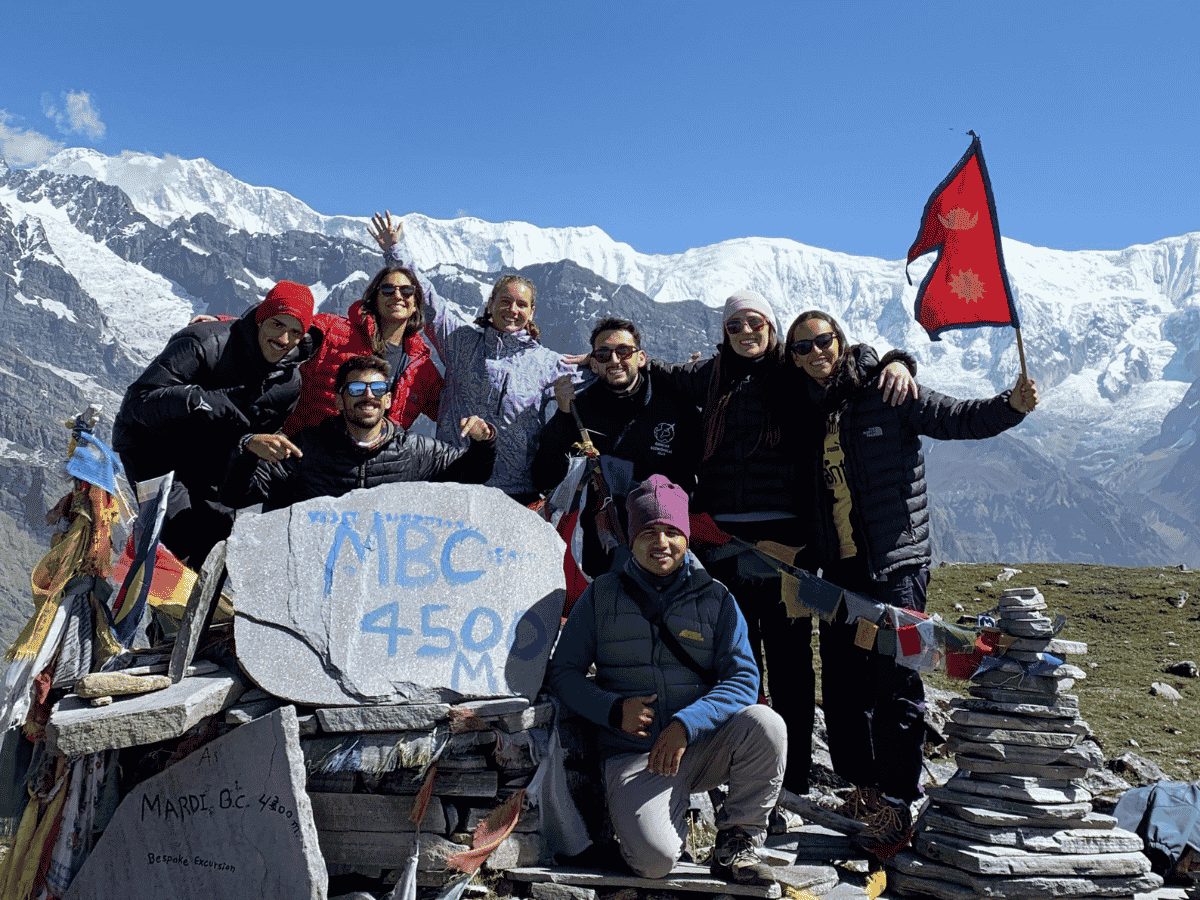
The trail from Lower View Point to Mardi Himal Base Camp is about 1.5 to 2 km and usually takes about 1-1.5 hours, depending upon pace and conditions. Here, we will walk along a narrow ridge with gradual ups and downs, and at a few places the trail can feel very tight like a bottleneck, so extra care is needed, especially during snowy or winter weather. The whole time during this Mardi Himal Base Camp trek journey you are walking high above the valleys with regular and breathtaking mountain views, including Annapurna I, Annapurna South, Gangapurna, Mardi Himal, and Machhapuchhre. From here, the horizon feels wide and open which makes it as one of the most dramatic viewpoints of the entire trek.
Section C: Mardi Himal Base Camp (4,500 m) to low Camp (2,970 m)
After enjoying an unreal view at Mardi Himal Base Camp, we will retrace our steps back along the same narrow ridge way towards Lower View Point. As this is our return journey, we have to be careful while walking downhill on the same steep sections, stone steps, and tight paths. The descending journey is generally considered easier on the way down, but we still need to be very alert, especially where the trail feels very narrow or exposed. From Lower View Point, we will continue back to the High Camp, where we will stop for a short tea break, rest our legs, and pack our things properly which we left earlier in the morning before moving on.
From High Camp, the trail drops gradually toward Badal Danda and then down to Low Camp. This part can feel slippery in winter, especially through the forest sections, so slow and careful footing is important. The route passes through rhododendron forest, shaded trails, and damp stone stairways before finally reaching Low Camp. During this section we will cover total distance of around 10 km in 6-7 hours.
Day 6: Trek from Low Camp (2,970 m) to Siding (1,750 m), 6-7 Km and Drive to Pokhara (8,22 m), 40-45 Km- 5-7 hours
After breakfast at Low Camp, we will descend through lush rhododendron and bamboo forests, waterfalls, and terraced farmland to the authentic village of Siding. At siding we will have lunch before taking a rugged jeep ride through the Mardi Khola Valley to Hemja. And then we will continue on paved roads back to Pokhara for a relaxing evening by Phewa Lake. Today we will trek for about 6-7 km and drive 40-45 km towards Pokhara.
Section A: Trek from Low Camp (4,500 m) to Siding (1,750 m)
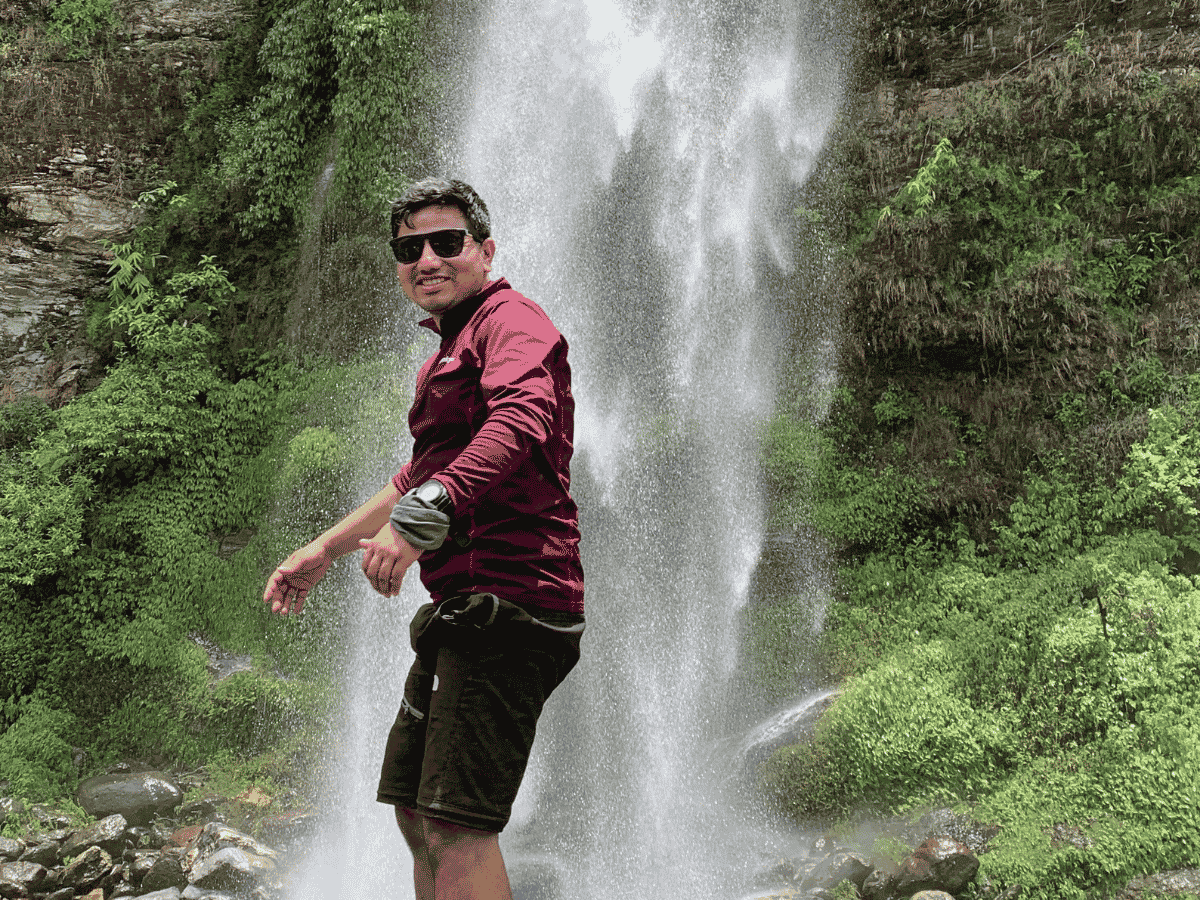
From Low Camp to Siding, the trail drops steeply off the high ridge and into the deep valley of the Mardi Khola, covering about 7–9 km in roughly 3–4 hours. The descent begins just below Low Camp and continues through dense green wilderness, so you need to watch your footing on loose leaves and slippery mud. As we lose altitude, the higher altitude cold alpine air gives way to a warmer and more humid sub-tropical atmosphere. The route here includes rough stone steps, beautiful waterfalls, and mossy cliffs before opening into Siding village. Siding is peaceful village with traditional mud-and-stone houses. Here we will have our lunch before driving back towards Pokhara.
Section B: Drive from Siding (1,750 m) to Pokhara (822 m)
From Siding, the return drive to Pokhara covers roughly about 40-45 km and it usually takes about 2.5–3.5 hours, depending upon the road and traffic conditions. The first section (about 20 km) is an adventurous ride on a rough, unpaved dirt track that follows the Mardi Khola valley, with bumpy turns, shallow river crossings, and also the narrow hillside shelves that pass settlements like Lwang and Mardi. This part of journey aslo offers beautiful waterfalls bottom of Sidding.
Once the jeep reaches the highway junction at Hyamja, the road becomes really smooth and blacktopped. From here, within about 30 minutes we are back in Pokhara Lakeside. After checking into our hotel, trekkers can enjoy a hot shower and a relaxed evening by Phewa Lake.
Day 7: Drive or Flight from Pokhara (822 m) to Kathmandu (1400 m) 200 Km Drive or 30 minutes flight
After having early breakfast in Pokhara, we can either take a scenic flight to Kathmandu or begin the overland return by tourist bus or private vehicle according to the Mardi Himal Trek Package. The drive covers about 200 kilometers along the Prithvi Highway and usually takes around 6–8 hours, depending upon traffic and road conditions. Along the way, you pass through the green hills of Tanahun, roadside markets, and river gorge sections above the Trishuli River, with a stop for lunch at a highway restaurant before continuing toward Nagdhunga and into the Kathmandu Valley.
If you choose the flight option, Kathmandu is reached in about 30–35 minutes, with beautiful aerial views of the Himalayas on a clear day. On arrival, our team will transfer you to your hotel in Thamel, where the trip settles into a smooth city finish after the trek. Whether by road or air, this day is the final transition from mountain trails back to the capital, giving trekkers an enough time to rest, reflect, and enjoy your last evening in Nepal.
How difficult is Mardi Himal Trek?
Mardi Himal Trek is a moderate Himalayan trek that most people with average fitness can complete without need of any prior technical trekking experience. The Mardi Himal trekking trail includes different forest paths, stone staircases, steep uphill sections, narrow ridges, and also the long descents, with around 4–7 hours of walking per day. The High Camp to Base Camp section is considered the most demanding section, but with steady pace, regular breaks, proper footwear, and preparation can make it very manageable. This trek is an excellent choice for friends, families with older children, and couples who are looking for a scenic and rewarding adventure without any technical climbing. With help from reliable agencies like Mount Face Nepal which offers smoother logistics, experienced guides and quality services, your journey remains really safer and fully enjoyable.
What is the highest point of Mardi Himal Trekking route?
The highest point of this Mardi Himal Base Camp Trekking Trek is at Mardi Himal Base Camp itself which is situated at approximately 4,500 m (14,763 ft) above sea level. Reaching at this elevation is the main achievement of the route that offers breathtaking close-up views of Mardi Himal, Machhapuchhre (Fishtail), Annapurna South, Annapurna I, and surrounding peaks. Unlike the standard itinerary, which often turns around at the 4,200 m Upper Viewpoint, this Mardi Himal Base Camp package continues along the ridge to the true Base Camp before returning to High Camp.
Final Words
The Mardi Himal Trekking Route is a short but deeply rewarding Himalayan journey. The Mardi Himal Trek itinerary takes you from Pokhara’s peaceful surroundings to Mardi Himal Base Camp through lush forests, rhododendron trails, alpine grasslands, and the dramatic mountain ridges. From Kande to High Camp, every stage here offers trekkers a new landscape, while the journey to Mardi Himal Base Camp brings you face to face with the Machhapuchhre, Annapurna, Gangapurna, and Mardi Himal.
What makes this trek special is its balance of scenery, challenge, and the accessibility. Although the route includes steep climbs, stone steps, narrow ridges, and long descents, a well-planned Mardi Himal Trek itinerary itinerary really allows you to enjoy it at a comfortable pace. With proper preparation, support from reliable agencies like Mount Face Nepal and help from experienced guides the Mardi Himal Trek becomes an unforgettable journey through Nepal’s Annapurna region.